Navigating the 2026 US Labor Market: Key Shifts and 3 Emerging Sectors to Watch for Growth

The United States economy is a dynamic entity, constantly evolving and reshaping its labor landscape. As we look towards 2026, the 2026 US labor market is set to undergo significant transformations, driven by technological advancements, demographic shifts, and changing global economic paradigms. Understanding these shifts is not just an academic exercise; it’s a critical necessity for individuals planning their career paths, businesses strategizing for future growth, and policymakers aiming to foster a robust and equitable job market. This comprehensive analysis will explore the key drivers influencing the 2026 US labor market, delve into the prominent trends, and identify three emerging sectors poised for substantial growth.
The past decade has been marked by unprecedented innovation, leading to automation, artificial intelligence (AI), and advanced data analytics becoming integral components of various industries. These technological forces are not merely tools; they are catalysts fundamentally altering job roles, skill requirements, and the very nature of work. Coupled with an aging workforce, increasing diversity, and a growing emphasis on remote work flexibility, the 2026 US labor market will present both challenges and unparalleled opportunities.
Understanding the Key Drivers of Change in the 2026 US Labor Market
Several powerful forces are converging to redefine the contours of the 2026 US labor market. Grasping these drivers is fundamental to anticipating and adapting to the coming changes.
Technological Advancements: AI, Automation, and Digital Transformation
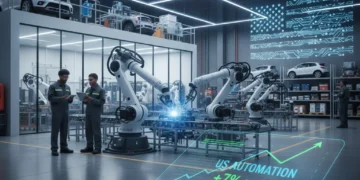
Artificial Intelligence (AI) and automation continue to be the most significant disruptors. While fears of widespread job displacement persist, the reality is more nuanced. AI is increasingly augmenting human capabilities, automating routine tasks, and creating entirely new job categories. For instance, the demand for AI ethics specialists, prompt engineers, and AI-driven data analysts is skyrocketing. Automation in manufacturing, logistics, and even service industries is leading to a shift from manual labor to roles requiring oversight, maintenance, and strategic planning of automated systems. Digital transformation initiatives, accelerated by the pandemic, are pushing businesses across all sectors to adopt cloud computing, cybersecurity measures, and advanced data infrastructure, thereby creating a sustained demand for skilled professionals in these areas.
Demographic Shifts: An Aging Workforce and Generational Dynamics
The aging of the baby boomer generation continues to impact the 2026 US labor market. As experienced workers retire, a significant knowledge gap can emerge, creating opportunities for younger generations to step into leadership roles. However, it also means a potential shortage of skilled labor in certain specialized fields. Concurrently, the increasing diversity of the workforce, particularly with younger generations entering the labor pool, brings new perspectives, values, and demands for workplace flexibility, inclusivity, and purpose-driven work. Companies that successfully navigate these generational dynamics and foster inclusive environments will have a distinct advantage in attracting and retaining top talent.
Globalization and Geopolitical Influences
The interconnectedness of the global economy means that international events, trade policies, and geopolitical tensions can have direct repercussions on the US labor market. Supply chain disruptions, shifts in manufacturing bases, and international collaborations all influence job availability and economic growth within the US. The push for reshoring or nearshoring critical industries, for example, could create manufacturing jobs domestically, while global competition continues to drive innovation and efficiency requirements across sectors.
Evolving Work Models: Remote Work and Hybrid Environments
The pandemic irrevocably altered traditional work structures, normalizing remote and hybrid work models. By 2026, these flexible arrangements will likely be standard practice in many industries, influencing office space requirements, urban planning, and employee expectations. This shift has implications for geographical talent acquisition, allowing companies to tap into a broader talent pool, but also requiring new strategies for team cohesion, performance management, and cybersecurity in distributed workforces.
Key Trends Shaping the 2026 US Labor Market
Beyond the overarching drivers, several distinct trends will characterize the 2026 US labor market, influencing everything from hiring practices to skill development.
The Primacy of Skills Over Degrees
While traditional degrees will remain valuable, there’s a growing emphasis on demonstrable skills. Employers are increasingly prioritizing candidates with specific, practical skills relevant to the job, often acquired through bootcamps, certifications, or on-the-job training, rather than solely relying on academic credentials. This shift is driven by the rapid pace of technological change, which often outstrips the ability of traditional educational institutions to update curricula. Lifelong learning and continuous upskilling will be non-negotiable for career longevity.
The Gig Economy’s Continued Expansion
The gig economy, encompassing freelancers, contractors, and temporary workers, is expected to continue its expansion. This trend is fueled by both employer demand for flexible staffing solutions and employee desire for autonomy and work-life balance. By 2026, a significant portion of the workforce may engage in some form of gig work, requiring new approaches to benefits, labor protections, and career development for this segment of the workforce.
Increased Focus on ESG (Environmental, Social, and Governance)
Companies are facing increasing pressure from consumers, investors, and employees to demonstrate strong Environmental, Social, and Governance (ESG) practices. This translates into a demand for professionals who can help organizations meet sustainability goals, promote diversity and inclusion, and ensure ethical business conduct. Jobs related to corporate social responsibility, sustainability consulting, and diversity and inclusion leadership will see significant growth.
Mental Health and Well-being as a Workplace Priority
The pandemic highlighted the critical importance of mental health and well-being. By 2026, employers are expected to integrate comprehensive mental health support, stress management programs, and flexible work arrangements as standard components of employee benefits packages. This focus will not only improve employee retention and productivity but also create new roles for mental health professionals within corporate structures.

3 Emerging Sectors to Watch for Growth in the 2026 US Labor Market
While technology will permeate almost every sector, certain industries are uniquely positioned for explosive growth in the 2026 US labor market. Here are three key areas to observe closely:
1. The Green Economy and Renewable Energy
The global imperative to combat climate change, coupled with government incentives and decreasing costs of renewable technologies, is driving unprecedented growth in the green economy. This sector encompasses everything from renewable energy generation (solar, wind, geothermal) and energy efficiency solutions to sustainable agriculture, waste management, and green building. The demand for skilled workers in this area will be immense.
Key Opportunities within the Green Economy:
- Renewable Energy Technicians: Installers and maintenance specialists for solar panels, wind turbines, and battery storage systems.
- Environmental Engineers and Scientists: Developing sustainable solutions, assessing environmental impact, and designing eco-friendly processes.
- Energy Auditors and Efficiency Specialists: Helping businesses and homeowners reduce energy consumption.
- Sustainable Finance Professionals: Managing investments in green technologies and sustainability initiatives.
- Electric Vehicle (EV) Infrastructure Development: Engineers, technicians, and project managers for charging stations and grid integration.
The growth in this sector is not just about new jobs; it’s also about the ‘greening’ of existing jobs, as professionals across various fields integrate sustainable practices into their roles.
2. Advanced Healthcare and Biotech Innovation
The healthcare sector is perennially robust, but by 2026, it will be profoundly reshaped by technological advancements and an aging population. Biotech innovation, personalized medicine, telemedicine, and health data analytics will be at the forefront. The pandemic underscored the importance of rapid scientific advancement and resilient healthcare systems, fueling further investment and job creation in this domain.
Key Opportunities within Advanced Healthcare and Biotech:
- Bioinformatics Specialists: Analyzing complex biological data for drug discovery and personalized treatment.
- Genetic Counselors: Guiding individuals through genetic testing and its implications.
- Telemedicine Professionals: Doctors, nurses, and support staff specializing in remote patient care platforms.
- Medical Device Engineers: Designing and developing advanced diagnostic tools, robotic surgery equipment, and wearable health tech.
- Health Data Analysts and AI in Healthcare: Leveraging big data and AI to improve patient outcomes, optimize hospital operations, and predict disease outbreaks.
- Biomanufacturing Technicians: Producing biologics, vaccines, and advanced therapies.
This sector will require a highly skilled workforce, often at the intersection of medicine, technology, and engineering.
3. Cybersecurity and Data Privacy
As the world becomes more digitized, the importance of protecting data and critical infrastructure from cyber threats escalates dramatically. High-profile data breaches and ransomware attacks are constant reminders of this vulnerability. The demand for cybersecurity professionals far outstrips supply, and this gap is only expected to widen by 2026. Data privacy regulations (like GDPR and CCPA) also create a continuous need for compliance experts.
Key Opportunities within Cybersecurity and Data Privacy:
- Cybersecurity Analysts: Monitoring networks for breaches, responding to incidents, and implementing security measures.
- Ethical Hackers (Penetration Testers): Proactively identifying vulnerabilities in systems.
- Cloud Security Architects: Designing secure cloud environments.
- Data Privacy Officers (DPOs) / Privacy Engineers: Ensuring compliance with data protection laws and building privacy into systems from the ground up.
- Security Software Developers: Creating tools and applications to enhance digital security.
- Forensic Cybersecurity Specialists: Investigating cybercrimes and recovering compromised data.
This field offers lucrative career paths for individuals with strong analytical skills, attention to detail, and a passion for protecting digital assets.

Preparing for the 2026 US Labor Market: Strategies for Success
Navigating the evolving 2026 US labor market requires proactive planning and a commitment to continuous development. Here are strategies for individuals and organizations:
For Individuals:
- Embrace Lifelong Learning: Continuously acquire new skills, especially in digital literacy, data analysis, and critical thinking. Online courses, certifications, and vocational training will be crucial.
- Develop Soft Skills: Communication, collaboration, adaptability, creativity, and emotional intelligence are increasingly valuable as automation handles routine tasks.
- Network Strategically: Build connections within your industry and emerging sectors. Mentorship can provide invaluable guidance.
- Consider Hybrid Skills: Look for roles that combine expertise from different fields (e.g., healthcare + AI, finance + sustainability).
- Stay Informed: Regularly research industry trends, job market forecasts, and in-demand skills.
For Businesses and Organizations:
- Invest in Upskilling and Reskilling: Provide training programs for existing employees to adapt to new technologies and roles. This is often more cost-effective than constant external hiring.
- Foster a Culture of Innovation: Encourage experimentation, continuous learning, and adaptability within your workforce.
- Prioritize Employee Well-being: Offer comprehensive benefits, flexible work arrangements, and mental health support to attract and retain talent.
- Diversify Talent Acquisition: Look beyond traditional recruitment channels and degree requirements. Consider skills-based hiring and apprenticeships.
- Leverage Technology Ethically: Implement AI and automation responsibly, focusing on augmenting human capabilities rather than simply replacing them.
- Embrace ESG Principles: Integrate sustainability and social responsibility into your core business strategy to enhance your brand and attract purpose-driven talent.
The Role of Government and Education in Shaping the Future Workforce
The transition to the 2026 US labor market will not happen in a vacuum. Government policies and educational institutions play a pivotal role in ensuring a smooth and equitable transition.
Government Initiatives:
- Funding for Workforce Development: Investing in training programs, STEM education, and vocational schools that align with future job demands.
- Support for Small Businesses: Providing resources for small and medium-sized enterprises (SMEs) to adopt new technologies and offer employee training.
- Infrastructure Investment: Enhancing digital infrastructure (broadband access) and sustainable energy infrastructure to create jobs and support innovation.
- Policy Frameworks: Developing policies that address the gig economy, protect worker rights in evolving work models, and promote ethical AI development.
Educational Institutions:
- Curriculum Modernization: Adapting academic programs to teach in-demand skills, often in collaboration with industry partners.
- Emphasis on STEM and Digital Literacy: Strengthening education in science, technology, engineering, and mathematics from an early age.
- Promoting Lifelong Learning: Offering accessible and affordable continuing education programs, micro-credentials, and bootcamps.
- Career Guidance: Providing students with up-to-date information on labor market trends and future career paths.
Challenges and Considerations for the 2026 US Labor Market
While opportunities abound, the 2026 US labor market will also present challenges that need careful consideration:
- Skill Gaps: The rapid evolution of technology means that the skills of the current workforce may not always align with future demands, leading to persistent skill gaps.
- Digital Divide: Unequal access to technology and digital literacy can exacerbate existing inequalities, leaving some segments of the population behind.
- Job Displacement: While new jobs are created, some traditional roles may decline due to automation, requiring effective reskilling initiatives to support affected workers.
- Ethical Implications of AI: The widespread adoption of AI raises concerns about bias in algorithms, job monitoring, and the nature of human-machine interaction in the workplace.
- Economic Volatility: Global economic shifts, inflation, and unforeseen events can always impact labor market stability and growth projections.
Conclusion: A Future of Adaptability and Opportunity
The 2026 US labor market will be defined by its dynamism, driven by the relentless march of technology, demographic shifts, and a heightened awareness of global challenges. While the landscape will undoubtedly shift, it will also be rich with opportunities for those who are prepared to adapt, learn, and innovate. The green economy, advanced healthcare and biotech, and cybersecurity will serve as powerful engines of job creation and economic growth.
For individuals, cultivating a mindset of continuous learning, developing both technical and soft skills, and remaining agile will be paramount. For businesses, investing in their workforce, embracing ethical technological integration, and fostering inclusive, supportive environments will be key to thriving. And for governments and educational institutions, collaborative efforts to build robust infrastructure, modernize education, and implement forward-thinking policies will be essential to ensure a prosperous and equitable future for the American workforce.
The journey to 2026 is one of transformation, demanding foresight, resilience, and a collective commitment to shaping a labor market that benefits all. By understanding these trends and acting strategically, we can unlock the vast potential of the future US economy.