AI Integration: 5 Market Trends Reshaping US Industries by Mid-2026

AI Integration: 5 Market Trends Reshaping US Industries by Mid-2026 (INSIDER KNOWLEDGE)
The rapid evolution of artificial intelligence (AI) is not just a technological marvel; it’s a profound force reshaping the very fabric of global economies. In the United States, industries are experiencing an unprecedented transformation, driven by the strategic integration of AI. As we approach mid-2026, understanding the pivotal AI market trends is no longer optional but essential for survival and growth. This deep dive offers critical insider knowledge, unveiling the five most impactful trends that are setting the stage for the next era of industrial innovation and competitive advantage.
The digital revolution, powered by artificial intelligence, is accelerating at an astonishing pace, making it imperative for businesses across all sectors to not only adapt but to proactively anticipate change. The US market, a global leader in technological adoption and innovation, is particularly susceptible to these shifts. By mid-2026, the landscape will be distinctly different, characterized by a deeper integration of AI into operational workflows, strategic decision-making, and customer interactions. These AI market trends are not mere predictions; they are observable trajectories informed by current investment patterns, research breakthroughs, and early adoption successes.
For executives, entrepreneurs, and policymakers, grasping these emerging patterns is crucial for crafting resilient strategies and seizing new opportunities. This article will dissect each of the five key AI market trends, providing context, implications, and actionable insights. From hyper-personalization powered by advanced algorithms to the ethical considerations of pervasive AI, we will explore the multifaceted impact on US industries. Prepare to gain a comprehensive understanding of the forces that will define the industrial competitive landscape in the coming years.
1. Hyper-Personalization and Predictive Analytics: The New Customer Frontier
The first and arguably most immediate of the AI market trends is the exponential growth in hyper-personalization, driven by increasingly sophisticated predictive analytics. Gone are the days of generic marketing campaigns and one-size-fits-all customer experiences. AI, through machine learning algorithms, is now capable of processing vast quantities of data – from browsing history and purchase patterns to social media interactions and demographic information – to create highly accurate individual customer profiles.
The Evolution of Customer Engagement
This level of data analysis allows businesses to predict customer needs and preferences with remarkable precision, often before the customer themselves are even aware of them. Think beyond personalized product recommendations; we’re talking about dynamic pricing models tailored to individual willingness to pay, customized service offerings based on anticipated lifecycle needs, and even proactive customer support that addresses potential issues before they arise. E-commerce, retail, and entertainment industries are already seeing significant gains, but the application is broadening rapidly to sectors like healthcare (personalized treatment plans) and finance (tailored investment advice).
Impact on US Industries
By mid-2026, hyper-personalization will be a non-negotiable expectation for consumers. Businesses that fail to adopt advanced AI-driven predictive analytics will find themselves at a severe disadvantage, unable to compete with the tailored experiences offered by their AI-savvy counterparts. This trend necessitates significant investment in data infrastructure, AI talent, and robust ethical frameworks to manage customer data responsibly. The legal and ethical implications of data privacy and algorithmic bias will also become paramount, requiring careful navigation by companies.
The rise of hyper-personalization also fuels a demand for new skill sets. Data scientists, AI ethicists, and customer experience designers with a deep understanding of AI will be highly sought after. Companies will need to foster a data-driven culture, where insights derived from AI inform every aspect of their operations, from product development to supply chain management. This shift isn’t just about technology; it’s about a fundamental change in how businesses understand and interact with their customer base.
Furthermore, the competitive edge gained through superior predictive analytics will extend beyond customer-facing operations. Internal processes, such as human resource management and operational efficiency, will also benefit from predictive insights, leading to more optimized resource allocation and improved employee experiences. The ability to forecast demand, identify potential bottlenecks, and automate routine tasks will free up human capital for more strategic and creative endeavors.
2. AI-Powered Automation and Robotics: Redefining Workflows and Productivity
The second major trend among the AI market trends is the pervasive integration of AI-powered automation and robotics across various industrial sectors. While automation has been a part of industry for decades, AI is elevating it to a new level, enabling machines to perform complex tasks, learn from their environments, and adapt to changing conditions with minimal human intervention.
Beyond Repetitive Tasks
This isn’t just about automating repetitive, manual labor. AI-powered robots are now capable of intricate assembly, quality control with superhuman precision, and even collaborative tasks alongside human workers. In manufacturing, AI is optimizing production lines, predicting equipment failures, and managing inventory with unprecedented efficiency. In logistics, autonomous vehicles and drones, guided by AI, are streamlining delivery processes and reducing operational costs. Even in service industries, AI chatbots and virtual assistants are handling customer inquiries, appointment scheduling, and basic troubleshooting, freeing up human agents for more complex issues.
Economic and Social Implications
By mid-2026, the impact on productivity will be transformative, leading to significant cost reductions and increased output for adopting industries. However, this trend also brings forth critical discussions around workforce displacement and the need for reskilling and upskilling programs. Governments and educational institutions will play a vital role in preparing the workforce for an AI-augmented future, focusing on skills that complement AI capabilities, such as critical thinking, creativity, and emotional intelligence.
The ethical considerations surrounding autonomous systems, particularly in areas like decision-making for self-driving cars or ethical choices in automated warfare, will also intensify. Regulations and frameworks will need to evolve rapidly to keep pace with technological advancements. Companies will be under increasing pressure to demonstrate transparency and accountability in their use of AI-powered automation.
The synergy between humans and AI will become a defining characteristic of future workplaces. Rather than full replacement, AI will augment human capabilities, allowing professionals to focus on higher-value tasks, innovation, and strategic thinking. This collaborative model, often referred to as ‘cobots’ (collaborative robots), will require new organizational structures and management philosophies to maximize its potential. The focus will shift from simply automating processes to intelligently augmenting human performance.

3. The Rise of Explainable AI (XAI) and Ethical AI Frameworks
As AI becomes more ubiquitous, especially in critical decision-making processes, the demand for transparency and accountability is skyrocketing. This brings us to the third crucial among the AI market trends: the imperative for Explainable AI (XAI) and the establishment of robust ethical AI frameworks.
Demystifying the Black Box
Historically, many advanced AI models, particularly deep learning networks, have operated as ‘black boxes,’ producing accurate outcomes without clearly revealing the underlying logic or reasoning. While this was acceptable for some applications, it is no longer sustainable for AI systems influencing areas like credit scores, medical diagnoses, legal judgments, or employment decisions. XAI aims to make these complex algorithms more transparent and interpretable, allowing humans to understand why an AI system made a particular decision.
Ensuring Fairness and Trust
By mid-2026, regulatory bodies and public demand will push for mandatory XAI components in sensitive applications. This will be coupled with the widespread adoption of ethical AI frameworks that address issues such as bias, fairness, privacy, and accountability. Companies will need to demonstrate that their AI systems are not only effective but also fair, unbiased, and compliant with evolving ethical guidelines. This trend is particularly significant for industries like finance, healthcare, and government services, where the consequences of biased or inexplicable AI decisions can be severe.
The development and implementation of ethical AI frameworks will require a multidisciplinary approach, involving AI researchers, ethicists, legal experts, and social scientists. It’s not just about technical solutions; it’s about embedding ethical considerations into the entire lifecycle of AI development, from data collection and model training to deployment and monitoring. Companies that proactively embrace XAI and ethical AI will build greater trust with their customers and stakeholders, gaining a significant competitive advantage in a market increasingly sensitive to responsible technology use.
Furthermore, the focus on XAI will foster innovation in AI development itself, leading to more robust and reliable models. Understanding why an AI makes certain errors can help developers improve its performance and reduce unintended consequences. This iterative process of development, explanation, and refinement will be key to advancing AI capabilities responsibly. The investment in XAI and ethical AI is not merely a compliance cost; it is an investment in the long-term sustainability and societal acceptance of AI technology.
4. AI-Driven Cybersecurity: The Arms Race in Digital Protection
As digital footprints expand and AI becomes more integrated, the threat landscape for cyberattacks also intensifies. This brings us to the fourth critical among the AI market trends: the emergence of AI-driven cybersecurity as an indispensable defense mechanism. It’s an ongoing arms race, where AI is both the weapon for attackers and the shield for defenders.
Proactive Threat Detection and Response
Traditional cybersecurity measures, often reliant on predefined rules and signatures, are increasingly insufficient against sophisticated, rapidly evolving cyber threats. AI, particularly machine learning, is revolutionizing cybersecurity by enabling systems to analyze vast amounts of network traffic, identify anomalous behavior in real-time, and detect previously unknown threats. These AI systems can learn from new attack patterns, predict potential vulnerabilities, and even automate response mechanisms, isolating threats before they can cause significant damage.
Protecting Critical Infrastructure and Data
By mid-2026, AI-powered cybersecurity solutions will be standard across all critical US industries, from finance and energy to healthcare and government. The sheer volume and complexity of cyber threats necessitate an automated, intelligent defense. Companies will invest heavily in AI-driven security information and event management (SIEM) systems, endpoint detection and response (EDR) platforms, and security orchestration, automation, and response (SOAR) technologies. The demand for cybersecurity professionals with AI expertise will surge, creating a new niche for highly skilled talent.
However, this trend also presents a paradox: cyber attackers are also leveraging AI to craft more potent and evasive attacks. This means the cybersecurity landscape will become increasingly dynamic, requiring continuous innovation in AI defense strategies. Companies will need to foster a culture of constant vigilance and continuous learning to stay ahead of sophisticated AI-powered threats. Regular security audits, penetration testing, and employee training will become even more critical to bolster defenses against these advanced attacks.
The implications extend beyond individual companies to national security. Protecting critical infrastructure from AI-enabled cyber warfare will be a paramount concern for governments. International collaboration on AI cybersecurity standards and threat intelligence sharing will become increasingly important to collectively defend against global cyber threats. The future of digital security is inextricably linked to the advancements and responsible deployment of AI.
5. Edge AI and Decentralized Intelligence: Bringing AI Closer to the Source
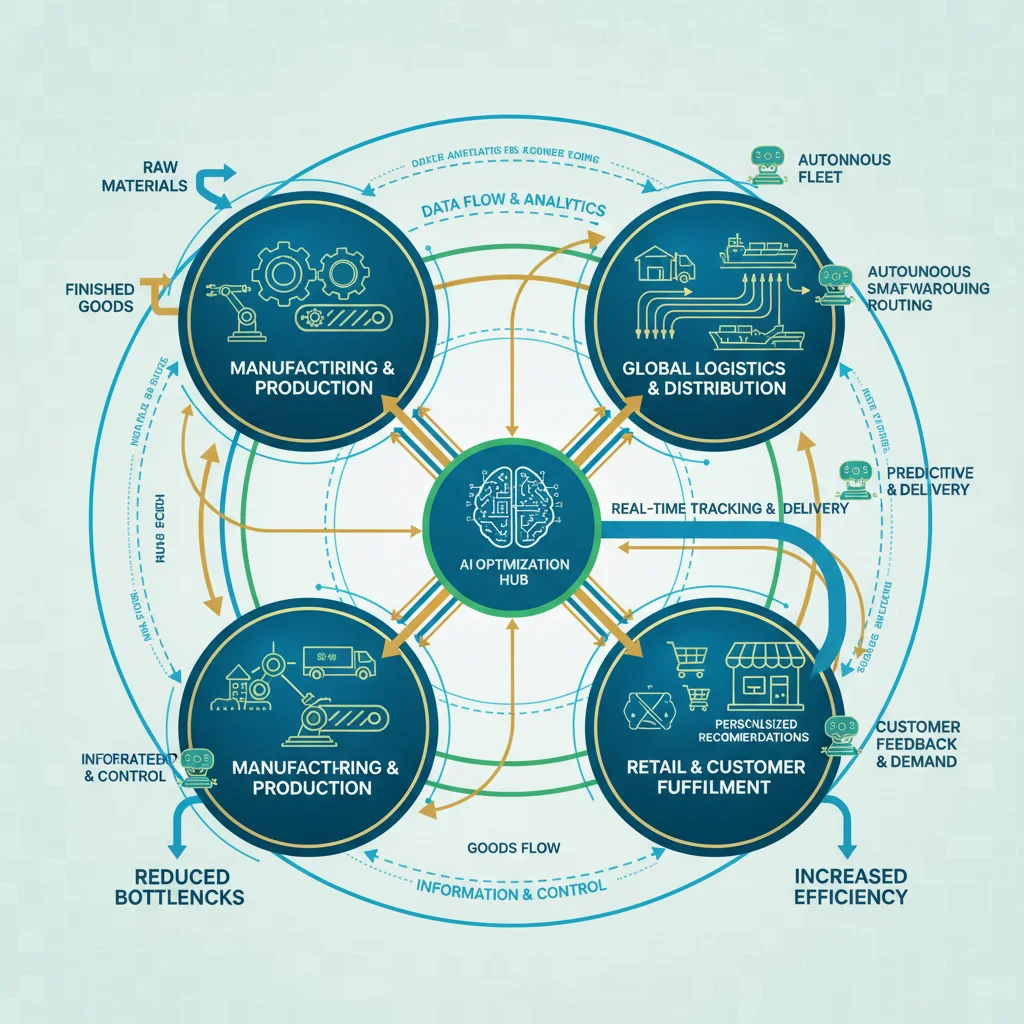
The fifth significant among the AI market trends is the proliferation of Edge AI and decentralized intelligence. Traditionally, AI processing has occurred in centralized cloud data centers. However, for many applications, sending data to the cloud for processing introduces latency, consumes bandwidth, and raises privacy concerns. Edge AI addresses these challenges by bringing AI computations closer to the data source, directly on devices or local servers.
Real-Time Decisions and Enhanced Privacy
Edge AI enables real-time decision-making without reliance on cloud connectivity. This is critical for applications where milliseconds matter, such as autonomous vehicles, industrial IoT sensors, smart city infrastructure, and remote healthcare monitoring. By processing data locally, Edge AI also enhances data privacy and security, as sensitive information doesn’t need to be transmitted over networks to centralized servers.
Transforming Industries and Infrastructure
By mid-2026, Edge AI will be a foundational technology for a wide array of US industries. In manufacturing, it will power predictive maintenance on factory floors, optimizing machinery performance. In retail, it will enable smart cameras for inventory management and personalized in-store experiences. In healthcare, wearable devices will leverage Edge AI for continuous health monitoring and immediate alerts. The telecommunications industry will see significant investment in 5G infrastructure to support the massive data generated by Edge AI devices, creating a synergistic relationship between these two transformative technologies.
The development of specialized AI chips optimized for low power consumption and high-performance computing at the edge will accelerate this trend. Companies specializing in hardware and software for Edge AI will experience significant growth. The challenge will be managing and orchestrating these distributed AI systems, ensuring they are secure, up-to-date, and interoperable. This will necessitate new paradigms in system architecture and network management.
Furthermore, decentralized intelligence will lead to more resilient and robust AI systems. If one part of a network fails, other edge devices can continue to operate independently. This distributed approach also opens up possibilities for federated learning, where AI models are trained collaboratively on decentralized datasets without the need to centralize raw data, further enhancing privacy and data security. The shift towards Edge AI represents a fundamental change in how AI is deployed and utilized, unlocking new applications and efficiencies across the industrial landscape.
The Road Ahead: Navigating the AI-Driven Future
The five AI market trends outlined above – hyper-personalization, AI-powered automation, Explainable AI, AI-driven cybersecurity, and Edge AI – are not isolated phenomena. They are interconnected forces, each amplifying the others, creating a complex yet incredibly fertile ground for innovation and disruption across US industries. By mid-2026, businesses that have embraced these trends will likely be leading their respective sectors, demonstrating superior efficiency, customer satisfaction, and resilience.
Strategic Imperatives for Businesses
- Invest in AI Talent and Training: The demand for AI specialists, data scientists, and ethicists will continue to outpace supply. Companies must invest in attracting, retaining, and upskilling their workforce to leverage AI effectively.
- Prioritize Data Strategy: AI is only as good as the data it’s fed. Developing a robust data collection, management, and governance strategy is foundational for any AI initiative.
- Embrace Ethical AI: Proactively implement XAI and ethical frameworks to build trust and ensure responsible AI deployment. This is not just a compliance issue, but a competitive differentiator.
- Foster a Culture of Innovation: Encourage experimentation and cross-functional collaboration to identify new AI applications and integrate them into core business processes.
- Stay Agile and Adaptable: The AI landscape is constantly evolving. Businesses must remain agile, continuously monitoring new developments and adapting their strategies accordingly.
Government and Policy Considerations
Governments also have a critical role to play in shaping this AI-driven future. Policies related to data privacy, algorithmic bias, workforce retraining, and international AI standards will be crucial. Collaborative efforts between industry, academia, and government will be essential to harness the full potential of AI while mitigating its risks.
Conclusion: A New Era of Industrial Intelligence
The journey towards mid-2026 will be defined by the strategic adoption and integration of AI across US industries. These five AI market trends represent not just technological shifts but fundamental changes in how businesses operate, interact with customers, and secure their digital assets. While challenges such as workforce adaptation and ethical considerations are significant, the opportunities for enhanced productivity, innovation, and competitive advantage are immense.
For those with the insider knowledge and foresight to navigate these trends effectively, the coming years promise a new era of industrial intelligence, where AI is not just a tool but a strategic partner in shaping a more efficient, personalized, and secure future. The time to prepare, adapt, and innovate is now.