Professional Certifications 2026: US Market Trends & Future Outlook

Understanding the 2026 Landscape of US Professional Certifications: A Market Analysis
The United States professional landscape is in a constant state of flux, driven by technological advancements, evolving economic conditions, and shifting societal demands. As we inch closer to 2026, the significance of US professional certifications has never been more pronounced. These credentials serve as vital benchmarks of skill, competence, and dedication, offering a clear advantage in a competitive job market. For both aspiring professionals and seasoned experts, understanding the trajectory of these certifications is paramount to sustained career growth and relevance.
In an era where continuous learning is not just an advantage but a necessity, professional certifications provide a structured pathway to acquire and validate specialized knowledge. They signal to employers a commitment to excellence and an up-to-date skill set, often translating into better job opportunities, higher salaries, and enhanced career mobility. This comprehensive analysis will delve deep into the anticipated trends, key sectors, and strategic implications of US professional certifications for the year 2026 and beyond.
The Evolving Role of Professional Certifications in the US Job Market
Historically, a college degree was often considered the golden ticket to a successful career. While higher education remains crucial, the landscape has broadened significantly. Employers are increasingly valuing demonstrated skills and practical expertise, attributes that US professional certifications are specifically designed to validate. This shift is not merely a passing trend but a fundamental recalibration of how talent is identified and developed.
By 2026, we anticipate an even greater emphasis on stackable credentials and micro-certifications. These smaller, more focused certifications allow individuals to rapidly acquire specific skills, making them agile and adaptable to fast-changing industry needs. This modular approach to learning is particularly appealing in fields where technology evolves at an exponential rate, such as IT, data science, and cybersecurity.
Furthermore, the rise of remote work and the gig economy has amplified the importance of verifiable skills. When geographic proximity is no longer a primary factor, certifications offer a universal language of competence, enabling employers to confidently assess candidates from anywhere in the world. This globalized talent pool further underscores the strategic value of obtaining relevant US professional certifications.
Key Drivers Shaping the 2026 Certification Landscape
Several powerful forces are shaping the future of US professional certifications. Understanding these drivers is crucial for anyone looking to invest in their professional development or for organizations planning their talent acquisition strategies.
Technological Advancements and Digital Transformation
The relentless march of technology remains the single most significant driver. Artificial intelligence (AI), machine learning (ML), blockchain, cloud computing, and the Internet of Things (IoT) are not just buzzwords; they are foundational technologies reshaping every industry. Consequently, certifications in these areas are experiencing explosive growth. Professionals with validated skills in AI ethics, cloud architecture, data analytics, and cybersecurity will be exceptionally well-positioned.
Shifting Economic Priorities and Industry Growth
Economic shifts, including increased focus on sustainability, renewable energy, and advanced manufacturing, are creating new job categories and elevating the demand for specialized skills. Certifications in green technologies, sustainable business practices, and advanced robotics will see a surge in popularity. The healthcare sector, perpetually in need of skilled professionals, will also continue to drive demand for specialized medical and administrative certifications, particularly those related to health informatics and telehealth.
The Gig Economy and Flexible Work Models
The proliferation of freelance, contract, and remote work arrangements means that individuals are increasingly responsible for marketing their own skills. US professional certifications act as powerful endorsements, providing instant credibility to independent contractors and consultants. This trend will likely lead to more certifications focused on project management, agile methodologies, and specialized consulting skills, catering to the needs of a flexible workforce.
Increased Emphasis on Soft Skills and Emotional Intelligence
While technical skills are often the focus of certifications, there’s a growing recognition of the importance of ‘power skills’ or soft skills. Certifications that integrate leadership, communication, problem-solving, critical thinking, and emotional intelligence will gain traction. These skills are often transferable across industries and are crucial for navigating complex work environments and fostering innovation.
Top Sectors and In-Demand US Professional Certifications for 2026
Based on current trends and projected market needs, several sectors are poised to dominate the US professional certifications landscape in 2026. Here’s a closer look at where the demand will be highest:
Information Technology (IT) and Cybersecurity
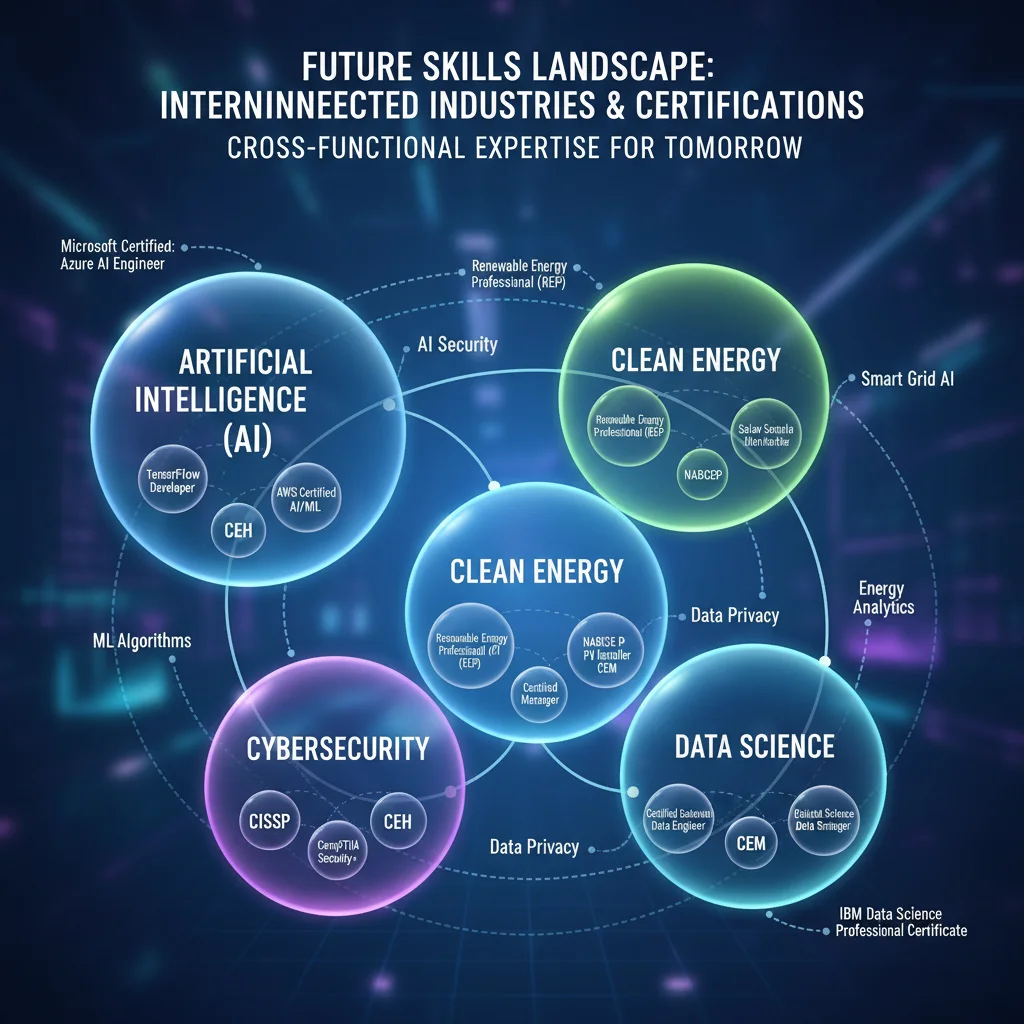
This sector continues its meteoric rise. With cyber threats becoming more sophisticated and data breaches more common, the need for skilled cybersecurity professionals is insatiable. Similarly, as businesses migrate to the cloud and leverage big data, certifications in cloud platforms (AWS, Azure, Google Cloud) and data science will remain critical. Expected in-demand certifications include:
- Certified Information Systems Security Professional (CISSP): For experienced security practitioners.
- CompTIA Security+: An entry-to-mid-level certification for cybersecurity roles.
- AWS Certified Solutions Architect: For designing scalable systems on Amazon Web Services.
- Google Cloud Professional Data Engineer: For building and managing data pipelines and models on Google Cloud.
- Certified Data Privacy Solutions Engineer (CDPSE): Focusing on privacy-by-design principles.
Healthcare and Health Informatics
The healthcare industry is undergoing significant digital transformation, leading to a demand for professionals who can manage patient data, implement new technologies, and ensure compliance. Telehealth and personalized medicine further amplify this need. Key US professional certifications in this domain include:
- Certified Professional in Healthcare Information and Management Systems (CPHIMS): For IT professionals in healthcare.
- Certified Health Education Specialist (CHES): For promoting health and wellness.
- Registered Health Information Administrator (RHIA): For managing patient health information and medical records.
- Certified Clinical Medical Assistant (CCMA): A foundational certification for clinical support roles.
Project Management and Agile Methodologies
As organizations become more dynamic and project-centric, the ability to manage complex initiatives efficiently is highly valued. Agile and Scrum methodologies are becoming standard, driving demand for certified professionals. Relevant US professional certifications include:
- Project Management Professional (PMP): The gold standard for project managers.
- Certified ScrumMaster (CSM): For leading Scrum teams.
- PMI Agile Certified Practitioner (PMI-ACP): For those working in agile environments.

Data Science and Analytics
Data is the new oil, and professionals who can extract insights from it are invaluable. From business intelligence to machine learning engineering, data-related roles are critical across almost all industries. Certifications in this field include:
- Certified Analytics Professional (CAP): For business analytics experts.
- IBM Data Science Professional Certificate: A comprehensive program covering data science fundamentals.
- Microsoft Certified: Azure Data Scientist Associate: For implementing and running machine learning workloads on Azure.
Digital Marketing and E-commerce
With businesses increasingly relying on online channels for growth, digital marketing expertise is more important than ever. Certifications in SEO, SEM, social media marketing, content strategy, and e-commerce platforms will continue to be highly sought after.
- Google Ads Certifications: For expertise in search, display, video, and shopping ads.
- HubSpot Content Marketing Certification: For content strategy and creation.
- Facebook Certified Digital Marketing Associate: For advertising on Facebook and Instagram.
Environmental, Social, and Governance (ESG)
As corporate responsibility and sustainability become central to business strategy, professionals with expertise in ESG frameworks, reporting, and implementation will be in high demand. This is an emerging area for US professional certifications.
- Sustainability Accounting Standards Board (SASB) FSA Credential: For professionals integrating sustainability into financial analysis.
- Global Reporting Initiative (GRI) Certified Training: For sustainability reporting standards.
The Impact of AI and Automation on Certifications
The rise of artificial intelligence and automation is a double-edged sword for the job market. While some routine tasks may be automated, AI also creates new roles that require advanced skills in AI development, ethical AI, AI project management, and human-AI collaboration. The focus of US professional certifications will increasingly shift towards skills that complement AI, rather than compete with it. This includes:
- Critical thinking and complex problem-solving: Skills that AI can augment but not fully replicate.
- Creativity and innovation: Essential for developing new solutions and strategies.
- Emotional intelligence and interpersonal communication: Crucial for leadership, teamwork, and client relations.
- Digital literacy and adaptability: The ability to quickly learn and master new technologies and tools.
Certifying bodies will need to adapt rapidly, developing new credentials that address these emerging skill gaps and ensure that professionals are equipped to work alongside intelligent machines.
Strategic Advice for Professionals: Navigating the 2026 Certification Landscape
For individuals looking to boost their careers, a strategic approach to US professional certifications is essential. Here’s how to navigate the evolving landscape:
Identify Your Career Goals and Industry Trends
Start by clearly defining your career aspirations. Research the industries and roles that align with your goals and investigate which certifications are highly valued within those areas. Look for certifications that have long-term relevance and are recognized by reputable industry bodies.
Focus on Future-Proof Skills
Prioritize certifications that focus on skills resilient to automation and highly sought after in emerging fields. Think about data analytics, AI literacy, cloud computing, cybersecurity, and advanced project management methodologies. These skills offer versatility and open doors to diverse opportunities.
Consider Stackable and Micro-Certifications
Instead of pursuing a single, lengthy certification, explore modular options. Stackable credentials allow you to build expertise incrementally, while micro-certifications enable you to validate specific skills quickly. This approach offers flexibility and allows for continuous skill development without significant time or financial commitments.
Leverage Online Learning Platforms
The accessibility of online learning platforms (Coursera, edX, Udemy, LinkedIn Learning) has democratized access to certification preparation. Many leading universities and industry experts offer courses that directly align with certification requirements, making it easier to prepare for exams from anywhere.
Network and Seek Mentorship
Connect with professionals in your target industry and ask about the certifications that have most benefited their careers. Mentors can provide invaluable guidance, helping you choose the most impactful credentials and offering insights into the certification process.
Continuous Learning is Key
The 2026 landscape demands a mindset of lifelong learning. Once you achieve a certification, don’t stop there. The most successful professionals will be those who consistently update their skills and pursue new knowledge, ensuring their continued relevance in a dynamic job market.
Implications for Employers: Attracting and Retaining Certified Talent
Employers, too, must adapt their strategies to effectively leverage US professional certifications. In a talent-scarce market, recognizing and valuing these credentials is a competitive advantage.
Integrate Certifications into Hiring and Promotion Processes
Explicitly include desired certifications in job descriptions. Create career pathways that reward employees for achieving relevant credentials, linking certification attainment to promotions and salary increases. This signals to employees that their professional development is valued.
Invest in Employee Certification Programs
Sponsor employees to pursue certifications. This not only enhances your workforce’s skill set but also boosts employee morale and loyalty. Offering reimbursement for exam fees, study materials, and even dedicated study time can yield significant returns on investment.
Develop Internal Certification Frameworks
For highly specialized or proprietary skills, consider developing internal certification programs. These can validate unique expertise within your organization, fostering a culture of continuous learning and knowledge sharing.
Recognize the Value of Micro-Credentials
Embrace micro-credentials and skill badges as indicators of specific competencies. These can help identify candidates with niche skills that might not be captured by traditional resumes or larger certifications.
Build a Culture of Continuous Learning
Foster an environment where learning and skill development are encouraged and celebrated. Provide access to online learning platforms, workshops, and mentorship opportunities. A workforce that is constantly learning is better equipped to innovate and adapt to market changes.
Challenges and Considerations for the Future
While the benefits of US professional certifications are clear, there are also challenges to address as we move towards 2026.
Quality Control and Standardization
With the proliferation of certifications, ensuring quality and standardization will be crucial. Employers need confidence that a certification truly represents a validated skill set. Reputable certifying bodies will become even more important.
Cost and Accessibility
The cost of certifications can be a barrier for some individuals. Initiatives to make certifications more affordable and accessible, particularly for underrepresented groups, will be vital for fostering a diverse and skilled workforce.
Keeping Pace with Rapid Change
Certifying bodies face the ongoing challenge of updating their curricula and exam content to keep pace with rapidly evolving technologies and industry best practices. Certifications must remain current to retain their value.
Conclusion
The 2026 landscape for US professional certifications is one of dynamic growth and increasing importance. As technology continues to reshape industries and job roles, certifications will serve as indispensable tools for both individuals seeking career advancement and organizations striving for a competitive edge. By understanding the key drivers, focusing on in-demand skills, and embracing a mindset of continuous learning, professionals can strategically navigate this evolving terrain.
For employers, recognizing, valuing, and investing in certifications will be paramount to attracting and retaining the talent needed to thrive in the coming years. The future workforce will be defined not just by degrees, but by a rich tapestry of validated skills, with US professional certifications playing a central role in this new paradigm of professional competence and career success.