U.S. Economic Forecast 2026: High-Growth Industries for Career Advancement

U.S. Economic Forecast 2026: Identifying High-Growth Industries for Career Advancement
The landscape of the American economy is in a constant state of flux, shaped by technological advancements, global shifts, and evolving consumer demands. As we look towards 2026, understanding the U.S. economic forecast is not merely an academic exercise; it’s a critical tool for professionals seeking to navigate their career paths effectively and for businesses aiming to strategize for future success. This comprehensive guide will delve into the anticipated economic trends, spotlighting the US high-growth industries that are poised for significant expansion and offering unparalleled opportunities for career advancement.
The post-pandemic recovery has demonstrated the resilience and adaptability of the U.S. economy, but it has also accelerated certain trends and created new imperatives. Automation, artificial intelligence, sustainable practices, and personalized services are no longer niche concepts but foundational pillars of future economic growth. For individuals, this translates into a need for continuous learning, skill adaptation, and strategic positioning within sectors that are not just growing, but thriving.
Our exploration will cover the key drivers behind these shifts, provide detailed insights into specific sectors, and offer actionable advice for those looking to leverage these trends for career growth. Whether you are a student planning your education, a seasoned professional considering a pivot, or an entrepreneur seeking new ventures, understanding the US high-growth industries of 2026 is paramount.
Understanding the Broader U.S. Economic Forecast for 2026
Before we dive into specific industries, it’s essential to grasp the overarching economic climate projected for 2026. Experts generally anticipate continued, albeit potentially moderated, economic expansion. Key indicators such as GDP growth, inflation rates, and employment figures will play crucial roles in defining the operational environment for businesses and the job market for individuals.
Several factors will influence this forecast. Geopolitical stability, global supply chain dynamics, domestic policy decisions (especially concerning infrastructure, technology, and environmental regulations), and consumer spending patterns will all contribute to the economic narrative. The Federal Reserve’s monetary policy, particularly interest rate adjustments, will also significantly impact investment and borrowing costs, thereby affecting business expansion and consumer purchasing power.
Technological innovation remains a primary engine of growth. Breakthroughs in artificial intelligence, biotechnology, quantum computing, and renewable energy are not just creating new products and services but are fundamentally reshaping existing industries. This technological revolution demands a workforce equipped with advanced digital skills, critical thinking, and adaptability.
Furthermore, demographic shifts, including an aging population and evolving workforce demographics, will continue to influence labor supply and demand, as well as the types of services and products consumed. Understanding these macro-economic forces provides the necessary context for identifying where the most significant opportunities for career advancement will lie within the US high-growth industries.
The U.S. economy is characterized by its dynamism and resilience. While challenges such as inflation and labor shortages may persist, the underlying innovative spirit and robust market mechanisms are expected to drive sustained growth. The focus for individuals and businesses should be on identifying and capitalizing on the sectors that are not only growing but are also strategically positioned to benefit from these broader economic trends.
The Digital Frontier: Technology and AI
It comes as no surprise that technology continues to dominate the list of US high-growth industries. By 2026, the digital frontier will have expanded even further, with Artificial Intelligence (AI) at its core. AI is no longer just a futuristic concept; it’s an integral part of operations across almost every sector, from healthcare and finance to manufacturing and retail.
Artificial Intelligence and Machine Learning
The demand for AI specialists, machine learning engineers, data scientists, and AI ethics professionals is skyrocketing. Companies are heavily investing in AI to automate processes, personalize customer experiences, analyze vast datasets, and drive innovation. This includes developing new AI models, integrating AI into existing systems, and ensuring responsible AI deployment. Careers in this area offer not only high salaries but also the chance to shape the future of technology.
Cybersecurity
As digitalization intensifies, so does the threat of cyberattacks. Cybersecurity remains a critical and perpetually growing field. With more data being stored in the cloud and more devices connected to the internet (IoT), the need for robust security measures and skilled cybersecurity professionals is paramount. Roles such as security analysts, ethical hackers, and security architects will be in extremely high demand, making this one of the most stable and high-growth areas within technology.
Cloud Computing
Cloud infrastructure continues to be the backbone of modern digital operations. The shift to cloud-native applications and multi-cloud strategies means a constant need for cloud architects, engineers, and administrators. Expertise in platforms like AWS, Azure, and Google Cloud will be invaluable for career advancement in this sector.
Software Development and Data Science
Beyond AI, core software development remains a powerhouse. The proliferation of mobile applications, web platforms, and enterprise software ensures a continuous demand for skilled developers. Data science, which underpins many technological advancements, will also continue its strong growth trajectory. Professionals who can extract insights from complex data sets will be crucial for business intelligence and strategic decision-making.
For those looking to enter or advance within these fields, continuous learning is non-negotiable. Certifications, advanced degrees, and practical project experience will be key differentiators. The technology sector, particularly in AI and related disciplines, represents a vast ocean of opportunity for those willing to adapt and innovate.

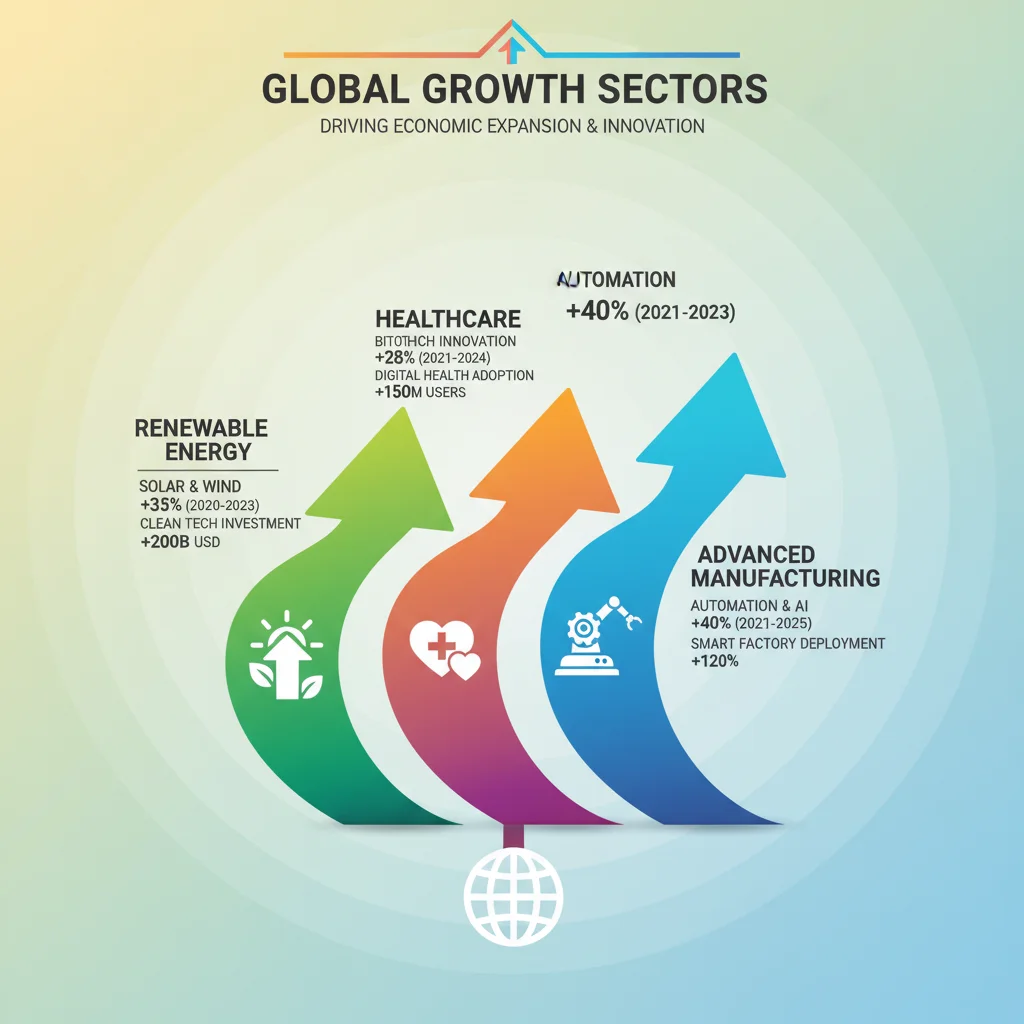
Healthcare and Biotechnology: Innovation for Well-being
The healthcare sector, perennially vital, is undergoing a profound transformation driven by technological innovation, an aging population, and a greater emphasis on personalized medicine. By 2026, healthcare and biotechnology will firmly establish themselves as leading US high-growth industries.
Biotechnology and Pharmaceuticals
Advances in genetic engineering, drug discovery, and personalized medicine are propelling the biotechnology sector forward. The development of novel therapies for previously untreatable diseases, along with innovations in diagnostics, creates a constant demand for researchers, scientists, clinical trial specialists, and bioinformaticians. The push for more efficient and targeted treatments will ensure sustained growth.
Digital Health and Telemedicine
The pandemic significantly accelerated the adoption of digital health solutions, including telemedicine, remote patient monitoring, and health-tracking wearables. This trend is here to stay. Professionals in health informatics, digital health product development, and telehealth services will find abundant opportunities. The convergence of healthcare and technology is creating new roles that require both medical knowledge and tech proficiency.
Geriatric Care and Home Healthcare
With a growing aging population, the demand for geriatric care services, including home healthcare, assisted living facilities, and specialized medical support for seniors, is expanding rapidly. This creates opportunities for nurses, physical therapists, occupational therapists, personal care aides, and healthcare administrators specializing in elder care. These roles are not just about medical treatment but also about improving the quality of life for seniors.
Preventative Care and Wellness
There’s a noticeable shift towards preventative care and holistic wellness. This includes nutrition, mental health services, fitness programs, and lifestyle coaching. Professionals in public health, dietetics, psychology, and wellness coaching will see increased demand as individuals and employers invest more in proactive health management.
The healthcare sector, while complex and highly regulated, offers immense stability and a sense of purpose. For those passionate about improving human well-being, these areas represent significant pathways for career advancement in the coming years.
Sustainable Solutions: Renewable Energy and Green Technologies
The global imperative to combat climate change and transition to sustainable practices positions renewable energy and green technologies among the most promising US high-growth industries for 2026 and beyond. Government incentives, falling technology costs, and increasing consumer awareness are driving this transformation.
Renewable Energy Development
The expansion of solar, wind, geothermal, and hydropower projects requires a vast workforce. This includes engineers (electrical, mechanical, civil), project managers, environmental scientists, policy analysts, and skilled technicians for installation and maintenance. The entire supply chain for renewable energy technologies, from manufacturing components to grid integration, is experiencing robust growth.
Energy Storage Solutions
As renewable energy sources become more prevalent, efficient energy storage solutions (e.g., advanced batteries) are crucial for grid stability. This area demands materials scientists, chemical engineers, and manufacturing specialists. Innovation in battery technology and other storage methods is a key enabler for a fully renewable energy future.
Sustainable Agriculture and Food Technology
Addressing food security and reducing environmental impact in agriculture is another growth area. This includes vertical farming, plant-based protein development, sustainable aquaculture, and precision agriculture technologies. Agronomists, food scientists, biotech researchers, and supply chain specialists with an environmental focus will find significant opportunities.
Circular Economy and Waste Management
The concept of a circular economy, which emphasizes reducing waste and maximizing resource utilization, is gaining traction. This involves recycling technologies, waste-to-energy solutions, and sustainable product design. Engineers, environmental consultants, and logistics experts focused on circular economy principles will be in demand.
The green economy is not just about environmental protection; it’s about creating new industries, jobs, and economic value. Professionals with a passion for sustainability and relevant technical skills will find themselves at the forefront of this transformative sector.
Advanced Manufacturing and Robotics
Far from being a declining sector, manufacturing in the U.S. is experiencing a renaissance, driven by automation, robotics, and advanced materials. This makes advanced manufacturing one of the prominent US high-growth industries.
Robotics and Automation Engineering
The deployment of robots and automated systems in factories and warehouses is accelerating. This creates a strong demand for robotics engineers, automation specialists, mechatronics engineers, and technicians who can design, implement, and maintain these complex systems. The focus is on increasing efficiency, precision, and safety in production processes.
Additive Manufacturing (3D Printing)
3D printing is revolutionizing product design and production across various industries, from aerospace and medical devices to consumer goods. Materials scientists, industrial designers, and manufacturing engineers with expertise in additive manufacturing processes will be highly sought after. This technology allows for rapid prototyping, customization, and efficient use of materials.
Smart Factories and IoT Integration
The concept of “smart factories,” where machines and systems are interconnected and communicate in real-time through the Internet of Things (IoT), is becoming a reality. This requires professionals skilled in industrial IoT, data analytics for manufacturing, and operational technology (OT) cybersecurity. The goal is to optimize production, predict maintenance needs, and reduce downtime.
Supply Chain Optimization
Global supply chain disruptions have highlighted the critical need for resilient and efficient logistics. Professionals in supply chain management, logistics analytics, and operations research will be essential for optimizing material flow, inventory management, and distribution networks, often leveraging AI and big data.
Advanced manufacturing offers a blend of traditional engineering principles with cutting-edge technology, providing exciting opportunities for those who thrive on innovation and problem-solving in a tangible environment.
Education and Training: Adapting to the Future Workforce
As industries evolve, so too must the skills of the workforce. The education and training sector, particularly in areas focused on upskilling and reskilling, will be a crucial US high-growth industry by 2026.
Online Learning and EdTech
The proliferation of online courses, virtual learning platforms, and educational technologies (EdTech) will continue. Instructional designers, e-learning developers, educational technologists, and content creators specializing in digital formats will be in high demand. The focus is on delivering accessible, engaging, and effective learning experiences.
Vocational and Skills-Based Training
With the rapid pace of technological change, there’s a growing need for vocational and skills-based training programs that equip individuals with specific, in-demand competencies. This includes certifications in IT, cybersecurity, renewable energy installation, advanced manufacturing techniques, and healthcare support roles. Educators and trainers who can deliver practical, job-oriented instruction will be invaluable.
Corporate Training and Development
Companies are increasingly investing in continuous learning for their employees to keep pace with industry changes. Learning and Development (L&D) specialists, corporate trainers, and talent development managers will play a critical role in designing and implementing programs that foster innovation, digital literacy, and leadership skills within organizations.
Personalized Learning Pathways
The future of education will likely involve more personalized learning pathways, leveraging AI to tailor educational content and pace to individual needs. Professionals in educational data analytics and AI-driven learning platform development will contribute to this evolution.
For those passionate about empowering others through knowledge, the education and training sector offers diverse roles that directly contribute to economic resilience and individual career success.
Essential Skills for Career Advancement in US High-Growth Industries
Regardless of the specific industry, certain skills will be universally valuable for career advancement in the coming years. Cultivating these competencies will make you a more attractive candidate and a more effective professional:
- Digital Literacy and Data Fluency: Understanding how to use digital tools and interpret data is fundamental across all sectors.
- Critical Thinking and Problem-Solving: The ability to analyze complex situations and devise effective solutions is always in demand.
- Adaptability and Lifelong Learning: Industries will continue to evolve; a willingness to learn new skills and adapt to change is crucial.
- Creativity and Innovation: Companies seek individuals who can think outside the box and contribute new ideas.
- Emotional Intelligence and Collaboration: Working effectively in teams and understanding interpersonal dynamics are vital for success.
- Cybersecurity Awareness: A basic understanding of cybersecurity principles is becoming essential for everyone in the digital age.
- Sustainability Mindset: An awareness of environmental, social, and governance (ESG) principles is increasingly valued.
Investing in these foundational skills, alongside specialized technical knowledge, will position you strongly for the opportunities arising from the US high-growth industries of 2026.
Navigating Your Career Path in 2026 and Beyond
The U.S. economic forecast for 2026 paints a picture of dynamic growth, particularly in sectors driven by technology, sustainability, and human well-being. For individuals, this is not a time for complacency but for proactive engagement and strategic planning.
Continuous Skill Development
Identify the skills gaps in your current profile relative to the demands of these high-growth industries. Leverage online courses, certifications, workshops, and advanced degrees to acquire new competencies. Platforms like Coursera, edX, and specialized bootcamps offer flexible learning opportunities.
Networking and Mentorship
Connect with professionals in your target industries. Attend industry conferences, join professional organizations, and seek out mentors who can provide guidance and insights into emerging trends and opportunities. A strong professional network can open doors to unforeseen career paths.
Internships and Project Experience
For those looking to transition into a new sector, internships, volunteer work, or personal projects can provide invaluable hands-on experience and demonstrate your commitment and capabilities to potential employers. Even within your current role, look for opportunities to take on projects that align with future growth areas.
Flexibility and Geographic Considerations
While many roles in high-growth industries offer remote work options, some sectors or specific roles may still benefit from proximity to industry hubs. Consider the geographic distribution of these industries and be open to relocation if it aligns with your career aspirations.
The future of work is not just about what jobs will exist, but what skills will be valued. By focusing on continuous learning, strategic networking, and developing a versatile skill set, you can ensure your career not only survives but thrives amidst the evolving economic landscape.