Skill-Building Platforms 2026: Cost-Effectiveness for US Professionals

The Latest 3 Months of Skill-Building Platforms: Comparing Cost-Effectiveness for US Professionals in 2026
In the dynamic landscape of 2026, continuous learning is not just an advantage; it’s a necessity. US professionals are constantly seeking avenues to upskill, reskill, and stay competitive in an ever-evolving job market. The proliferation of online skill-building platform cost options, however, presents a new challenge: identifying which platforms offer the most bang for their buck. This comprehensive analysis dives into the latest three months of data, scrutinizing various skill-building platforms to determine their true cost-effectiveness for the American workforce.
The decision to invest in a skill-building platform is multifaceted. It involves weighing subscription fees, course quality, certification value, community support, and the direct applicability of learned skills to career advancement. Our focus here is on understanding the nuanced relationship between the financial investment and the tangible returns, helping professionals make informed choices that align with their career goals and budget constraints. We’ll explore how different pricing models impact overall value and highlight platforms that truly stand out in delivering high-quality education at a reasonable skill-building platform cost.
Understanding the Evolving Landscape of Skill-Building Platforms in 2026
The past three months of 2026 have witnessed significant shifts in the online learning sphere. New platforms have emerged, existing ones have refined their offerings, and the demand for specialized skills has intensified. Professionals are no longer content with generic courses; they seek highly targeted, industry-relevant content that can be immediately applied. This heightened expectation places pressure on platforms to deliver not just content, but demonstrable career outcomes. The concept of skill-building platform cost now extends beyond mere subscription fees to encompass the opportunity cost of time and the potential return on investment in terms of salary increase or career progression.
Several key trends have shaped the current environment. Firstly, the rise of AI-powered personalized learning paths has become more prevalent. Platforms are leveraging artificial intelligence to tailor content, recommend courses, and even provide real-time feedback, making the learning experience more efficient and effective. This personalization, while often adding to the skill-building platform cost, can significantly enhance learning outcomes. Secondly, micro-credentials and digital badges are gaining traction, offering professionals a way to showcase specific competencies without committing to a full degree. These smaller, stackable qualifications are often more affordable and quicker to obtain, making them attractive for those looking to quickly acquire new skills.
Thirdly, the integration of practical projects and hands-on experience is becoming a standard. Employers value practical application over theoretical knowledge, and the best skill-building platforms are responding by incorporating capstone projects, coding challenges, and simulated work environments. This focus on experiential learning directly impacts the perceived value and, consequently, the willingness of professionals to pay a certain skill-building platform cost. Finally, the emphasis on community and networking within these platforms is growing. Learning from peers, collaborating on projects, and connecting with industry mentors adds immense value beyond the formal curriculum, fostering a holistic professional development experience.
Methodology for Comparing Cost-Effectiveness
To accurately compare the cost-effectiveness of various skill-building platforms, we employed a rigorous methodology over the last three months. Our analysis focused on several key metrics:
- Subscription Models: We examined monthly, annual, and per-course pricing structures. Some platforms offer tiered subscriptions, while others operate on a pay-as-you-go basis. Understanding these models is crucial for calculating the true skill-building platform cost over time.
- Content Quality and Breadth: This involved assessing the relevance, depth, and currency of course materials, instructor expertise, and the range of topics covered. A platform with a higher skill-building platform cost might be justified if it offers unparalleled content quality.
- Certification and Accreditation: We evaluated whether platforms offer industry-recognized certifications, university-backed degrees, or credible micro-credentials. The value of these credentials directly impacts career progression and, therefore, the return on investment.
- Interactive Features and Support: This included live sessions, peer communities, one-on-one mentoring, and customer support. Platforms offering robust interactive features often provide a richer learning experience, potentially justifying a higher skill-building platform cost.
- Career Services and Job Placement: Some platforms go beyond education, offering resume reviews, interview preparation, and even direct job placement assistance. These services can significantly enhance the value proposition.
- User Reviews and Testimonials: We incorporated feedback from actual users to gauge satisfaction levels and perceived value, providing a real-world perspective on the skill-building platform cost versus benefit.
By synthesizing these factors, we developed a comprehensive framework to assess not just the monetary skill-building platform cost, but the overall value delivered to US professionals. Our aim was to move beyond simple price comparisons and delve into the tangible and intangible benefits each platform offers.
Spotlight on Leading Skill-Building Platforms (Q1 2026 Review)
Let’s delve into specific platforms that have shown notable performance or shifts in their offerings during the first quarter of 2026, specifically concerning their skill-building platform cost and value proposition.
Platform A: The Industry Standard Refined
Platform A continues to be a dominant player, known for its extensive catalog of courses from top universities and industry leaders. Over the last three months, it has further expanded its specialization programs, offering more in-depth learning paths with capstone projects. The annual subscription, while on the higher end of the skill-building platform cost spectrum, provides unlimited access to a vast library, including many professional certificates. Its value lies in the credibility of its content and the strong career outcomes reported by its alumni. For professionals seeking university-level education and recognized credentials, the investment remains highly justified. Recent updates include enhanced AI-driven progress tracking and more integrated peer review systems, further solidifying its position as a premium option.
Platform B: The Agile Innovator
Platform B has made significant strides in offering highly practical, project-based learning experiences, particularly in tech and creative fields. Its pricing model, which allows for individual course purchases or a more affordable monthly subscription for specific learning tracks, makes its skill-building platform cost highly flexible. In Q1 2026, Platform B introduced several new immersive bootcamps, which, despite a higher upfront skill-building platform cost, promise direct pathways to employment. User reviews consistently highlight the hands-on nature of the courses and the strong community support. This platform is ideal for professionals who prefer learning by doing and are looking for immediate application of skills.
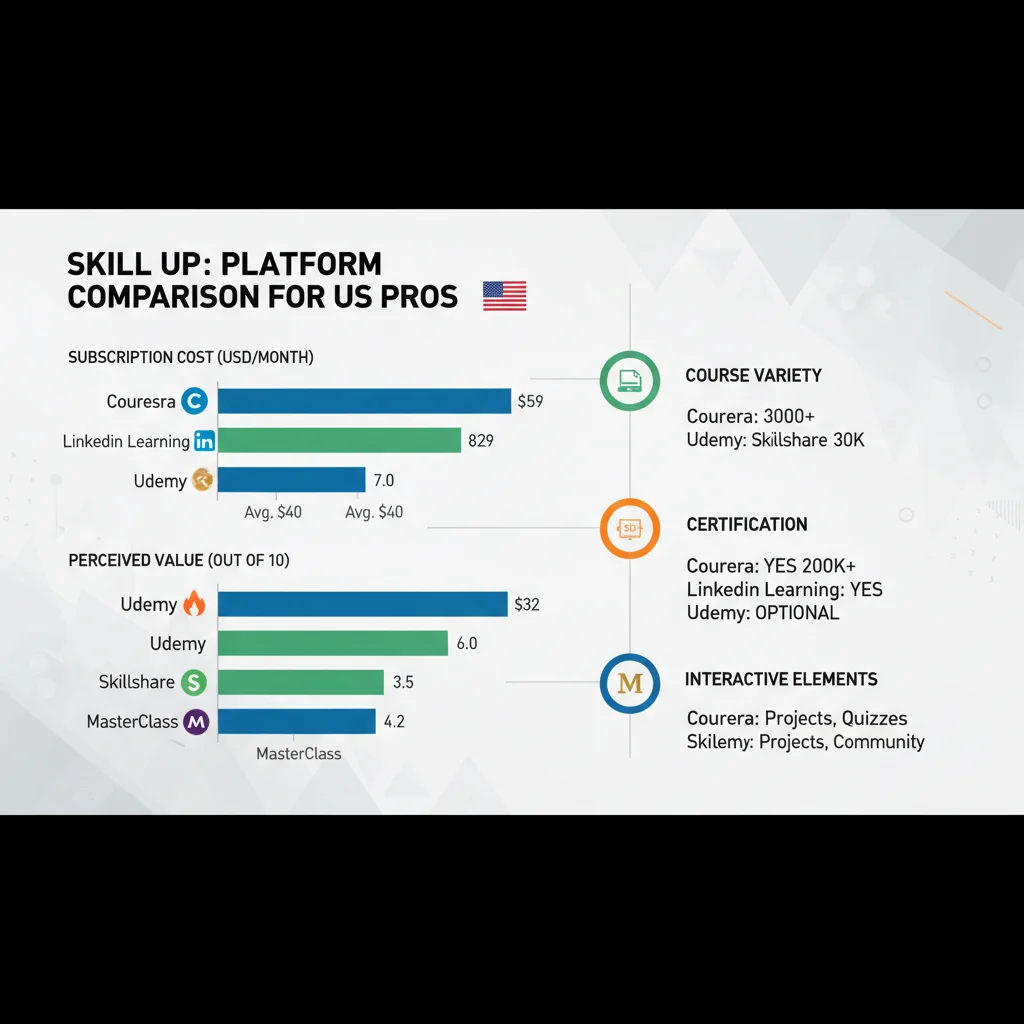
Platform C: The Budget-Friendly Powerhouse
For professionals mindful of their skill-building platform cost, Platform C continues to offer an incredible value proposition. With a very competitive annual subscription, it provides access to thousands of courses across a wide array of subjects. While it might not boast as many university-backed certifications as Platform A, its strength lies in its sheer volume of practical, instructor-led content. Recent additions include more courses on emerging technologies and soft skills, catering to a broader professional audience. The platform has also improved its mobile learning experience, making it easier for busy professionals to learn on the go. Its cost-effectiveness is particularly appealing to those looking to explore multiple domains or acquire foundational skills without a significant financial outlay.
Platform D: The Niche Specialist
Platform D, while having a higher per-course skill-building platform cost, excels in highly specialized, in-demand areas like advanced data science, cybersecurity, and specific programming languages. It partners directly with leading tech companies to develop its curriculum, ensuring industry relevance. The value here is in the depth of expertise and the direct career opportunities that often arise from completing their programs. While the overall skill-building platform cost can be substantial for multiple courses, the investment is often recouped quickly through higher earning potential. In the last three months, Platform D has rolled out several new certifications endorsed by major tech firms, further solidifying its niche appeal.
Factors Influencing Skill-Building Platform Cost vs. Value
When evaluating the skill-building platform cost against its perceived value, several factors come into play, each holding different weight for individual professionals.
Personalized Learning Paths
Platforms that offer personalized learning paths, often powered by AI, can justify a higher skill-building platform cost. The ability to adapt content to a learner’s pace, prior knowledge, and career goals significantly enhances efficiency and engagement. This tailored approach means less wasted time on irrelevant topics and a more direct route to skill acquisition, ultimately boosting the return on investment.
Instructor Expertise and Industry Relevance
The caliber of instructors and the relevance of the curriculum to current industry demands are paramount. Platforms featuring instructors who are active industry professionals or renowned academics often command a higher skill-building platform cost, but they also provide invaluable insights and networking opportunities. The direct applicability of learned skills to real-world scenarios is a critical component of value.
Community and Networking Opportunities
Beyond the formal lessons, the community aspect of a skill-building platform can add immense value. Forums, discussion groups, and opportunities to connect with peers and mentors can foster a supportive learning environment and open doors to new career prospects. A vibrant community can transform a higher skill-building platform cost into a worthwhile investment in one’s professional network.
Certifications and Employer Recognition
The credibility of certifications offered is a major determinant of value. Certifications from reputable institutions or those recognized by industry bodies carry significant weight with employers. While these often contribute to a higher skill-building platform cost, they can directly lead to promotions, salary increases, or new job opportunities, making the financial outlay a strategic career move.
Flexibility and Accessibility
For busy US professionals, the flexibility of a platform is crucial. Features like offline access, mobile compatibility, and self-paced learning options contribute to the overall convenience and accessibility. A platform that allows seamless integration into a professional’s demanding schedule, even if it has a slightly higher skill-building platform cost, might offer greater overall value due to its practicality.
Maximizing Value: Strategies for US Professionals
Given the diverse offerings and varying skill-building platform cost structures, how can US professionals ensure they are maximizing their investment? Here are some strategies:
- Define Your Goals Clearly: Before subscribing to any platform, clearly articulate what skills you need to acquire and why. Is it for a promotion, a career change, or simply personal growth? Your goals will dictate which platform offers the most relevant content and the best return on your skill-building platform cost.
- Utilize Free Trials and Introductory Offers: Many platforms offer free trials or introductory modules. Take advantage of these to test the waters, assess content quality, and experience the user interface before committing to a full subscription or significant skill-building platform cost.
- Leverage Employer-Sponsored Programs: Many companies offer tuition reimbursement or access to corporate learning platforms. Check if your employer provides such benefits, as this can significantly reduce or even eliminate your personal skill-building platform cost.
- Focus on Specializations and Certifications: Instead of aimlessly browsing, prioritize platforms that offer structured specializations or industry-recognized certifications in your chosen field. These targeted programs often provide a clearer path to career advancement, justifying their skill-building platform cost.
- Engage with the Community: Don’t just consume content; actively participate in forums, discussions, and peer review sessions. Networking and collaborative learning can enhance your understanding and open up new opportunities, adding intangible value beyond the explicit skill-building platform cost.
- Track Your Progress and Apply Learning: Regularly review your learning progress and actively seek opportunities to apply newly acquired skills in your current role or personal projects. This reinforces learning and demonstrates the tangible return on your skill-building platform cost.
- Consider Annual Subscriptions for Long-Term Value: While monthly subscriptions offer flexibility, annual plans often come with significant discounts, reducing the overall skill-building platform cost if you plan to use the platform consistently over a longer period.

The Future of Skill-Building Platform Cost and Value
Looking beyond the current three-month analysis, the trajectory for skill-building platforms in 2026 and beyond suggests continued innovation and increasing personalization. We anticipate a greater emphasis on immersive learning experiences, including virtual reality (VR) and augmented reality (AR) integrations, which could impact the skill-building platform cost but also dramatically enhance learning effectiveness. The trend towards hyper-specialization will likely continue, with platforms offering highly specific, micro-credentialed courses designed to fill immediate industry gaps.
Furthermore, the integration of AI will deepen, moving from personalized recommendations to AI-powered tutors and mentors that can provide real-time feedback and support. This advanced level of interaction could justify a premium skill-building platform cost for those seeking highly individualized guidance. We also expect to see more robust partnerships between learning platforms and employers, leading to more direct talent pipelines and industry-specific training programs. Such collaborations could potentially reduce the direct skill-building platform cost for individuals if employers subsidize or fully cover these expenses.
The concept of ‘learn-to-earn’ models might also gain traction, where successful completion of courses or projects could unlock tangible benefits, further blurring the lines between education and employment. As the demand for upskilling intensifies, platforms will be under constant pressure to demonstrate clear ROI, making transparency around skill-building platform cost and career outcomes more critical than ever.
Conclusion: Making an Informed Investment in Your Future
The past three months of 2026 have underscored the critical importance of strategic investment in skill development for US professionals. Understanding the true skill-building platform cost goes far beyond the sticker price; it encompasses the quality of education, the relevance of certifications, the strength of the community, and the tangible impact on one’s career trajectory. While platforms like A and D offer premium experiences with higher skill-building platform cost, their credibility and career outcomes often justify the investment. Conversely, platforms like C demonstrate that significant value can be obtained at a more accessible price point.
Ultimately, the most cost-effective skill-building platform is the one that best aligns with your individual career goals, learning style, and budget. By carefully evaluating the factors discussed in this analysis, utilizing available trials, and strategically planning your learning journey, US professionals can make informed decisions that maximize their return on investment in continuous education. In an economy where skills are currency, choosing the right platform at the right skill-building platform cost is a powerful step towards securing a prosperous future.