Biotechnology Breakthroughs 2026: 4 Industry Insights Impacting U.S. Healthcare
Biotechnology Breakthroughs 2026: 4 Industry Insights Impacting U.S. Healthcare
The landscape of healthcare is in a perpetual state of evolution, driven by relentless innovation in science and technology. As we approach 2026, the field of biotechnology stands at the precipice of delivering transformative breakthroughs that promise to redefine diagnosis, treatment, and prevention of diseases. These advancements are not merely incremental improvements; they represent fundamental shifts in our approach to health and wellness, with profound implications for the U.S. healthcare system and global health alike. Understanding these biotechnology healthcare impact points is crucial for patients, practitioners, policymakers, and investors.
The promise of biotechnology lies in its ability to harness biological processes for human benefit, from developing new drugs and therapies to creating diagnostic tools that offer unprecedented precision. The next few years are expected to witness the maturation of several groundbreaking technologies, transitioning from the lab to mainstream clinical application. This article will delve into four key biotechnology breakthroughs anticipated by 2026, exploring their potential to revolutionize U.S. healthcare and outlining the challenges and opportunities they present.
1. The Maturation and Widespread Application of Gene Editing Technologies
Gene editing, particularly technologies like CRISPR-Cas9, has been a beacon of hope for treating genetic disorders. While the foundational science has been established for years, 2026 is projected to be a period where these technologies move beyond rare disease treatment and begin to see broader application, significantly impacting the U.S. healthcare system. The biotechnology healthcare impact of gene editing is multifaceted, promising cures for previously incurable conditions.
From Lab to Clinic: Expanding Therapeutic Horizons
Initially, gene editing focused on single-gene disorders such as sickle cell anemia, cystic fibrosis, and Huntington’s disease. By 2026, we can expect to see an expansion into more complex conditions, including certain types of cancer, HIV, and even some neurodegenerative diseases. Clinical trials are rapidly progressing, demonstrating both the efficacy and safety of these interventions. For instance, in oncology, gene editing is being explored to engineer T-cells for CAR-T therapy, making them more potent and specific in targeting cancer cells. The ability to precisely alter DNA sequences opens up avenues for not just treating symptoms but addressing the root cause of genetic ailments.
Ethical Considerations and Regulatory Frameworks
As gene editing becomes more prevalent, ethical considerations and regulatory frameworks will continue to evolve. The debate around germline editing versus somatic cell editing, and the potential for ‘designer babies,’ remains a significant societal discussion. By 2026, it is anticipated that regulatory bodies like the FDA will have established clearer guidelines and approval pathways for gene-edited therapies, balancing innovation with safety and ethical responsibility. This will be crucial for public acceptance and widespread adoption, shaping the overall biotechnology healthcare impact.
Economic Implications and Accessibility
The cost of gene therapies has been a major barrier to accessibility. However, as research and development mature, and manufacturing processes become more efficient, there is hope that the cost will decrease, making these life-changing treatments available to a larger population. Innovative payment models, such as outcomes-based agreements, are also being explored to mitigate the financial burden on healthcare systems and patients. The long-term economic benefit of curing chronic diseases could outweigh the initial high costs, transforming healthcare economics.
2. Personalized Medicine: A Paradigm Shift Driven by Genomics and Big Data
Personalized medicine, or precision medicine, is another area where biotechnology is poised to make a monumental biotechnology healthcare impact by 2026. This approach tailors medical treatment to the individual characteristics of each patient, leveraging their unique genetic makeup, lifestyle, and environmental factors. Advancements in genomics and the ability to process vast amounts of health data are the primary drivers of this revolution.
Genomic Sequencing as a Standard Practice
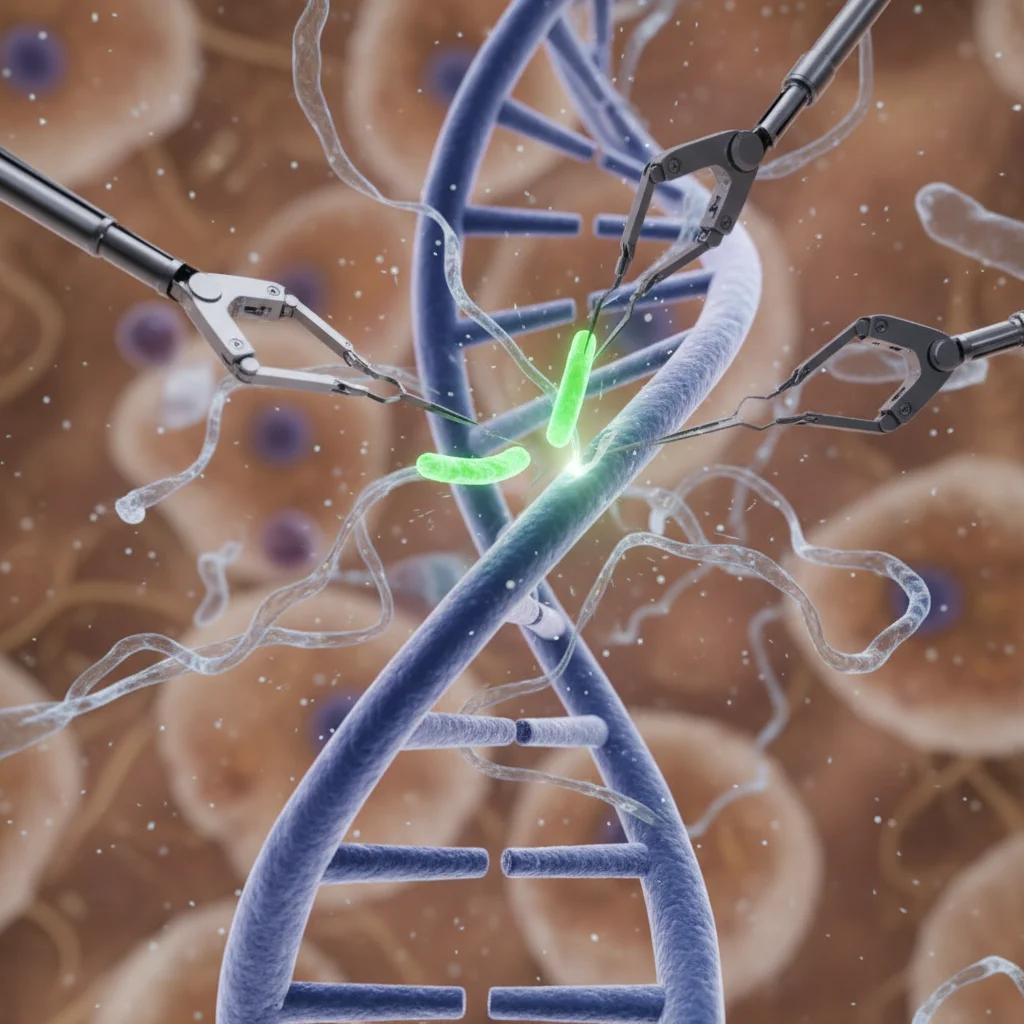
By 2026, it is conceivable that genomic sequencing will become a more routine part of clinical care, moving beyond specialized research settings. Decreasing costs and faster turnaround times for sequencing will enable clinicians to use genetic information to guide treatment decisions across a wider range of conditions. This includes pharmacogenomics, where an individual’s genetic profile is used to predict their response to specific drugs, thereby optimizing dosages and minimizing adverse reactions. This level of personalization will lead to more effective treatments and fewer side effects, a significant biotechnology healthcare impact.
AI and Machine Learning in Treatment Personalization
The sheer volume of genomic and clinical data generated by personalized medicine necessitates sophisticated analytical tools. Artificial intelligence (AI) and machine learning (ML) algorithms are becoming indispensable for identifying patterns, predicting disease risk, and recommending individualized treatment strategies. These technologies can integrate data from various sources, including electronic health records, wearable devices, and genomic databases, to create a comprehensive patient profile. This holistic view enables healthcare providers to make more informed decisions, leading to better patient outcomes and a more efficient healthcare system.
Preventive Medicine and Early Intervention
Personalized medicine also holds immense promise for preventive care. By understanding an individual’s genetic predispositions to certain diseases, healthcare professionals can implement targeted screening programs and lifestyle interventions much earlier. For example, individuals with a higher genetic risk for certain cancers could undergo more frequent screenings, while those predisposed to cardiovascular disease could receive personalized dietary and exercise recommendations. This proactive approach to health management could significantly reduce the incidence and severity of chronic diseases, easing the burden on the U.S. healthcare system.
3. AI-Driven Drug Discovery and Development: Accelerating Innovation
The traditional drug discovery process is notoriously long, expensive, and often fraught with failure. However, the integration of artificial intelligence and machine learning is rapidly transforming this landscape, promising to accelerate the development of new therapeutics and create a substantial biotechnology healthcare impact by 2026.
Revolutionizing Target Identification and Compound Screening
AI algorithms can analyze vast datasets of biological information, including genomic, proteomic, and clinical data, to identify novel drug targets with unprecedented speed and accuracy. This capability significantly shortens the initial discovery phase. Furthermore, AI can simulate molecular interactions and predict the efficacy and toxicity of potential drug compounds, dramatically reducing the need for extensive wet-lab experimentation. This in silico approach allows researchers to virtually screen billions of compounds, vastly improving the chances of identifying promising candidates.
Optimizing Clinical Trials and Reducing Time to Market
Beyond discovery, AI is also making inroads into optimizing clinical trial design and execution. Machine learning models can identify ideal patient populations for trials, predict patient response to treatment, and even monitor patient safety more effectively. This leads to more efficient trials, reduced failure rates, and ultimately, a faster path for new drugs to reach patients. The ability to bring effective treatments to market more quickly will have a profound biotechnology healthcare impact, particularly for diseases with high unmet medical needs.
The Rise of ‘In Silico’ Drug Development
The concept of ‘in silico’ drug development, where much of the early-stage research and testing is conducted computationally, is gaining traction. This not only saves time and resources but also allows for the exploration of chemical spaces that would be impossible to navigate through traditional methods. By 2026, we can expect to see several AI-discovered and developed drugs entering advanced stages of clinical trials, or even receiving regulatory approval, marking a new era in pharmaceutical innovation.
4. Advanced Regenerative Medicine and Tissue Engineering
Regenerative medicine, a field focused on repairing, replacing, or regenerating damaged or diseased cells, tissues, and organs, is poised for significant breakthroughs by 2026. This area of biotechnology offers revolutionary solutions for chronic diseases and injuries, promising a substantial biotechnology healthcare impact on patient quality of life and healthcare costs.

Stem Cell Therapies: From Lab to Broad Clinical Use
While stem cell research has been ongoing for decades, by 2026, we anticipate a broader application of various stem cell therapies. This includes mesenchymal stem cells (MSCs) for treating inflammatory conditions and autoimmune diseases, and induced pluripotent stem cells (iPSCs) for generating patient-specific tissues and organs. The ability to grow functional tissues and organs in the lab, or stimulate the body’s own regenerative capabilities, represents a monumental leap forward from current treatments that often only manage symptoms.
3D Bioprinting and Organoids
The advent of 3D bioprinting technology is revolutionizing tissue engineering. This technology allows for the precise layering of living cells and biomaterials to create complex tissues and even rudimentary organs. By 2026, 3D bioprinted tissues are expected to be more widely used for drug testing, reducing the reliance on animal models, and potentially for repairing or replacing damaged tissues in patients. Organoids – miniature, simplified versions of organs grown in vitro – are also becoming powerful tools for disease modeling and drug discovery, offering insights into human physiology and pathology that were previously unattainable.
Addressing Organ Shortages and Chronic Diseases
One of the most profound biotechnology healthcare impact areas of regenerative medicine is its potential to address the critical shortage of organs for transplantation. Imagine a future where damaged organs can be repaired or replaced with bioengineered alternatives, eliminating the need for immunosuppressive drugs and reducing the burden of chronic diseases like heart failure, kidney disease, and liver failure. While a fully functional bioengineered organ for transplantation may still be a few years beyond 2026, significant progress in tissue repair and partial organ regeneration is highly anticipated.
Challenges and Opportunities for U.S. Healthcare
While these biotechnology breakthroughs promise a healthier future, their integration into the U.S. healthcare system comes with its own set of challenges and opportunities. The biotechnology healthcare impact will be felt across all stakeholders.
Regulatory Hurdles and Approval Processes
The rapid pace of innovation often outstrips the speed of regulatory adaptation. Ensuring the safety and efficacy of novel gene therapies, AI-driven diagnostics, and regenerative treatments requires robust and agile regulatory frameworks. The FDA will continue to play a pivotal role in navigating these complexities, balancing the need for speed with the imperative of patient safety. Streamlined approval processes that maintain high standards will be critical for harnessing the full potential of these breakthroughs.
Healthcare Infrastructure and Workforce Development
Implementing these advanced biotechnologies will demand significant upgrades to healthcare infrastructure and a highly skilled workforce. Hospitals and clinics will need to invest in new equipment, data management systems, and specialized personnel. Training programs for doctors, nurses, and technicians will be essential to ensure they are proficient in administering gene therapies, interpreting genomic data, and utilizing AI-powered tools. The biotechnology healthcare impact extends to the educational and professional development sectors.
Equitable Access and Affordability
A major challenge will be ensuring equitable access to these cutting-edge treatments. The high costs associated with many biotechnological innovations could exacerbate existing health disparities if not addressed proactively. Policymakers, pharmaceutical companies, and healthcare providers must collaborate to develop sustainable pricing models, insurance coverage strategies, and public health initiatives that ensure these benefits are available to all, regardless of socioeconomic status. This is a critical aspect of maximizing the positive biotechnology healthcare impact.
Data Security and Privacy
The increased reliance on genomic data, electronic health records, and AI platforms raises significant concerns about data security and patient privacy. Robust cybersecurity measures and stringent data governance policies will be paramount to protect sensitive health information from breaches and misuse. Building public trust in these technologies will hinge on demonstrating a steadfast commitment to safeguarding patient data.
The Future of Healthcare: A Transformative Era
By 2026, the cumulative biotechnology healthcare impact will be undeniable. We are moving towards a healthcare system that is more predictive, preventive, personalized, and participatory. Patients will have access to treatments that can cure previously untreatable diseases, and healthcare providers will have tools that offer unprecedented insights into individual health. The convergence of genomics, AI, and regenerative medicine will fundamentally alter how we perceive and manage health.
The next few years will be a pivotal period for biotechnology. The breakthroughs discussed here are not just scientific curiosities; they are foundational elements of a future where diseases are detected earlier, treatments are more effective, and the quality of life for millions is significantly improved. Navigating the ethical, regulatory, and economic complexities will be crucial, but the potential rewards are immense. The U.S. healthcare system stands on the brink of a new era, powered by the relentless innovation of biotechnology.
Embracing the Future: A Call to Action
To fully realize the positive biotechnology healthcare impact, it will require a concerted effort from all stakeholders. Governments need to foster supportive regulatory environments and invest in scientific research. Industry must continue to innovate responsibly and work towards making therapies affordable and accessible. Healthcare providers need to embrace new technologies and adapt their practices. And individuals must engage with these advancements, understanding their potential and advocating for ethical and equitable implementation.
The journey towards 2026 is not just about technological advancement; it’s about reimagining health. It’s about harnessing the power of biology and computation to create a future where disease is no longer an insurmountable challenge, but a solvable problem. The biotechnology healthcare impact will resonate for generations to come, shaping a healthier, more resilient society.
In conclusion, the four key biotechnology breakthroughs – widespread gene editing, personalized medicine driven by genomics and AI, AI-accelerated drug discovery, and advanced regenerative medicine – are set to dramatically reshape U.S. healthcare by 2026. These innovations offer unprecedented opportunities to combat disease, improve patient outcomes, and enhance overall public health. While challenges remain, the collective commitment to scientific progress and ethical implementation will ensure that these advancements deliver on their promise of a healthier future.