Mastering Digital Marketing Certifications 2026: Your ROI-Driven Guide
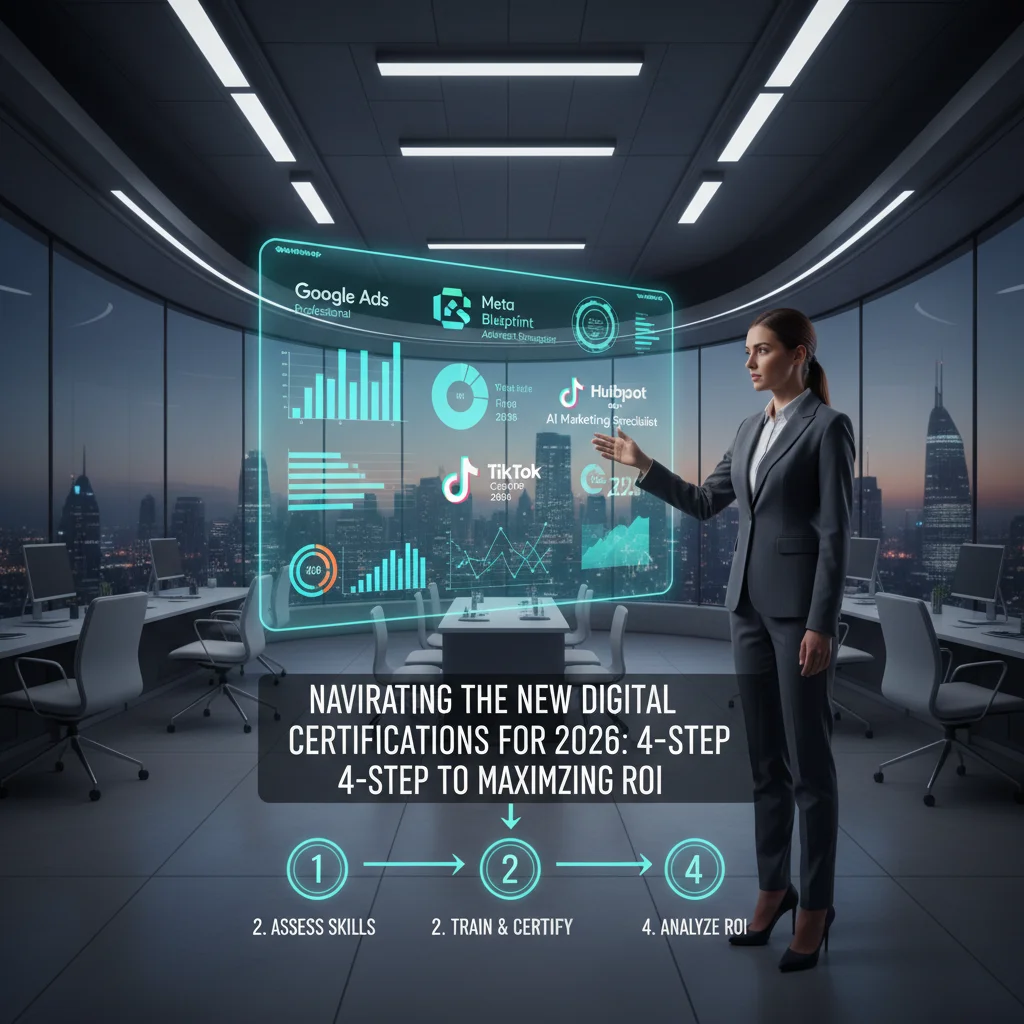
The digital marketing landscape is a perpetual motion machine, constantly evolving with new technologies, algorithms, and consumer behaviors. To stay relevant, competitive, and truly effective, digital marketers must commit to continuous learning. As we approach 2026, the demand for specialized skills is intensifying, making digital marketing certifications 2026 not just beneficial, but essential for career growth and maximizing return on investment (ROI). This comprehensive guide will navigate you through the most impactful certifications, help you understand their ROI, and provide a strategic 4-step plan to choose and leverage them effectively.
The Evolving Digital Marketing Landscape: Why Certifications Matter More Than Ever
Before diving into specific digital marketing certifications 2026, it’s crucial to understand the forces shaping the industry. Artificial Intelligence (AI) and Machine Learning (ML) are no longer futuristic concepts; they are embedded in everything from content creation and personalization to ad targeting and analytics. Data privacy regulations continue to tighten, demanding a deeper understanding of ethical data handling. The rise of new platforms, the dominance of video content, and the ever-present need for authentic brand storytelling mean that a marketer’s skill set must be broad yet specialized.
In this dynamic environment, certifications serve multiple critical purposes:
- Validation of Skills: They provide official recognition of your expertise in a specific area, offering credibility to potential employers or clients.
- Structured Learning: Certifications often offer structured curricula that cover essential topics, ensuring you acquire a foundational and advanced understanding.
- Staying Current: Reputable certification programs are regularly updated to reflect the latest industry trends and best practices, keeping your knowledge cutting-edge.
- Career Advancement: Holding relevant certifications can significantly boost your resume, open doors to higher-paying roles, and demonstrate a commitment to professional development.
- Increased Earning Potential: Studies consistently show that certified professionals often command higher salaries than their uncertified counterparts.
- Networking Opportunities: Many certification programs connect you with a community of like-minded professionals, fostering valuable networking and collaboration.
Forecasting the Key Trends for Digital Marketing in 2026
To choose the right digital marketing certifications 2026, we must anticipate the dominant trends. Here’s what’s on the horizon:
- Hyper-Personalization at Scale: AI-driven tools will enable marketers to deliver incredibly personalized experiences across touchpoints, demanding expertise in data analysis, segmentation, and automation.
- Conversational AI and Chatbots: The integration of advanced chatbots and conversational AI in customer service and sales funnels will continue to grow, requiring skills in natural language processing (NLP) and user experience (UX) design for these interfaces.
- Privacy-First Marketing: With the deprecation of third-party cookies and stricter data regulations, a deep understanding of first-party data strategies, consent management, and privacy-compliant advertising will be paramount.
- Video Content Dominance: Short-form video, live streaming, and interactive video will remain kings of engagement, necessitating skills in video production, editing, distribution, and performance analysis.
- AI for Content Creation and Optimization: While AI won’t replace human creativity, it will become an indispensable tool for generating content ideas, drafting copy, optimizing for SEO, and personalizing messages. Certifications in AI prompting and ethical AI usage will be valuable.
- Sustainable and Ethical Marketing: Consumers are increasingly conscious of brand values. Marketers will need to integrate sustainability and ethical practices into their strategies and messaging, requiring a nuanced understanding of corporate social responsibility (CSR) and transparent communication.
- Web3 and Metaverse Exploration: While still nascent, understanding the fundamentals of Web3, NFTs, and potential metaverse marketing opportunities could provide a significant early-mover advantage.
Step 1: Assess Your Current Skills and Career Goals
Before you invest time and money into any digital marketing certifications 2026, a thorough self-assessment is essential. This isn’t just about identifying gaps; it’s about aligning your learning with your long-term career aspirations.
Identify Your Strengths and Weaknesses
Take stock of your existing knowledge and experience. What areas of digital marketing do you excel in? Where do you feel less confident? Consider:
- SEO (Search Engine Optimization): Technical SEO, on-page SEO, off-page SEO, local SEO, voice search optimization.
- SEM (Search Engine Marketing)/PPC (Pay-Per-Click): Google Ads, Bing Ads, social media advertising, budget management, bid strategies.
- Content Marketing: Content strategy, copywriting, blogging, video scriptwriting, content promotion, content analytics.
- Social Media Marketing: Platform-specific strategies (Facebook, Instagram, LinkedIn, TikTok, X), community management, paid social, influencer marketing.
- Email Marketing: List building, automation, segmentation, campaign creation, deliverability, analytics.
- Analytics and Data Science: Google Analytics 4 (GA4), data visualization, reporting, A/B testing, marketing attribution.
- Marketing Automation: CRM integration, lead nurturing, workflow design.
- Web Design/Development Basics: Understanding UX/UI principles, basic HTML/CSS for landing page optimization.
- AI/ML in Marketing: Prompt engineering, understanding AI tools, ethical considerations.
Be honest with yourself. A SWOT analysis (Strengths, Weaknesses, Opportunities, Threats) can be a helpful framework here.
Define Your Career Path for 2026 and Beyond
Where do you see yourself in the next 3-5 years? Are you aiming for a specialized role (e.g., SEO Specialist, Social Media Manager, Data Analyst), a managerial position (e.g., Digital Marketing Manager, Head of Marketing), or perhaps starting your own agency? Your career goals will dictate the type and level of digital marketing certifications 2026 that will be most beneficial.
- Specialist Roles: Focus on deep-dive certifications in your chosen niche.
- Managerial Roles: Consider certifications that cover broader strategic aspects, team leadership, and cross-functional integration.
- Entrepreneurial Ventures: A mix of strategic and tactical certifications, alongside business development and project management skills, will be valuable.
Step 2: Research Top Digital Marketing Certifications for 2026
With your self-assessment complete, it’s time to explore the landscape of digital marketing certifications 2026. Prioritize those from reputable institutions, industry leaders, and platforms that are widely recognized and respected.
Industry-Recognized Certifications
These are often offered by the platforms themselves or by well-established educational bodies:
- Google Certifications:
- Google Ads Certifications: Essential for anyone running paid search or display campaigns. Covers Search, Display, Video, Shopping Ads, and Measurement.
- Google Analytics Individual Qualification (GAIQ): Crucial for understanding website performance, user behavior, and campaign effectiveness, especially with the transition to GA4.
- Google Skillshop (various courses): Offers certifications in Google My Business, YouTube Content Strategy, and more.
- Meta Blueprint Certifications (Facebook & Instagram):
- Meta Certified Digital Marketing Associate/Professional: Validates expertise in managing campaigns across Meta’s platforms, crucial for social media advertisers.
- Meta Certified Creative Strategy Professional: Focuses on developing effective ad creatives.
- HubSpot Academy Certifications:
- Inbound Marketing Certification: A foundational certification covering the entire inbound methodology.
- Content Marketing Certification: Focuses on creating and distributing valuable content.
- Email Marketing Certification: Essential for building and executing effective email campaigns.
- Social Media Marketing Certification: Covers strategy, engagement, and measurement on social platforms.
- SEO Certification: Deep dive into search engine optimization techniques.
- Semrush Academy Certifications:
- Offers a wide range of free certifications in SEO, content marketing, PPC, social media, and competitive research, often tied to their powerful tools.
- Hootsuite Academy Certifications:
- Social Media Marketing Certification: Focuses on social media strategy, management, and analytics.
- Advanced Social Media Strategy Certification: For those looking to master more complex social media tactics.
Specialized and Emerging Certifications
As trends evolve, so do the specialized certifications. Look out for:
- AI in Marketing Certifications: Programs from institutions like the Digital Marketing Institute (DMI), Coursera, or edX focusing on AI tools for content, analytics, and personalization.
- Data Science for Marketing Certifications: Courses that teach advanced analytics, predictive modeling, and data visualization relevant to marketing decisions.
- Privacy and Data Ethics Certifications: Such as those offered by the IAPP (International Association of Privacy Professionals) or specialized modules within digital marketing programs.
- Advanced SEO Certifications: Beyond the basics, focusing on technical SEO, international SEO, or schema markup.
- Conversion Rate Optimization (CRO) Certifications: Programs from institutions like CXL or Optimizely that teach methodologies for improving website and landing page performance.

Evaluating Certification Programs
When researching digital marketing certifications 2026, consider these factors:
- Reputation and Recognition: Is it widely respected in the industry?
- Curriculum Relevance: Does it cover the latest trends and essential skills for 2026?
- Instructor Expertise: Are the instructors industry practitioners or academics with real-world experience?
- Practical Application: Does the program include hands-on projects, case studies, or simulations?
- Cost vs. Value: Evaluate the financial investment against the potential career benefits and earning potential.
- Time Commitment: Can you realistically dedicate the required time to complete the program?
- Renewal Requirements: Do you need to re-certify periodically to keep your credentials current?
Step 3: Strategize Your Certification Pathway for Maximum ROI
Simply collecting certifications won’t guarantee success. The key is to strategize your pathway to maximize your ROI. This involves a phased approach, focusing on foundational knowledge first, then specialization.
Phase 1: Build a Strong Foundation (Core Certifications)
Start with certifications that provide a broad understanding of digital marketing principles and essential tools. These are your non-negotiables for 2026:
- Google Analytics Individual Qualification (GAIQ): Understanding data is fundamental to all marketing efforts. GA4 proficiency is critical.
- HubSpot Inbound Marketing Certification: Provides a holistic view of attracting, engaging, and delighting customers.
- Google Ads Search Certification: Even if you don’t specialize in PPC, understanding how paid search works is vital.
- Meta Certified Digital Marketing Associate: For foundational social media advertising knowledge.
These foundational digital marketing certifications 2026 will equip you with a robust understanding of the ecosystem, regardless of your ultimate specialization.
Phase 2: Specialize and Deepen Expertise
Once you have a strong foundation, choose certifications that align with your identified career goals and the emerging trends for 2026. This is where you become an expert in a specific domain.
- If you aim for SEO expertise: Consider advanced SEO certifications from Semrush, Moz, or dedicated technical SEO courses. Focus on AI for SEO, local SEO, and E-E-A-T principles.
- If you aim for Content Marketing mastery: HubSpot Content Marketing, Semrush Content Marketing Toolkit, or specialized courses in AI-driven content generation, video content strategy, or storytelling.
- If you aim for Paid Media proficiency: Advanced Google Ads (e.g., Measurement, Video), Meta Certified Media Buying Professional, LinkedIn Marketing Solutions certifications, or programmatic advertising courses.
- If you aim for Data Analytics & CRO: Google Tag Manager, advanced GA4 courses, CXL Conversion Optimization, or certifications in data visualization tools like Tableau or Power BI.
- If you aim for Marketing Automation: Certifications from platforms like Salesforce Marketing Cloud, Marketo, or specific HubSpot advanced automation modules.
- If you aim for AI in Marketing: Look for programs specifically designed to teach prompt engineering, AI tool integration, and ethical AI deployment in marketing contexts.
Phase 3: Continuous Learning and Re-certification
The digital marketing landscape won’t stop evolving in 2026. Plan for ongoing learning. Many certifications require periodic renewal, which is a good opportunity to update your knowledge. Subscribe to industry newsletters, follow thought leaders, and actively participate in professional communities.
Step 4: Leverage Your Certifications for Career Advancement
Earning digital marketing certifications 2026 is only half the battle. The real ROI comes from effectively leveraging them.
Update Your Resume and LinkedIn Profile
Immediately add your new certifications to your resume, LinkedIn profile, and any professional portfolios. List the full name of the certification, the issuing authority, and the date obtained. LinkedIn allows you to add specific certification badges, which can significantly boost your profile’s visibility.
Showcase Your Knowledge in Interviews and Projects
Don’t just list your certifications; articulate what you learned and how you can apply that knowledge. In interviews, be prepared to discuss specific concepts, strategies, or tools covered in your certifications. For current roles, actively seek opportunities to implement your newly acquired skills in projects.
- Example: "My Google Analytics 4 certification allowed me to identify a key customer journey bottleneck, leading to a 15% increase in conversion rate after implementing recommended changes."
- Example: "Through my AI in Content Marketing certification, I’ve started experimenting with AI-powered tools to generate blog post outlines and optimize existing content for SEO, saving 10 hours per week in content creation."

Network and Share Your Expertise
Engage with the communities associated with your certifications. Share insights, answer questions, and build your professional network. Attending webinars, conferences, and local meetups (virtually or in-person) can also help you connect with peers and potential mentors or employers.
Demonstrate Tangible ROI
The ultimate measure of a certification’s value is the tangible impact it has on your work and your organization’s bottom line. Track and document how your certified skills lead to:
- Increased website traffic or engagement.
- Improved conversion rates.
- Higher ROI on ad spend.
- More efficient workflows or cost savings.
- Enhanced customer satisfaction.
- Successful execution of new marketing initiatives.
Quantify these achievements whenever possible. This data will be invaluable for performance reviews, salary negotiations, and future job applications.
Understanding the ROI of Digital Marketing Certifications 2026
Calculating the exact ROI of a certification can be complex, as it involves both direct financial gains and indirect career benefits. However, we can look at several factors:
Direct Financial ROI
- Increased Salary: Many studies indicate a direct correlation between certifications and higher earning potential. Research average salaries for certified professionals in your specific niche.
- Job Opportunities: Certifications often put you ahead of uncertified candidates, reducing the time spent job searching and increasing your chances of landing a desired role.
- Project Wins/Client Acquisition: For freelancers or agencies, certifications can be a powerful selling point, helping you win more projects or attract higher-paying clients.
- Cost Savings: By applying certified knowledge, you can optimize campaigns, reduce wasted ad spend, or improve operational efficiency, leading to direct cost savings for your employer or clients.
Indirect Career ROI
- Enhanced Credibility: Certifications signal to employers and peers that you are serious about your profession and committed to excellence.
- Skill Mastery: Beyond a piece of paper, certifications provide structured learning that genuinely enhances your capabilities, making you a more effective marketer.
- Adaptability: By staying certified and continuously learning, you become more adaptable to industry changes, future-proofing your career.
- Confidence: Mastering new skills and earning recognition boosts your professional confidence, empowering you to take on new challenges.
- Network Expansion: Being part of a certified community can lead to valuable connections and mentorship opportunities.
Mitigating Risks and Maximizing Benefits
To ensure a positive ROI from your digital marketing certifications 2026:
- Choose Wisely: Don’t collect certifications indiscriminately. Focus on those that align with your goals and are highly recognized.
- Apply What You Learn: Theoretical knowledge is less valuable than practical application. Seek opportunities to put your certified skills into practice immediately.
- Stay Updated: The digital world moves fast. Ensure your chosen certifications have regular updates or plan for re-certification.
- Consider Cost vs. Benefit: Free certifications (like many from Google or Semrush) offer immense value. For paid ones, carefully weigh the cost against the potential career impact.
Conclusion: Your Path to Digital Marketing Excellence in 2026
The journey to mastering digital marketing in 2026 is one of continuous learning and strategic skill development. By carefully assessing your goals, researching the most impactful digital marketing certifications 2026, strategizing your learning pathway, and actively leveraging your new credentials, you can significantly enhance your career prospects and maximize your ROI.
Embrace the changes coming to the digital landscape. Let AI, data privacy, and new platforms be opportunities for growth, not obstacles. With the right certifications and a proactive approach, you’ll not only stay ahead of the curve but also become a driving force in the exciting world of digital marketing.
Start your assessment today, plan your certification journey, and prepare to unlock unparalleled success in 2026 and beyond.