E-commerce Evolution 2026: Top 3 Market Trends Shaping US Retail

The landscape of retail is in a constant state of flux, a dynamic environment shaped by technological advancements, shifting consumer behaviors, and global economic forces. As we hurtle towards 2026, the trajectory of e-commerce is becoming clearer, revealing dominant market trends that are not just influencing, but actively redefining, the very essence of how we shop. Projections indicate that by 2026, e-commerce is set to capture a significant 18% share of the total US retail market. This isn’t merely a statistic; it’s a testament to the profound and accelerating evolution of online commerce. Understanding these key ecommerce market trends is crucial for businesses aiming to thrive in this rapidly expanding digital arena.
This comprehensive analysis will delve into three pivotal ecommerce market trends that are expected to dominate the US retail space by 2026. We will explore the underlying drivers of these trends, their potential impact on businesses and consumers, and offer strategic insights for navigating this transformative period. From personalized shopping experiences powered by AI to the intricate dance of sustainable logistics and the rise of immersive technologies, the future of e-commerce promises innovation and unprecedented opportunities.
The AI Revolution: Hyper-Personalization and Predictive Analytics
One of the most impactful ecommerce market trends shaping the future is the pervasive integration of Artificial Intelligence (AI) into every facet of the online shopping journey. AI is no longer a futuristic concept; it’s a present-day reality that is rapidly advancing, enabling unprecedented levels of hyper-personalization and predictive analytics. By 2026, sophisticated AI algorithms will be the backbone of most successful e-commerce platforms, offering consumers highly tailored experiences that anticipate their needs and preferences.
Unlocking Hyper-Personalization
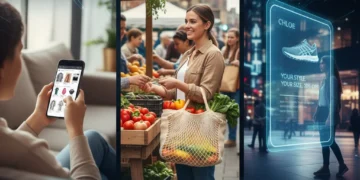
At its core, hyper-personalization leverages AI to analyze vast amounts of customer data – browsing history, purchase patterns, demographic information, even real-time behavior – to create a unique and highly relevant shopping experience for each individual. This goes far beyond simple product recommendations. Imagine an e-commerce site that dynamically reconfigures its homepage layout, product categories, promotional offers, and even the language used in descriptions, all based on an individual’s specific profile and current intent. This level of customization fosters a deeper connection with the brand, making the shopping experience feel more intuitive and less overwhelming.
For instance, an AI-powered platform might identify that a customer frequently buys organic, gluten-free products and lives in a colder climate. It could then prioritize showing them organic, gluten-free winter wear options, alongside relevant recipes or health tips, creating a holistic and valuable interaction. This isn’t just about selling; it’s about building a relationship and becoming a trusted resource for the consumer.
The Power of Predictive Analytics
Beyond personalization, AI excels at predictive analytics. By analyzing historical data and identifying patterns, AI can forecast future trends, anticipate customer churn, optimize inventory management, and even predict demand for specific products. This capability is a game-changer for e-commerce businesses. For example, by predicting seasonal demand fluctuations with greater accuracy, retailers can optimize their supply chains, reduce waste, and ensure products are always in stock when customers want them. This proactive approach minimizes lost sales opportunities and enhances customer satisfaction.
Predictive analytics also plays a crucial role in targeted marketing campaigns. AI can identify segments of customers most likely to respond to a particular promotion or product launch, allowing businesses to allocate their marketing budgets more effectively and achieve higher conversion rates. This precision marketing is a significant departure from traditional broad-stroke campaigns and represents a more efficient and customer-centric approach.
AI-Driven Customer Service and Chatbots
Another area where AI is revolutionizing e-commerce is customer service. AI-powered chatbots and virtual assistants are becoming increasingly sophisticated, capable of handling a wide range of customer inquiries, from tracking orders and processing returns to providing product information and troubleshooting common issues. These AI agents offer instant support, 24/7, improving response times and freeing up human customer service representatives to handle more complex or sensitive cases.
The continuous learning capabilities of AI mean that these chatbots improve over time, becoming more adept at understanding natural language and providing accurate, helpful responses. This enhanced customer service experience contributes significantly to customer loyalty and brand reputation, further cementing AI’s role as a cornerstone of future ecommerce market trends.
Immersive Shopping Experiences: AR, VR, and the Metaverse
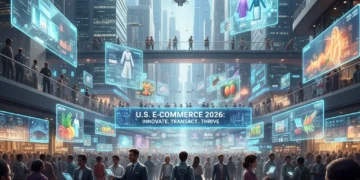
The second dominant trend set to transform e-commerce by 2026 is the widespread adoption of immersive technologies, including Augmented Reality (AR), Virtual Reality (VR), and the nascent but rapidly evolving Metaverse. These technologies promise to bridge the gap between the physical and digital shopping worlds, offering consumers more engaging, interactive, and realistic experiences that were once the stuff of science fiction.
Augmented Reality (AR) in Retail
AR overlays digital information onto the real world, typically through a smartphone camera or AR glasses. In e-commerce, AR is already making significant inroads, and its application is only set to expand. Imagine trying on clothes virtually, seeing how a piece of furniture looks in your living room before purchasing, or previewing makeup shades on your own face – all from the comfort of your home. This capability dramatically reduces uncertainty for online shoppers and lowers return rates for businesses.

Major retailers are already experimenting with AR, and by 2026, it is expected to be a standard feature for product categories where visualization is key, such as fashion, home decor, and cosmetics. AR provides a level of interaction and visual confirmation that traditional 2D product images simply cannot match, leading to increased consumer confidence and satisfaction. This trend is particularly vital for products that are highly visual or require a sense of scale and fit.
Virtual Reality (VR) for Experiential Commerce
While AR enhances the real world, VR transports users to entirely new digital environments. In e-commerce, VR offers the potential for truly experiential shopping. Picture walking through a virtual showroom, interacting with products in 3D, or even attending a virtual fashion show from anywhere in the world. VR shopping experiences can mimic the feeling of being in a physical store, complete with personalized guidance from virtual assistants.
The adoption of VR is still somewhat nascent compared to AR, largely due to the higher barrier to entry (VR headsets). However, as VR technology becomes more affordable and accessible, its potential for e-commerce is immense. Luxury brands, travel companies, and even automotive manufacturers are exploring VR to offer immersive product tours and unique brand experiences. By 2026, expect to see more sophisticated VR storefronts and interactive product demonstrations becoming a differentiator in the competitive online retail space.
The Metaverse: The Next Frontier of E-commerce
The Metaverse, a persistent, interconnected set of virtual spaces, represents the ultimate convergence of AR and VR with social networking and digital economies. While still in its early stages, the Metaverse is poised to become a significant force in e-commerce. It offers a platform for brands to create immersive digital storefronts, host virtual events, sell digital goods (NFTs), and even facilitate transactions for physical products within a virtual world.
Consumers could, for example, purchase a digital outfit for their avatar in the Metaverse and then have a physical replica delivered to their home. The Metaverse promises a new dimension of brand engagement, community building, and revenue generation. Businesses that strategically position themselves within this emerging digital landscape will be at the forefront of the next wave of ecommerce market trends, tapping into a new generation of digital-native consumers and unlocking novel commercial opportunities.
Sustainable E-commerce and Ethical Consumption
The third major trend that will profoundly influence e-commerce by 2026 is the increasing emphasis on sustainability and ethical consumption. Consumers are becoming more environmentally conscious and socially aware, and they expect the brands they patronize to reflect these values. This shift is driving significant changes in supply chain management, product sourcing, packaging, and corporate transparency within the e-commerce sector.
Eco-Friendly Packaging and Reduced Waste
The sheer volume of packaging associated with online shopping has long been a concern for environmentalists. By 2026, expect to see a widespread adoption of eco-friendly packaging solutions. This includes biodegradable materials, compostable alternatives, recycled content, and innovative designs that minimize material usage. Companies will invest in optimizing packaging to reduce void fill and ensure products are shipped in the smallest possible containers, thereby decreasing transportation emissions.
Furthermore, the concept of reusable packaging and circular economy models will gain traction. Returnable packaging programs, where consumers send back empty containers for reuse, will become more common, particularly for recurring purchases. This commitment to reducing waste throughout the packaging lifecycle will be a significant differentiator for e-commerce brands.
Ethical Sourcing and Transparent Supply Chains
Modern consumers are not only interested in the product itself but also in its journey from raw material to their doorstep. Ethical sourcing, fair labor practices, and transparent supply chains will be non-negotiable for many shoppers. E-commerce businesses will need to provide clear and verifiable information about their sourcing practices, manufacturing processes, and the environmental impact of their products.
Blockchain technology, for example, is emerging as a powerful tool to ensure supply chain transparency, allowing consumers to trace a product’s origin and verify its ethical credentials. Brands that can demonstrate a genuine commitment to social responsibility and environmental stewardship will build greater trust and loyalty among their customer base, tapping into a growing segment of conscious consumers who are willing to pay a premium for ethically produced goods.
Green Logistics and Carbon Footprint Reduction
The logistics of e-commerce, from warehousing to last-mile delivery, contribute significantly to carbon emissions. By 2026, there will be an accelerated push towards green logistics. This includes the adoption of electric delivery vehicles, optimization of delivery routes to minimize fuel consumption, and the use of strategically located micro-fulfillment centers to reduce travel distances.

Investments in renewable energy sources for warehouses and data centers will also become standard practice. E-commerce platforms will likely offer carbon offsetting options at checkout, allowing consumers to contribute to environmental initiatives. Companies that actively work to reduce their carbon footprint and communicate these efforts transparently will gain a competitive edge in a market increasingly driven by environmental concerns. This focus on sustainability is not just a moral imperative but a crucial component of future ecommerce market trends.
The Interplay of Trends: A Holistic E-commerce Ecosystem
It’s important to recognize that these three dominant ecommerce market trends – AI-driven personalization, immersive shopping experiences, and sustainable practices – do not exist in isolation. Instead, they are deeply interconnected, forming a holistic and increasingly sophisticated e-commerce ecosystem. For example, AI can optimize sustainable logistics by predicting demand and reducing waste, while immersive experiences can be used to educate consumers about a brand’s ethical sourcing practices.
Synergies for Enhanced Customer Value
Consider a scenario where a customer uses an AR app to visualize an ethically sourced, sustainably produced piece of furniture in their home. The AI then suggests complementary products based on their style preferences and past purchases, while simultaneously optimizing the delivery route for the lowest carbon footprint. This seamless integration of technology and values creates an unparalleled customer experience that is both convenient and conscientious.
The convergence of these trends means that businesses cannot afford to focus on just one aspect. A truly future-proof e-commerce strategy will involve a multi-faceted approach, leveraging the power of AI to personalize and optimize, embracing immersive technologies to engage and convert, and embedding sustainability into every layer of operation. This integrated strategy will not only meet evolving consumer expectations but also drive efficiency and foster long-term brand loyalty.
Strategic Implications for Businesses
For businesses operating in or looking to enter the e-commerce space, understanding and adapting to these ecommerce market trends is paramount. The 18% share of US retail projected for e-commerce by 2026 signifies a mature yet still rapidly growing market where differentiation and customer-centricity will be key.
Investment in Technology and Talent
Companies must be prepared to invest significantly in AI, AR, and VR technologies. This includes not only software and hardware but also the talent required to implement, manage, and innovate with these tools. Data scientists, AI engineers, UX/UI designers specializing in immersive experiences, and sustainability experts will be in high demand.
Rethinking the Customer Journey
The traditional customer journey is being disrupted. Businesses need to map out new, non-linear paths that incorporate personalized touchpoints, immersive interactions, and transparent information regarding sustainability. This requires a deep understanding of customer behavior and a willingness to iterate and optimize the digital experience continuously.
Building a Sustainable Brand Identity
Sustainability is no longer a niche concern; it’s a mainstream expectation. Brands must genuinely integrate sustainable practices into their core operations and communicate these efforts authentically. Greenwashing will be quickly identified and penalized by informed consumers. Building a strong, sustainable brand identity will be a significant competitive advantage.
Agility and Adaptability
The pace of change in e-commerce is relentless. Businesses must cultivate an agile mindset, capable of quickly adapting to new technologies, emerging consumer preferences, and evolving market dynamics. This includes fostering a culture of innovation and continuous learning.
Conclusion: Navigating the Future of E-commerce
The evolution of e-commerce towards 2026 is characterized by profound innovation and a fundamental shift in consumer expectations. The three dominant ecommerce market trends – AI-driven hyper-personalization, immersive shopping experiences through AR/VR/Metaverse, and a strong emphasis on sustainability and ethical consumption – are converging to create a more intelligent, engaging, and responsible retail environment.
With e-commerce projected to command 18% of US retail by 2026, the stakes are high. Businesses that strategically embrace these trends, investing in the right technologies, fostering a customer-centric approach, and committing to sustainable practices, will not only survive but thrive in this exciting new era of digital commerce. The future of online shopping is not just about convenience; it’s about creating meaningful, personalized, and impactful connections with consumers, one innovative experience at a time.