Upskilling US Workers: Boost Income by 15% in 2026

The Financial Impact of Upskilling: How US Workers Can Increase Income by 15% in 2026 Through Targeted Learning
In an era defined by rapid technological advancements and shifting economic landscapes, the concept of continuous learning, or upskilling, has transitioned from a desirable trait to an absolute necessity. For upskilling US workers, the potential financial rewards are not merely theoretical; they are quantifiable and significant. Projections suggest that workers who strategically invest in acquiring new, in-demand skills could see their incomes rise by as much as 15% by 2026. This isn’t just about keeping pace; it’s about leading the charge, securing financial stability, and unlocking unprecedented career opportunities.
The global economy is currently undergoing a profound transformation, often referred to as the Fourth Industrial Revolution. Automation, artificial intelligence, and sophisticated data analytics are reshaping industries, creating new job roles while simultaneously rendering others obsolete. In this dynamic environment, the ability to adapt and acquire relevant skills is paramount. For the average American worker, this means understanding which skills are most valuable, where to acquire them, and how to leverage them for maximum financial gain. This comprehensive guide will explore the multifaceted financial impact of upskilling, providing a roadmap for US workers to achieve substantial income growth in the coming years.
Understanding the Current Landscape: Why Upskilling is Critical Now
The US job market is experiencing unprecedented fluidity. A report by the World Economic Forum indicates that by 2025, 85 million jobs may be displaced by a shift in the division of labor between humans and machines, while 97 million new roles may emerge that are more adapted to the new division of labor. This creates a significant skills gap that demands immediate attention. Traditional education models, while foundational, often struggle to keep pace with the rapid evolution of industry needs. This is where upskilling steps in, offering agile and targeted learning opportunities that directly address market demands.
For individuals, ignoring this trend is not an option. Stagnant skill sets can lead to decreased job security, limited career progression, and, ultimately, a decline in earning potential. Conversely, those who embrace continuous learning position themselves as invaluable assets, highly sought after by employers who are struggling to find talent with the right mix of modern competencies. The demand for digital literacy, data analysis, cloud computing, cybersecurity, and advanced problem-solving skills is skyrocketing across virtually every sector.
Moreover, the COVID-19 pandemic accelerated many of these trends, forcing businesses to adopt digital solutions at an unprecedented rate. Remote work became the norm for many, highlighting the importance of digital collaboration tools and self-management skills. The pandemic also exposed vulnerabilities in supply chains and healthcare systems, creating new demands for resilience, adaptability, and innovative solutions. These shifts underscore the urgent need for upskilling US workers to navigate and thrive in this new professional reality.
The 15% Income Boost: A Realistic Expectation for Upskilled Workers
The projection of a 15% income increase by 2026 for upskilled US workers is not an arbitrary figure. It is rooted in economic analysis and historical data that demonstrates a clear correlation between specialized skills and higher wages. Employers are willing to pay a premium for talent that can immediately contribute to their strategic goals, especially in areas where skills are scarce.
- Demand-Driven Wages: Industries facing critical skill shortages, such as technology, healthcare, and advanced manufacturing, often offer higher salaries to attract and retain qualified professionals. Acquiring skills in these areas directly translates to increased earning power.
- Productivity Gains: Upskilled employees are typically more efficient, innovative, and capable of handling complex tasks. This increased productivity adds tangible value to an organization, which is often reflected in higher compensation.
- Negotiating Power: Workers with specialized, in-demand skills have greater leverage in salary negotiations. They are not easily replaceable, making their contributions more valuable to employers.
- Career Progression: Upskilling often opens doors to more senior roles, management positions, or specialized expert roles, all of which come with significantly higher salaries and benefits.
Consider the example of a marketing professional who learns advanced data analytics and AI-driven campaign optimization. Their ability to deliver measurable ROI through sophisticated strategies makes them far more valuable than someone relying solely on traditional marketing methods. Similarly, a manufacturing technician who masters robotics and industrial automation becomes indispensable in a factory adopting Industry 4.0 principles. These are the kinds of transformations that justify a 15% or even greater income increase.
Identifying High-Value Skills for Future Growth
To maximize the financial impact of upskilling, it’s crucial to focus on skills that are projected to be in high demand. While specific needs vary by industry, several broad categories consistently emerge as critical for the future workforce:
Technical Skills: The Digital Backbone
- Data Science and Analytics: The ability to collect, interpret, and leverage data is paramount. This includes skills in Python, R, SQL, machine learning, and data visualization tools (e.g., Tableau, Power BI).
- Cloud Computing: Proficiency in platforms like AWS, Azure, or Google Cloud is essential as more businesses migrate their operations to the cloud.
- Cybersecurity: With increasing cyber threats, experts in network security, ethical hacking, and data protection are in high demand.
- Artificial Intelligence and Machine Learning: Understanding AI principles, developing AI models, and implementing AI solutions will be critical across various sectors.
- Software Development: While specific languages may evolve, foundational coding skills (Java, JavaScript, Python, C#) remain highly valuable.
Soft Skills: The Human Advantage
While technical skills are crucial, soft skills are equally important, as they are often difficult to automate and differentiate human workers. These include:
- Critical Thinking and Problem-Solving: The ability to analyze complex situations, identify root causes, and develop effective solutions.
- Creativity and Innovation: Generating new ideas, approaches, and solutions to challenges.
- Adaptability and Flexibility: Thriving in environments of constant change and learning new concepts quickly.
- Communication and Collaboration: Effectively conveying ideas, working in teams, and building strong professional relationships.
- Emotional Intelligence: Understanding and managing one’s own emotions, and recognizing and influencing the emotions of others.
A balanced approach that combines both technical and soft skills creates a truly resilient and high-earning professional. For instance, a data scientist who can also effectively communicate complex insights to non-technical stakeholders is far more valuable than one who only possesses technical prowess.
Strategies for Effective Upskilling
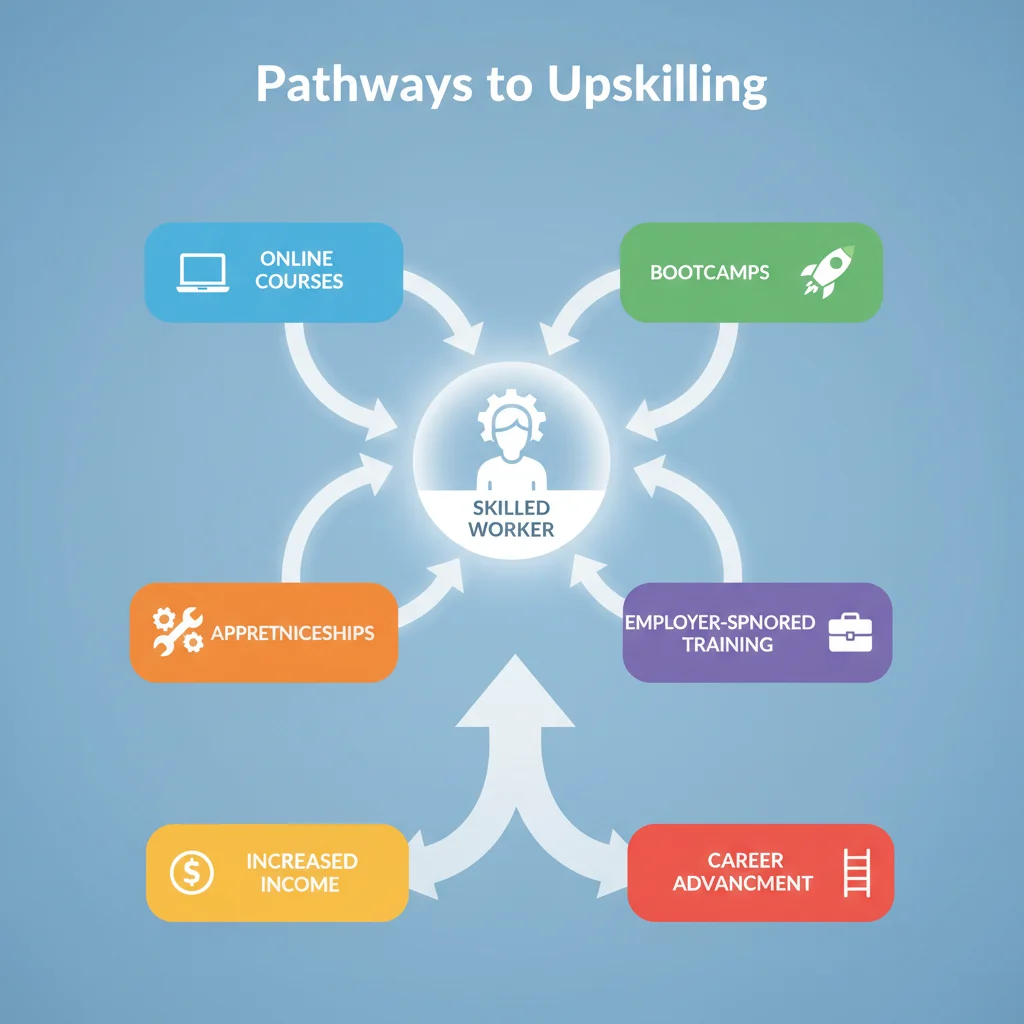
Once you’ve identified the skills you need, the next step is to strategize how to acquire them. Fortunately, the landscape of learning and development has expanded dramatically, offering numerous flexible and accessible options for upskilling US workers.
Online Courses and MOOCs (Massive Open Online Courses)
Platforms like Coursera, edX, Udacity, and LinkedIn Learning offer a vast array of courses, specializations, and professional certificates from top universities and industry experts. Many are self-paced, allowing workers to learn around their existing commitments.
- Pros: Flexibility, affordability (many free options or low-cost subscriptions), access to world-class instructors.
- Cons: Requires self-discipline, may lack personalized feedback, completion rates can be lower.
Bootcamps and Intensive Programs
Coding bootcamps, data science bootcamps, and similar intensive programs offer accelerated learning paths, often designed to get participants job-ready in a matter of weeks or months. These are particularly effective for transitioning into new technical roles.
- Pros: Fast-paced, career-focused, strong industry connections, often include career services.
- Cons: Higher cost, intense time commitment, may require a career break.
Employer-Sponsored Training and Development
Many forward-thinking companies invest in their employees’ growth by offering internal training programs, tuition reimbursement, or access to premium online learning platforms. Check with your HR department about available resources.
- Pros: Often free for employees, directly relevant to company needs, can lead to immediate career advancement within the organization.
- Cons: May be limited to specific skill sets, not always available.
Apprenticeships and Internships
For hands-on learning, apprenticeships and internships, even for experienced professionals looking to pivot, provide invaluable real-world experience. They allow individuals to learn new skills while applying them in a practical setting.
- Pros: Practical experience, mentorship, networking opportunities, often paid.
- Cons: Can be competitive, may involve a temporary pay cut.

Financing Your Upskilling Journey
Investing in your education can have a significant ROI, but the initial costs can be a barrier for some. Here are several ways to finance your upskilling journey:
- Personal Savings: The most straightforward approach, using existing funds.
- Employer Reimbursement: As mentioned, many companies offer to pay for or reimburse education expenses.
- Grants and Scholarships: Numerous organizations offer financial aid for career development, especially for specific industries or demographics.
- Low-Interest Loans: Education-specific loans can help cover costs, but always assess the interest rates and repayment terms.
- Income Share Agreements (ISAs): Some bootcamps offer ISAs, where you pay back a percentage of your income only after you secure a job earning above a certain threshold.
- Tax Deductions: Education expenses directly related to maintaining or improving skills for your current job may be tax-deductible. Consult a tax professional for specific advice.
Think of upskilling as an investment in your future self. The potential for a 15% income increase by 2026 can quickly outweigh the initial financial outlay, making it one of the most profitable investments you can make.
Measuring the Return on Investment (ROI) of Upskilling
While the 15% income increase is a compelling statistic, understanding how to measure your personal ROI from upskilling is crucial for motivation and strategic planning. ROI isn’t just about the immediate pay bump; it encompasses a broader range of benefits.
- Direct Income Increase: Track your salary and bonus increases post-upskilling.
- Job Promotion/New Role: Assess the career advancement garnered directly from your new skills.
- Increased Job Security: While harder to quantify financially, being indispensable in a volatile market has immense value.
- Enhanced Marketability: Your updated resume and LinkedIn profile will attract more recruiters, leading to better opportunities.
- Personal Growth and Confidence: Learning new things builds confidence and opens up new perspectives, impacting overall job satisfaction.
Keep a detailed record of courses completed, certifications earned, and projects undertaken using your new skills. This portfolio will serve as tangible evidence of your growth and can be used in salary negotiations or job interviews. The more you can demonstrate the value you bring through your enhanced capabilities, the stronger your position for increased compensation.
Case Studies: Real-World Success of Upskilling US Workers
To further illustrate the power of upskilling, let’s consider hypothetical yet realistic scenarios:
Case Study 1: The Manufacturing Technician
Sarah, 45, a skilled manufacturing technician, saw her role evolving with the introduction of advanced robotics. Instead of resisting, she enrolled in an online certification program for industrial automation and robot programming. Her company, seeing her initiative, sponsored part of her training. Within 18 months, Sarah was promoted to a Robotics Specialist role, overseeing the integration and maintenance of new automated systems. Her salary increased by 18%, far exceeding the 15% projection, and she became a critical asset to the company’s modernization efforts.
Case Study 2: The Marketing Coordinator
David, 30, a marketing coordinator, recognized the shift towards data-driven marketing. He took several Coursera courses in Google Analytics, Python for data analysis, and A/B testing. He then applied these skills to optimize his company’s digital ad campaigns, showing a measurable increase in conversion rates. This initiative led to his promotion to Digital Marketing Analyst, with a 16% salary increase and greater autonomy in campaign strategy. He also leveraged his new skills to freelance on the side, further boosting his income.
Case Study 3: The Healthcare Administrator
Maria, 52, an experienced healthcare administrator, noticed the growing importance of electronic health records (EHR) and healthcare data security. She completed a professional certificate in Health Informatics and Cybersecurity for Healthcare. This allowed her to take on more complex projects related to data privacy and system integration, making her invaluable in navigating HIPAA compliance and improving data management. Her proactive approach resulted in a 14% raise and a more strategic role within her hospital’s IT department.
These examples highlight that upskilling is not limited to specific age groups or industries. It is a universal strategy for career advancement and financial growth for upskilling US workers across the board.
The Role of Government and Employers in Fostering Upskilling
While individual initiative is key, the broader ecosystem of government and employers plays a crucial role in facilitating widespread upskilling. Policies and programs can create an environment where continuous learning is accessible and incentivized.
Government Initiatives
- Funding for Training Programs: Government grants and subsidies can support community colleges, vocational schools, and private training providers in offering in-demand skill programs.
- Tax Incentives: Tax credits for individuals or businesses investing in education and training can make upskilling more affordable.
- Public-Private Partnerships: Collaborations between government, educational institutions, and industries can ensure that training programs align with actual labor market needs.
- Career Counseling and Resources: Providing accessible resources for career guidance and skill assessment can help workers identify optimal learning paths.
Employer Responsibilities
- Investment in Learning and Development (L&D): Companies should view L&D as a strategic investment, not just an expense.
- Internal Training Programs: Developing bespoke training tailored to company-specific needs and future goals.
- Tuition Reimbursement and Educational Benefits: Offering financial support for employees pursuing external education.
- Creating a Learning Culture: Fostering an environment where continuous learning is encouraged, recognized, and rewarded.
- Skills Mapping and Career Pathways: Clearly defining the skills needed for future roles and outlining pathways for employees to acquire them.
When governments and employers actively support upskilling, the benefits extend beyond individual income growth, contributing to a more competitive national workforce, increased economic productivity, and reduced unemployment.
Overcoming Challenges in Upskilling
Despite the clear benefits, upskilling US workers is not without its challenges. Recognizing and addressing these obstacles is vital for successful implementation.
- Time Constraints: Many workers struggle to balance learning with existing job and family responsibilities. Flexible learning formats and employer-supported learning time can help.
- Financial Barriers: The cost of courses and certifications can be prohibitive. Exploring grants, scholarships, and employer funding is crucial.
- Lack of Awareness: Some workers may not be aware of the urgency or the specific skills needed for future jobs. Better communication and career guidance are essential.
- Motivation and Mindset: Learning new things can be challenging. Fostering a growth mindset and celebrating small victories can maintain motivation.
- Quality of Training: Ensuring that training programs are high-quality, relevant, and recognized by employers is important. Research and reviews are key.
Individuals can overcome these challenges by setting realistic goals, breaking down learning into manageable chunks, seeking support from peers or mentors, and leveraging free or low-cost resources before committing to more expensive programs. Consistency, even if it’s just an hour a day, can lead to significant progress over time.
The Future of Work and the Role of Lifelong Learning
The concept of a static career path is rapidly becoming a relic of the past. The future of work will be characterized by continuous evolution, requiring a commitment to lifelong learning. For upskilling US workers, this means embracing a mindset where learning is not confined to formal education but is an ongoing process integrated into professional life.
As technology continues to advance, the skills that are valuable today may be augmented or replaced tomorrow. This necessitates not just learning new skills, but also developing the metacognitive skills to learn how to learn effectively. Adaptability, critical thinking, and creativity will remain evergreen skills, enabling individuals to pivot and thrive regardless of technological shifts.
The 15% income increase by 2026 for upskilled workers is not just a one-time bonus; it’s the beginning of a trajectory of sustained growth and resilience. Those who commit to lifelong learning will not only secure their financial futures but also contribute to a more innovative, productive, and adaptable US economy.
Conclusion: Seizing the Opportunity to Thrive
The evidence is clear: for upskilling US workers, the financial rewards are substantial and within reach. By strategically investing in high-demand skills, individuals can expect to see a significant income increase, potentially up to 15% by 2026. This journey requires proactive engagement, a commitment to continuous learning, and an understanding of the evolving job market.
Whether it’s mastering data analytics, delving into cloud computing, or honing essential soft skills like critical thinking and adaptability, the opportunities for growth are abundant. The resources—from online courses to employer-sponsored programs—are more accessible than ever before. Now is the time for US workers to seize this opportunity, future-proof their careers, and unlock their full earning potential. The financial impact of upskilling is not just a promise; it’s a tangible outcome for those willing to learn and adapt.
Start your upskilling journey today. Research the skills most relevant to your industry and career aspirations, explore the myriad of learning platforms available, and commit to continuous growth. Your future self, and your bank account, will thank you for it.