Navigating the 2026 AI Regulation Landscape: Key Industry Shifts and Compliance Strategies for U.S. Businesses
The rapid evolution of Artificial Intelligence (AI) has brought about unprecedented opportunities and challenges across industries. As AI systems become more sophisticated and integrated into daily operations, governments worldwide are scrambling to establish frameworks that ensure responsible development and deployment. For U.S. businesses, the year 2026 is shaping up to be a pivotal moment, with significant AI regulation compliance shifts on the horizon. Understanding these changes, anticipating their impact, and developing robust AI regulation compliance strategies are no longer optional but imperative for sustained success and ethical operation.
This comprehensive guide delves into the anticipated landscape of AI regulation compliance in 2026, exploring the key industry shifts, the potential legal and operational ramifications for U.S. businesses, and actionable strategies to navigate this complex environment. Our goal is to equip you with the knowledge and tools necessary to not only meet but exceed future AI regulation compliance requirements, transforming potential hurdles into competitive advantages.
The Impetus Behind AI Regulation Compliance: Why Now?
The urgency for comprehensive AI regulation compliance stems from several critical factors. Firstly, the widespread adoption of AI across sectors like healthcare, finance, transportation, and public safety raises profound ethical concerns. Issues such as algorithmic bias, data privacy breaches, lack of transparency, and the potential for autonomous decision-making without human oversight demand careful consideration. High-profile incidents involving biased facial recognition, discriminatory lending algorithms, and data misuse have highlighted the real-world consequences of unregulated AI.
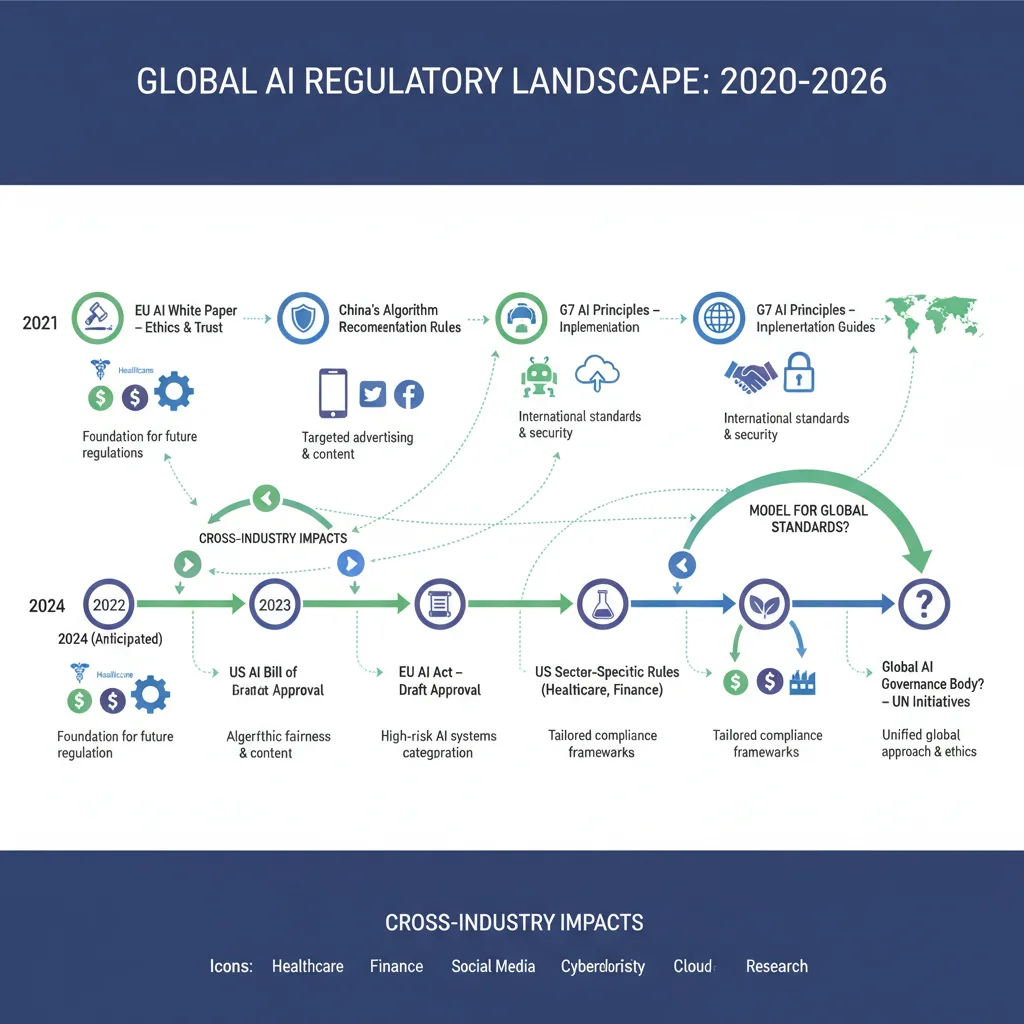
Secondly, international efforts, particularly the European Union’s AI Act, are setting a global precedent. While the U.S. approach may differ, the interconnectedness of global markets means that U.S. businesses operating internationally will inevitably face similar standards. This global harmonization, or lack thereof, necessitates a proactive stance on AI regulation compliance to avoid fragmentation and ensure interoperability.
Finally, consumer and public trust are paramount. As AI becomes more embedded in products and services, individuals are increasingly concerned about their rights, data security, and the fairness of AI-driven decisions. Robust AI regulation compliance frameworks can foster trust, encourage innovation, and ensure that AI serves humanity’s best interests rather than exacerbating existing societal inequalities.
Key Pillars of Anticipated 2026 AI Regulation Compliance in the U.S.
While the exact legislative details are still evolving, several core themes are expected to underpin U.S. AI regulation compliance efforts by 2026. These pillars are influenced by existing data privacy laws, emerging state-level initiatives, and federal discussions.
1. Data Privacy and Security Enhancements
Building upon frameworks like CCPA, CPRA, and HIPAA, future AI regulation compliance will likely introduce more stringent requirements for how AI systems collect, process, and store personal data. This includes:
- Enhanced Consent Mechanisms: More granular and explicit consent for data used in AI training and deployment, especially for sensitive categories.
- Data Minimization: Requiring businesses to collect only the data necessary for the AI’s intended purpose.
- Robust Anonymization/Pseudonymization: Stricter standards for de-identifying data used in AI models to protect individual privacy.
- AI-Specific Data Breach Notification: Protocols for reporting breaches involving AI systems and their datasets.
\
2. Algorithmic Transparency and Explainability (XAI)
One of the most challenging aspects of AI is its ‘black box’ nature. Future AI regulation compliance will push for greater transparency, particularly for high-risk AI applications. This means:
- Explainability Requirements: The ability to explain how an AI system arrived at a particular decision, especially in areas like credit scoring, employment, or criminal justice.
- Documentation and Auditing: Comprehensive records of AI model development, training data, performance metrics, and decision-making processes to facilitate external audits.
- Impact Assessments: Mandatory AI impact assessments (AIIAs) for high-risk systems to identify, evaluate, and mitigate potential risks before deployment.
3. Bias Detection and Mitigation
Algorithmic bias, often stemming from biased training data, can perpetuate and amplify societal inequalities. AI regulation compliance will likely mandate proactive measures:
- Bias Audits: Regular assessments of AI systems for discriminatory outcomes across different demographic groups.
- Fairness Metrics: Adoption of standardized metrics to measure and report on the fairness of AI outputs.
- Data Diversity Requirements: Encouraging or mandating the use of diverse and representative datasets to train AI models.
- Human Oversight and Intervention: Ensuring that humans remain in the loop for critical AI decisions, particularly where bias risks are high.
4. Accountability and Governance Frameworks
Establishing clear lines of responsibility for AI systems is crucial. AI regulation compliance will require robust internal governance:
- Designated AI Officers/Committees: Appointing individuals or teams responsible for overseeing AI ethics and compliance.
- Risk Management Frameworks: Implementing systematic approaches to identify, assess, and mitigate AI-related risks throughout the AI lifecycle.
- Liability Frameworks: Clarifying legal liability for harm caused by AI systems, potentially holding developers, deployers, and operators accountable.
5. Sector-Specific Regulations
While overarching federal guidelines are expected, specific sectors will likely see tailored AI regulation compliance. For instance:
- Healthcare: Strict rules on AI in diagnostics, drug discovery, and patient care, emphasizing data security and clinical validation.
- Finance: Enhanced scrutiny on AI for credit scoring, fraud detection, and investment advice to prevent discrimination and ensure market stability.
- Autonomous Systems: Regulations for self-driving cars, drones, and robotics focusing on safety, reliability, and human-machine interaction.
Industry Shifts Triggered by AI Regulation Compliance
The impending AI regulation compliance landscape will not just impact legal departments; it will catalyze significant shifts across entire industries and business functions. Businesses must recognize these broader implications to strategize effectively.
1. Increased Investment in Responsible AI Practices
Companies will increasingly invest in ‘Responsible AI’ (RAI) initiatives, encompassing ethical guidelines, fairness toolkits, explainable AI (XAI) technologies, and robust governance structures. This will move beyond mere compliance to a strategic differentiator, as consumers and partners will favor organizations demonstrating a commitment to ethical AI.
2. Reshaping AI Development Lifecycles
The traditional AI development lifecycle will integrate compliance checkpoints at every stage: from data acquisition and model training to deployment and monitoring. ‘Privacy-by-design’ and ‘ethics-by-design’ principles will become standard, requiring developers to consider regulatory implications from conception.
3. Emergence of New Roles and Skillsets
The demand for AI ethicists, AI auditors, AI lawyers, and specialized compliance officers will surge. Data scientists will need to expand their skills to include fairness testing, explainability techniques, and regulatory awareness. This will necessitate significant upskilling and reskilling initiatives within organizations.
4. Greater Emphasis on Data Governance and Quality
The adage ‘garbage in, garbage out’ will take on new regulatory weight. Businesses will need to invest heavily in data governance frameworks, ensuring data quality, lineage, and representativeness to mitigate bias and ensure compliance with data privacy regulations.
5. Strategic Partnerships and Vendor Scrutiny
Companies will scrutinize their AI vendors and partners more closely, demanding evidence of their AI regulation compliance frameworks. Supply chain transparency for AI components, data sources, and model provenance will become critical. Strategic partnerships with legal experts and AI governance consultants will also become more common.
6. Innovation in Explainable AI and Fairness Tools
The regulatory push for transparency and fairness will spur innovation in AI. We can expect to see advancements in XAI techniques, bias detection and mitigation tools, and platforms that simplify AI governance and auditing. Businesses that adopt these innovations early will gain a competitive edge in AI regulation compliance.
Compliance Strategies for U.S. Businesses: A Roadmap to 2026
Preparing for the 2026 AI regulation compliance landscape requires a multi-faceted and proactive approach. Here’s a strategic roadmap for U.S. businesses:
1. Conduct an AI Inventory and Risk Assessment
Begin by identifying all AI systems currently in use or under development within your organization. For each system, assess:
- Data Sources: What data is used, where does it come from, and is it compliant with privacy regulations?
- Purpose and Impact: What decisions does the AI make, and what are its potential societal, ethical, and legal impacts?
- Risk Level: Categorize AI systems as high, medium, or low risk based on potential for harm, bias, and data sensitivity.
- Transparency and Explainability: How explainable are the AI’s decisions, and what level of human oversight is in place?
This inventory forms the baseline for your AI regulation compliance efforts.
2. Establish an AI Governance Framework
A robust governance framework is the bedrock of AI regulation compliance. This includes:
- Cross-Functional AI Ethics Committee: Assemble a team comprising legal, technical, ethical, and business stakeholders to oversee AI strategy and compliance.
- Internal AI Policies and Guidelines: Develop clear policies on responsible AI development, deployment, data usage, and ethical considerations.
- Roles and Responsibilities: Clearly define who is accountable for different aspects of AI lifecycle management and compliance.
- Regular Audits and Reviews: Implement a schedule for internal and potentially external audits of AI systems for compliance with established policies and future regulations.
3. Prioritize Data Governance and Quality
Given the emphasis on data in AI regulation compliance, businesses must:
- Strengthen Data Lineage and Provenance: Track where data comes from, how it’s transformed, and how it’s used in AI models.
- Implement Data Anonymization/Pseudonymization Techniques: Adopt advanced methods to protect personal data while enabling AI development.
- Ensure Data Diversity and Representativeness: Actively work to curate and acquire datasets that minimize bias and accurately reflect target populations.
- Data Security Measures: Enhance cybersecurity protocols to protect AI training data and deployed models from breaches.

4. Invest in Explainable AI (XAI) and Bias Mitigation Tools
Proactively integrate technologies and methodologies that enhance transparency and fairness:
- Adopt XAI Frameworks: Utilize tools and techniques that help explain AI model predictions and decisions.
- Implement Fairness Toolkits: Integrate open-source or commercial tools to detect, measure, and mitigate algorithmic bias.
- Continuous Monitoring: Deploy systems to continuously monitor AI model performance, drift, and potential bias in real-world applications.
5. Foster a Culture of Responsible AI
Compliance is not just about technology; it’s about people and culture:
- Employee Training: Educate all relevant employees (developers, product managers, legal teams, executives) on AI ethics, responsible AI principles, and upcoming AI regulation compliance requirements.
- Ethical AI by Design: Encourage engineers and developers to incorporate ethical considerations and compliance requirements from the initial design phase of AI systems.
- Whistleblower Protections: Establish clear channels for employees to report ethical concerns related to AI without fear of retribution.
6. Stay Informed and Engage with Policymakers
The AI regulation compliance landscape is dynamic. Businesses should:
- Monitor Legislative Developments: Keep abreast of federal and state-level legislative proposals and regulatory guidance related to AI.
- Participate in Industry Groups: Engage with trade associations and industry consortia that are actively shaping AI policy and best practices.
- Consult Legal Experts: Partner with legal counsel specializing in AI and technology law to interpret regulations and ensure ongoing compliance.
7. Develop Incident Response and Remediation Plans
Despite best efforts, AI systems can fail or behave unexpectedly. Having a plan is crucial for AI regulation compliance:
- AI Incident Response Protocols: Develop clear procedures for identifying, responding to, and mitigating harm from AI failures or ethical breaches.
- Remediation Strategies: Outline steps for correcting biased algorithms, addressing data privacy violations, and restoring public trust.
- Public Communication Strategy: Prepare a plan for transparent communication with affected parties and regulators in the event of an AI incident.
Long-Term Benefits of Proactive AI Regulation Compliance
While the immediate prospect of new AI regulation compliance may seem daunting, a proactive approach offers significant long-term benefits:
- Enhanced Trust and Reputation: Demonstrating a commitment to ethical and responsible AI builds trust with customers, partners, and the public, strengthening your brand reputation.
- Reduced Legal and Reputational Risks: Proactive compliance minimizes the likelihood of costly fines, lawsuits, and public backlash associated with AI-related harms.
- Competitive Advantage: Businesses that are early adopters of responsible AI practices will be better positioned to innovate, attract top talent, and secure new markets.
- Improved AI System Quality: The focus on fairness, transparency, and data quality driven by compliance efforts often leads to more robust, reliable, and effective AI systems.
- Future-Proofing Operations: By embedding AI regulation compliance into your core operations, you create a resilient framework that can adapt to future regulatory changes with greater ease.
Conclusion: Embracing the Future of Responsible AI
The year 2026 marks a significant turning point for AI regulation compliance in the U.S. While the details are still taking shape, the direction is clear: a future where AI development and deployment are governed by principles of ethics, transparency, fairness, and accountability. For U.S. businesses, this isn’t merely a regulatory burden but an opportunity to lead in the responsible AI revolution.
By understanding the anticipated shifts, implementing robust AI regulation compliance strategies, and fostering a culture of responsible AI, businesses can not only meet legislative requirements but also build more trustworthy, innovative, and sustainable AI-powered futures. The time to prepare is now, transforming potential challenges into strategic advantages and ensuring that AI serves as a force for good.