No-Code/Low-Code Platforms: Boost Productivity 35% by 2026

The Rise of No-Code/Low-Code Platforms: 5 Tools to Master for 2026 and Boost Productivity by 35%
In the rapidly evolving digital landscape, businesses are constantly seeking innovative ways to accelerate development, reduce costs, and empower their teams. The answer to this pressing need lies in the burgeoning world of No-Code Low-Code Platforms. These revolutionary technologies are democratizing software development, allowing individuals and organizations, regardless of their technical expertise, to build sophisticated applications and automate complex workflows with unprecedented speed.
The promise is not just about faster development; it’s about a fundamental shift in how businesses operate, leading to significant gains in efficiency and responsiveness. Industry experts predict that by 2026, companies leveraging no-code and low-code solutions could see a productivity boost of up to 35%. This isn’t merely an incremental improvement; it’s a transformative leap. This article delves into the phenomenon of No-Code Low-Code Platforms, explores their profound impact, and identifies five essential tools that you should master to stay ahead in this exciting new era.
Understanding the No-Code/Low-Code Revolution
The terms ‘no-code’ and ‘low-code’ have become ubiquitous in tech discussions, but what do they truly signify? At their core, these platforms are designed to abstract away the complexities of traditional coding, offering visual interfaces, drag-and-drop functionalities, and pre-built components that enable users to create applications without writing a single line of code (no-code) or with minimal manual coding (low-code).
Traditional software development is often a lengthy, resource-intensive process requiring specialized programming skills. This creates a bottleneck, especially for businesses needing to quickly adapt to market changes or internal demands. No-Code Low-Code Platforms dismantle this barrier, empowering citizen developers – business users with little to no programming experience – to build and deploy applications. This significantly reduces the reliance on IT departments, freeing up highly skilled developers to focus on more complex, mission-critical projects.
The Driving Forces Behind Their Popularity
- Accelerated Development Cycles: Projects that once took months can now be completed in weeks, or even days, thanks to pre-built modules and visual development environments. This rapid prototyping and deployment capability is crucial in today’s fast-paced business environment.
- Reduced Costs: By minimizing the need for extensive coding and specialized developers, organizations can significantly cut down on development expenses. Furthermore, the efficiency gains translate into long-term cost savings.
- Increased Agility and Innovation: Businesses can respond more quickly to market demands, test new ideas, and iterate on solutions without being hampered by development backlogs. This fosters a culture of continuous innovation.
- Democratization of Development: No-code and low-code tools empower a broader range of employees to contribute to digital transformation initiatives, fostering cross-functional collaboration and unlocking untapped potential within the workforce.
- Bridging the IT Gap: Many organizations face a shortage of skilled developers. These platforms help bridge this gap by enabling non-technical staff to address their own software needs, alleviating pressure on IT teams.
The impact of No-Code Low-Code Platforms is far-reaching, transforming everything from customer relationship management (CRM) and enterprise resource planning (ERP) to internal tools and mobile applications. They are not just tools; they are enablers of digital transformation, allowing businesses to be more responsive, efficient, and competitive.
The Tangible Benefits: Boosting Productivity by 35%
The projection of a 35% productivity boost by 2026 isn’t a mere optimistic estimate; it’s rooted in the demonstrable advantages that No-Code Low-Code Platforms offer. Let’s break down how these platforms contribute to such substantial gains:
- Faster Time-to-Market: The ability to build and deploy applications much faster means businesses can capitalize on opportunities more quickly. This speed translates directly into increased output and revenue generation.
- Reduced Technical Debt: Many traditional development projects accumulate ‘technical debt’ – the implied cost of future rework necessary to make quick fixes now. No-code/low-code platforms, with their standardized components and visual builders, often lead to cleaner, more maintainable applications, reducing future rework.
- Empowered Business Users: When marketing, sales, HR, or operations teams can build their own custom tools, they gain immediate control over processes. This eliminates the back-and-forth with IT, speeding up problem-solving and process optimization. An HR team, for instance, could build a custom onboarding workflow application in days rather than waiting weeks for IT to develop it.
- Improved Collaboration: The visual nature of these platforms makes it easier for business users and IT professionals to collaborate. Both parties can understand the application’s logic and design, leading to better alignment and fewer miscommunications.
- Focus on Core Competencies: By offloading routine application development to no-code/low-code tools, IT departments can dedicate their expertise to complex, strategic initiatives that truly differentiate the business. This strategic reallocation of resources enhances overall organizational productivity.
- Enhanced Agility and Iteration: The ease of making changes and deploying updates allows businesses to continuously refine their applications based on user feedback and evolving requirements. This iterative approach ensures that tools remain relevant and effective, contributing to sustained productivity.
These combined benefits create a powerful synergy that propels organizations forward, making the 35% productivity increase a very realistic, even conservative, estimate for early adopters and proficient users of No-Code Low-Code Platforms.
5 Essential No-Code/Low-Code Tools to Master by 2026
To fully capitalize on the advantages offered by No-Code Low-Code Platforms, it’s crucial to identify and master the tools that best fit your needs. Here are five powerful platforms that are set to dominate the landscape by 2026, each offering unique strengths for different use cases:
1. Microsoft Power Platform (Power Apps, Power Automate, Power BI)
Microsoft’s Power Platform is an ecosystem designed to help businesses analyze data, build solutions, automate processes, and create virtual agents. It’s an incredibly robust and versatile suite, particularly for organizations already invested in the Microsoft ecosystem (Office 365, Azure).
- Power Apps: A low-code platform that allows users to build custom business applications without extensive coding. It integrates seamlessly with hundreds of data sources, including SharePoint, Excel, SQL Server, and Dynamics 365. You can create canvas apps (freestyle design) or model-driven apps (data-first approach).
- Power Automate (formerly Microsoft Flow): A no-code tool for automating workflows across various apps and services. From simple notifications to complex multi-step processes, Power Automate can connect disparate systems and streamline operations, saving countless hours.
- Power BI: While primarily a business intelligence tool, Power BI’s integration with the rest of the platform enables users to create powerful dashboards and reports from the data collected and processed by Power Apps and Power Automate, providing actionable insights.
- Why Master It: Its deep integration with other Microsoft products makes it indispensable for many enterprises. The learning curve is manageable, and the community support is vast. Mastering Power Platform means you can build comprehensive business solutions from end-to-end, from data collection to process automation and analytics.
2. Bubble
Bubble is a powerful no-code development platform that allows users to build sophisticated web applications without writing any code. It’s particularly well-suited for creating customer-facing web apps, SaaS products, and internal tools with complex logic and dynamic content.
- Key Features: Bubble offers a visual programming interface where you can design your user interface, define workflows, and manage databases. It supports custom logic, user authentication, integrations with third-party APIs (like Stripe for payments or Google Maps for location services), and responsive design.
- What You Can Build: Marketplaces, social networks, booking systems, internal dashboards, CRMs, and much more. If you can imagine a web application, Bubble likely has the capabilities to build it.
- Why Master It: For aspiring entrepreneurs and businesses looking to launch web products quickly and cost-effectively, Bubble is a game-changer. Its flexibility and extensive feature set mean you’re not limited to simple apps; you can build scalable, production-ready applications.

3. Airtable
Airtable blurs the lines between a spreadsheet and a database, offering a flexible and collaborative platform for organizing anything. While often used for data management, its automation capabilities and integration power make it a potent low-code tool for building custom workflows and lightweight applications.
- Database-like Spreadsheet: Airtable bases (workspaces) are composed of tables, columns (fields), and rows (records), much like a spreadsheet. However, fields can hold rich data types like attachments, checkboxes, dropdowns, and even linked records, giving it database functionality.
- Automation: Airtable offers built-in automation features, allowing you to trigger actions based on certain conditions – sending emails, updating records, or integrating with other services.
- App Building: With its ‘Interfaces’ feature, users can build custom front-ends on top of their Airtable bases, effectively creating bespoke applications for project management, content calendars, CRM, and more, all powered by their structured data.
- Why Master It: Airtable is perfect for teams needing a highly customizable, collaborative, and easy-to-use data management system that can also power simple applications and automate processes. It’s incredibly versatile for operational tasks and project management.
4. Zapier
While not a platform for building full-fledged applications, Zapier is an indispensable no-code automation tool that connects over 5,000 web applications. It allows users to create ‘Zaps’ – automated workflows that trigger actions between different apps without any coding.
- Seamless Integrations: Zapier acts as a central hub, connecting apps like Slack, Gmail, Trello, Salesforce, Mailchimp, and countless others.
- Event-Driven Automation: A ‘trigger’ event in one app (e.g., a new email in Gmail) can initiate an ‘action’ in another app (e.g., create a new task in Asana). This allows for complex, multi-step workflows.
- Why Master It: For maximizing productivity, Zapier is non-negotiable. It eliminates manual data entry, streamlines communication, and automates repetitive tasks across all your favorite tools. Mastering Zapier means building a highly efficient and interconnected digital workspace, freeing up valuable time for more strategic work.
5. Webflow
Webflow is a powerful no-code platform for designing, building, and launching professional, responsive websites. It offers the visual freedom of a design tool with the power of a CMS and hosting capabilities, all without writing code.
- Visual Development: Webflow provides a visual canvas where users can design and build websites with complete control over HTML, CSS, and JavaScript (without writing it manually). This allows for highly customized and pixel-perfect designs.
- Integrated CMS: It includes a robust Content Management System (CMS) that allows clients or marketing teams to easily update website content without touching the design.
- E-commerce Capabilities: Webflow also supports e-commerce functionalities, enabling businesses to build and manage online stores with integrated payment processing.
- Why Master It: For designers, marketers, and businesses needing to create stunning, high-performance websites without relying on developers or being constrained by template builders, Webflow is the ultimate solution. It offers professional-grade web development accessibility to the masses.
These five No-Code Low-Code Platforms represent the vanguard of this technological revolution. By focusing on mastering one or more of these tools, individuals and organizations can position themselves for unparalleled productivity gains and innovation by 2026.
Navigating the Challenges and Best Practices
While No-Code Low-Code Platforms offer immense benefits, it’s important to approach their implementation strategically. There are potential pitfalls, and understanding best practices can ensure successful adoption and maximize the projected 35% productivity boost.
Potential Challenges:
- Vendor Lock-in: Relying heavily on one platform might make it difficult to migrate applications if needs change or the vendor’s strategy shifts.
- Scalability Limitations: While many platforms are highly scalable, extremely complex or high-traffic applications might eventually hit limitations that traditional custom code could circumvent.
- Security Concerns: Ensuring that applications built with these platforms adhere to enterprise-level security standards requires careful attention and understanding of the platform’s security features.
- Integration Complexity: While many platforms boast extensive integrations, connecting highly specialized or legacy systems can still pose challenges.
- Governance and Shadow IT: The ease of development can lead to ‘shadow IT,’ where departments build applications without central oversight, potentially leading to data silos or security vulnerabilities.
Best Practices for Success:
- Start Small and Iterate: Don’t try to solve all your problems at once. Begin with a specific pain point or a small project, build a solution, gather feedback, and iterate.
- Define Clear Requirements: Even without coding, a clear understanding of what the application needs to do is crucial. What are the inputs, processes, and desired outputs?
- Involve IT: Rather than bypassing IT, involve them early. They can provide guidance on security, data governance, and integration strategies, turning citizen developers into a powerful extension of the IT department.
- Focus on Training and Upskilling: Invest in training programs to help business users become proficient with selected No-Code Low-Code Platforms. This empowers them to build effectively and responsibly.
- Establish Governance Policies: Implement clear guidelines for application development, data handling, and security. This prevents shadow IT and ensures alignment with organizational goals.
- Choose the Right Platform for the Job: As we’ve seen with the five tools discussed, each platform has its strengths. Select the one that best matches the specific needs of your project and your organization’s existing tech stack.
- Plan for Integration: Consider how your no-code/low-code applications will interact with existing systems. APIs and connectors are key to creating a cohesive digital ecosystem.
- Regularly Review and Optimize: Just like any software, no-code/low-code applications benefit from regular review and optimization to ensure they remain efficient and effective.
By proactively addressing these challenges and adhering to best practices, businesses can fully harness the power of No-Code Low-Code Platforms and achieve remarkable gains in productivity and innovation.
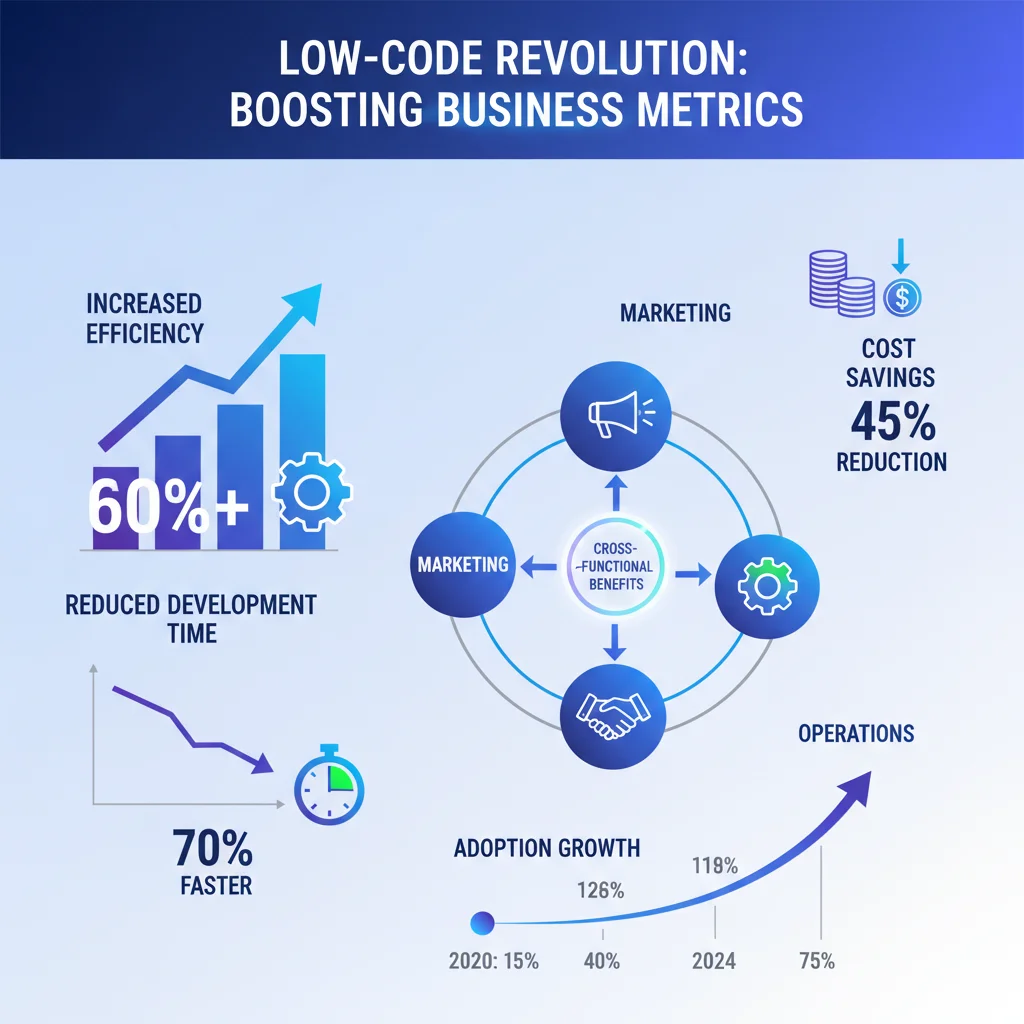
The Future is Visual: Embracing No-Code/Low-Code for Sustainable Growth
The trajectory of No-Code Low-Code Platforms is undeniably upward. What started as niche tools for rapid prototyping has evolved into a cornerstone of modern business strategy. As technology continues to advance, these platforms will become even more sophisticated, offering greater capabilities, deeper integrations, and enhanced AI-driven features, further solidifying their role in the enterprise.
The ability to quickly build, deploy, and iterate on applications without extensive coding is no longer a luxury; it’s a competitive necessity. Businesses that embrace this paradigm shift will be better equipped to adapt to market changes, innovate faster, and empower their entire workforce. The projected 35% boost in productivity by 2026 is a testament to the transformative power of these platforms, offering not just efficiency gains but a pathway to sustained growth and digital resilience.
Whether you’re an entrepreneur looking to launch your next big idea, a business leader striving for operational excellence, or an individual seeking to enhance your skillset, mastering No-Code Low-Code Platforms is a strategic investment in your future. The time to act is now. Dive into these tools, experiment, build, and become a part of the visual development revolution that is shaping the digital world.