The Green Economy Boom: U.S. Market Trends Driving Sustainable Career Paths in 2026
The global conversation around climate change and environmental sustainability has intensified, shifting from abstract concern to concrete action. At the forefront of this monumental shift is the burgeoning green economy US, a dynamic sector that is not only addressing ecological challenges but also fueling significant economic growth and creating a wealth of new career opportunities across the United States. As we look towards 2026, the trajectory of this green transformation is becoming clearer, promising a future where economic prosperity and environmental stewardship are inextricably linked.
The concept of a green economy encompasses industries and activities that contribute to a sustainable future, including renewable energy, energy efficiency, sustainable agriculture, waste management, green building, and eco-friendly manufacturing. It’s a holistic approach that seeks to reduce environmental risks and ecological scarcities, while simultaneously fostering sustainable development without degrading the environment. In the U.S., this sector is experiencing an unprecedented boom, driven by technological innovation, supportive government policies, increasing consumer demand for sustainable products and services, and a growing awareness of corporate social responsibility.
Understanding the current landscape and future projections of the green economy US is crucial for policymakers, businesses, and individuals alike. For businesses, it represents new markets, investment opportunities, and a chance to enhance brand reputation. For individuals, it signals a paradigm shift in the job market, offering purpose-driven careers that are both financially rewarding and environmentally impactful. This comprehensive article will delve into the key market trends shaping the green economy in the U.S., explore the driving forces behind its rapid expansion, and highlight the diverse sustainable career paths that are emerging and expected to flourish by 2026.
The Rise of Renewable Energy: Powering the Green Economy US
At the heart of the green economy US revolution is the dramatic expansion of the renewable energy sector. Solar, wind, geothermal, and hydropower technologies are no longer niche alternatives but mainstream power sources rapidly displacing traditional fossil fuels. The U.S. has witnessed significant investment and deployment in these areas, propelled by falling technology costs, federal and state incentives, and ambitious clean energy targets.
Solar energy, in particular, has seen exponential growth. The cost of solar photovoltaic (PV) panels has plummeted over the past decade, making solar power increasingly competitive with conventional electricity sources. This has led to a boom in utility-scale solar farms, commercial rooftop installations, and residential solar solutions. The demand for solar panel installers, solar engineers, project managers, and maintenance technicians is soaring, with projections indicating continued robust growth through 2026.
Wind energy is another cornerstone of the U.S. green economy. Vast wind farms, both onshore and increasingly offshore, are contributing a significant portion of the nation’s electricity. Advances in turbine technology, coupled with improved siting and grid integration, have made wind power highly efficient and scalable. This sector is generating demand for wind turbine technicians, manufacturing specialists, environmental impact assessors, and grid modernization experts. The development of offshore wind projects, in particular, is set to unlock substantial job creation in coastal regions.
Beyond solar and wind, other renewable energy sources are also gaining traction. Geothermal energy, which harnesses the Earth’s internal heat, offers a consistent baseload power supply and is seeing renewed interest in regions with suitable geological conditions. Hydropower, while a mature technology, continues to be optimized with new small-scale projects and upgrades to existing infrastructure. The diversification of the renewable energy portfolio is crucial for grid stability and energy security, and each segment contributes to the overall strength and job-creating potential of the green economy US.
The growth in renewable energy is not just about electricity generation; it also drives innovation in energy storage solutions, smart grid technologies, and electric vehicle (EV) charging infrastructure. The integration of battery storage systems with solar and wind farms is essential for ensuring reliable power supply, leading to demand for battery scientists, manufacturing engineers, and energy storage system designers. The burgeoning EV market further amplifies the need for clean electricity and associated infrastructure development, creating a virtuous cycle of growth within the green economy.
Sustainable Agriculture and Food Systems: Nurturing a Greener Future
The agricultural sector, traditionally a significant contributor to environmental impact, is undergoing a profound transformation to become a vital component of the green economy US. Sustainable agriculture practices aim to produce food in an environmentally friendly, socially responsible, and economically viable manner. This includes organic farming, regenerative agriculture, precision agriculture, and local food systems.
Consumer demand for organic, locally sourced, and sustainably produced food is on a sharp upward trend. This demand is pushing farmers to adopt practices that reduce pesticide use, conserve water, improve soil health, and minimize carbon footprints. Technologies like drones, GPS-guided machinery, and advanced sensor systems are enabling precision agriculture, allowing farmers to optimize resource use and boost yields while minimizing environmental impact. This creates opportunities for agronomists, soil scientists, data analysts, agricultural engineers, and sustainable farm managers.
Beyond the farm gate, the sustainable food system extends to processing, distribution, and consumption. Companies are investing in eco-friendly packaging, reducing food waste, and developing plant-based protein alternatives. The growth of urban farming, vertical farms, and controlled-environment agriculture (CEA) is also contributing to this sector, bringing food production closer to consumers and reducing transportation emissions. These innovations require expertise in hydroponics, aquaponics, urban planning, and logistics, adding diverse roles to the green economy US job market.
Regenerative agriculture, a practice focused on restoring soil health and biodiversity, is gaining significant traction. By sequestering carbon in the soil, regenerative practices offer a powerful natural climate solution. This area needs researchers, educators, and practitioners who can implement and scale these methods. The shift towards sustainable food systems also involves policy development, supply chain optimization, and consumer education, opening up roles in advocacy, marketing, and community development within the green sector.
Energy Efficiency and Green Building: Foundations of the Green Economy US
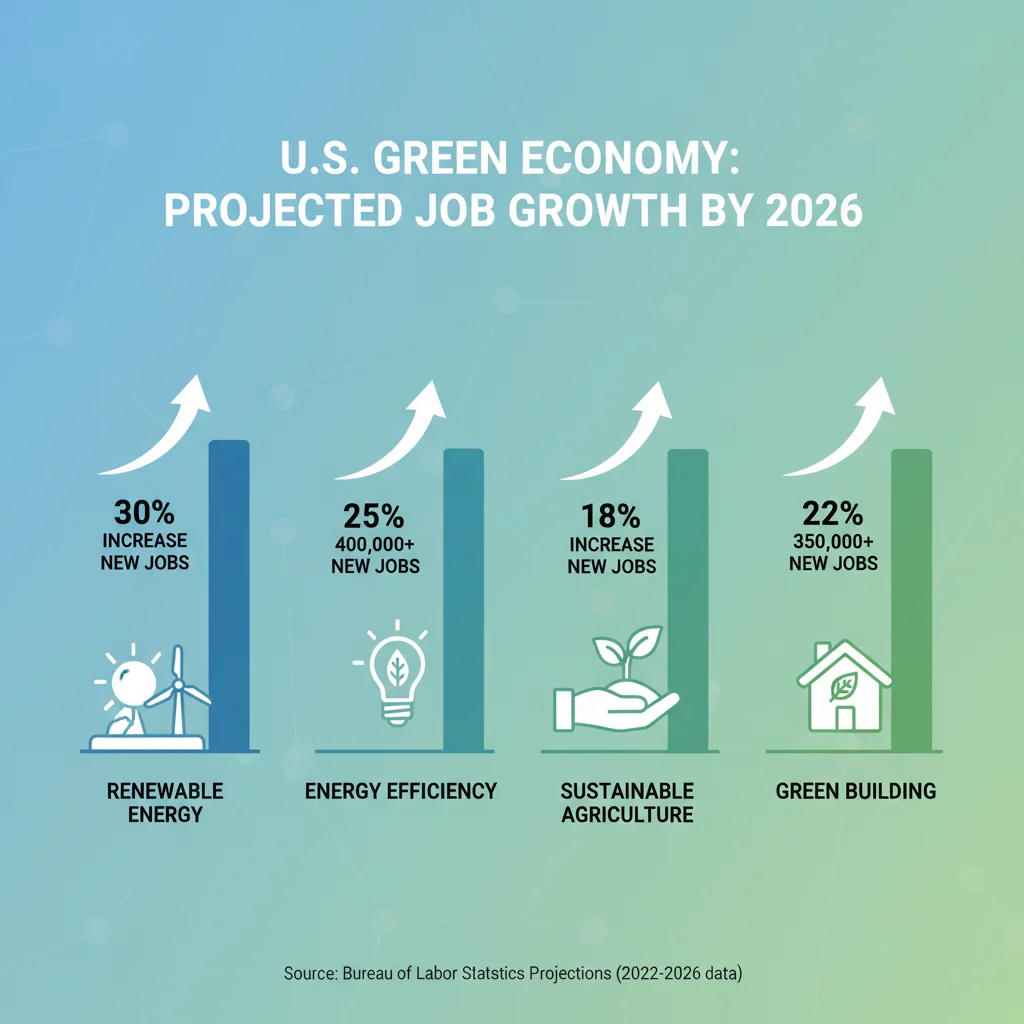
Improving energy efficiency in buildings and industrial processes is one of the most cost-effective ways to reduce greenhouse gas emissions and strengthen the green economy US. The focus here is on reducing energy consumption through better design, advanced materials, and smart technologies. Green building practices are becoming standard rather than exceptional, driven by certifications like LEED (Leadership in Energy and Environmental Design) and increasing awareness of the financial and environmental benefits.
The green building sector encompasses a wide range of activities, from the design and construction of new energy-efficient structures to the retrofitting of existing buildings. This includes installing high-efficiency HVAC systems, improving insulation, utilizing smart thermostats, and integrating renewable energy sources directly into buildings. The demand for green architects, sustainable construction managers, energy auditors, building performance analysts, and skilled tradespeople specializing in energy-efficient installations is substantial and growing.
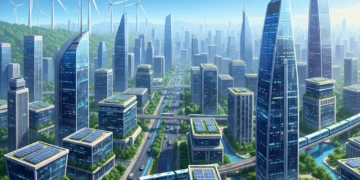
Furthermore, the development of smart cities and resilient infrastructure is a key trend. This involves integrating advanced sensors, data analytics, and interconnected systems to optimize energy use, manage waste, and improve urban living. This technological integration creates opportunities for urban planners, smart grid engineers, data scientists, and IoT (Internet of Things) specialists who can design and implement these sophisticated solutions within the green economy US framework.
Industrial energy efficiency is also a critical area. Many industries are adopting new technologies and processes to reduce their energy consumption and waste generation. This includes optimizing manufacturing processes, implementing combined heat and power (CHP) systems, and recovering waste heat. Expertise in industrial engineering, process optimization, and environmental compliance is highly sought after in this sub-sector, contributing to a more sustainable and competitive manufacturing base in the U.S.
Waste Management and Circular Economy: Redefining Resource Use
Traditional linear economic models, where resources are extracted, used, and then discarded, are increasingly unsustainable. The green economy US is rapidly embracing the principles of the circular economy, which aims to keep resources in use for as long as possible, extract the maximum value from them whilst in use, then recover and regenerate products and materials at the end of each service life. This paradigm shift is transforming waste management into resource management.
Recycling and composting initiatives are expanding, with advanced sorting technologies and processing facilities. This creates jobs in waste collection, processing, and material recovery. However, the circular economy goes beyond recycling, focusing on upstream strategies like product design for durability, reusability, and repairability. This necessitates a shift in industrial design, engineering, and manufacturing processes.
New business models are emerging, such as product-as-a-service, where companies retain ownership of products and lease them to customers, thereby incentivizing durability and end-of-life recovery. This requires innovation in supply chain management, logistics, and customer service. The demand for circular economy specialists, sustainable product designers, lifecycle assessment analysts, and reverse logistics experts is on the rise. Moreover, the development of bio-based and biodegradable materials is another critical area, reducing reliance on fossil-fuel-derived plastics and creating opportunities for material scientists and chemists within the green economy US.
Waste-to-energy technologies, which convert non-recyclable waste materials into usable heat, electricity, or fuel, also play a role in this sector, offering alternative solutions for waste disposal. This area requires engineers, operations managers, and environmental compliance officers. The overarching goal is to minimize landfill waste and maximize resource utilization, fostering a more resilient and sustainable industrial ecosystem.
Green Finance and Investment: Fueling the Transition
The transition to a green economy US would not be possible without significant financial investment. Green finance refers to financial products and services that facilitate the transition to a more sustainable economy. This includes green bonds, sustainable investment funds, carbon credits, and impact investing. Mainstream financial institutions are increasingly integrating environmental, social, and governance (ESG) criteria into their investment decisions, recognizing both the risks of climate change and the opportunities presented by sustainable businesses.
The market for green bonds, which are debt instruments issued to finance environmentally friendly projects, has grown exponentially. Investors are keen to support projects that contribute to renewable energy, energy efficiency, sustainable water management, and green buildings. This trend is creating new roles for financial analysts, portfolio managers, risk assessors, and sustainability consultants who specialize in ESG integration and green investment strategies.
Impact investing, which seeks to generate both financial returns and positive social and environmental impact, is also gaining momentum. High-net-worth individuals, foundations, and institutional investors are directing capital towards businesses and projects that align with their sustainability goals. This requires expertise in evaluating the environmental and social performance of investments, as well as traditional financial analysis.
Furthermore, the development of carbon markets and emissions trading schemes creates opportunities for carbon traders, market analysts, and policy experts. These mechanisms incentivize companies to reduce their carbon emissions, driving innovation and investment in cleaner technologies. The legal and regulatory frameworks surrounding green finance are also evolving rapidly, creating demand for environmental lawyers and compliance officers within the expanding green economy US.
Policy and Innovation: Driving Forces for the Green Economy US
Government policies and continuous technological innovation are indispensable drivers for the growth of the green economy US. Federal and state governments are implementing a range of policies designed to accelerate the transition to a sustainable future, including tax credits for renewable energy, mandates for clean energy adoption, carbon pricing mechanisms, and funding for research and development.
The Biden administration, for instance, has placed a strong emphasis on climate action, setting ambitious targets for emissions reductions and investing heavily in clean energy infrastructure. Legislation like the Infrastructure Investment and Jobs Act and the Inflation Reduction Act are channeling billions of dollars into renewable energy, electric vehicles, energy efficiency, and environmental justice initiatives. These policies create a stable and predictable regulatory environment that encourages private sector investment and job creation.
Technological innovation is equally crucial. Breakthroughs in battery storage, advanced materials, artificial intelligence, and biotechnology are continually expanding the possibilities within the green economy. For example, advancements in carbon capture, utilization, and storage (CCUS) technologies offer potential solutions for hard-to-abate industrial emissions, creating new engineering and research roles. The development of sustainable aviation fuels and green hydrogen also represents significant areas of future growth and innovation.
The interplay between policy and innovation is dynamic. Government support often de-risks nascent technologies, allowing them to scale and become commercially viable. Conversely, technological advancements can inform and shape future policy directions. This symbiotic relationship ensures that the green economy US remains at the cutting edge of environmental solutions and economic development.
Moreover, the academic sector plays a vital role in this ecosystem, conducting fundamental research, developing new technologies, and educating the next generation of green professionals. Universities and research institutions are increasingly offering specialized programs in sustainability, environmental engineering, renewable energy, and green business, preparing individuals for the evolving demands of the green job market.
Emerging Career Paths and Skills for 2026 and Beyond
The rapid expansion of the green economy US is creating a diverse array of career opportunities that often require interdisciplinary skills. By 2026, many of these roles will be well-established, while new ones will continue to emerge. For individuals looking to enter or transition into this sector, understanding the required skill sets is paramount.
Technical skills are, of course, essential. This includes expertise in renewable energy technologies (solar PV installation, wind turbine maintenance), environmental engineering (water treatment, waste management), sustainable agriculture (precision farming techniques, soil science), and green building design (LEED certification, energy modeling). As the sector matures, there will be a growing need for specialized technicians, engineers, and scientists.
However, the green economy also places a high value on soft skills and interdisciplinary knowledge. Problem-solving, critical thinking, adaptability, and collaboration are crucial, as green solutions often require integrating diverse technologies and working across different sectors. Communication skills are also vital for advocating for sustainable practices, educating stakeholders, and explaining complex environmental concepts.
Here’s a glimpse into some of the key career paths expected to thrive in the green economy US by 2026:
- Renewable Energy Engineers & Technicians: Designing, installing, and maintaining solar panels, wind turbines, and other renewable energy systems.
- Environmental Scientists & Consultants: Assessing environmental impacts, developing mitigation strategies, and advising businesses on sustainability practices.
- Sustainability Managers & Officers: Leading corporate sustainability initiatives, ensuring compliance with environmental regulations, and reporting on ESG performance.
- Green Building Specialists: Designing and constructing energy-efficient buildings, performing energy audits, and managing green certification processes.
- Agronomists & Soil Scientists: Developing and implementing sustainable farming practices, improving soil health, and optimizing crop yields.
- Water Resource Managers: Developing strategies for sustainable water use, wastewater treatment, and watershed management.
- Circular Economy Specialists: Designing products for longevity, managing waste reduction programs, and developing reverse logistics systems.
- Environmental Policy Analysts: Researching and developing policies to address environmental challenges and promote sustainable development.
- Green Finance Analysts: Evaluating investment opportunities based on ESG criteria and developing sustainable financial products.
- Electric Vehicle (EV) Infrastructure Engineers: Designing and deploying charging networks and smart grid integration for EVs.
Continuous learning and upskilling will be critical for success in these evolving roles. Many universities and vocational schools are now offering specialized certifications and degrees in various aspects of the green economy, providing pathways for individuals to acquire the necessary expertise.
Challenges and Opportunities for the Green Economy US
While the outlook for the green economy US is overwhelmingly positive, it is not without its challenges. One significant hurdle is the need for massive infrastructure upgrades, particularly in the electricity grid, to accommodate the influx of renewable energy and support electric vehicle charging. This requires substantial investment and coordinated planning across different states and utilities.
Another challenge lies in workforce development. While new jobs are being created, there’s a need to ensure that the workforce has the necessary skills to fill these roles. This involves retraining workers from traditional industries, attracting new talent, and ensuring equitable access to green job training programs. Addressing potential supply chain disruptions, particularly for critical minerals used in renewable energy technologies and batteries, is also an ongoing concern.
Despite these challenges, the opportunities presented by the green economy US far outweigh them. The drive for sustainability is fostering innovation, creating new industries, and enhancing the nation’s economic competitiveness. By investing in clean technologies, the U.S. can reduce its reliance on volatile global energy markets, improve public health, and create millions of well-paying jobs.
Furthermore, the green economy offers a path towards greater energy independence and national security. Diversifying energy sources and localizing supply chains can buffer the nation from geopolitical disruptions and economic shocks. The focus on environmental justice within green initiatives also presents an opportunity to address historical inequities and ensure that the benefits of the green transition are shared equitably across all communities.
Conclusion: A Sustainable Future Powered by the Green Economy US
The journey towards a sustainable future is well underway, and the green economy US is leading the charge. From the soaring growth of renewable energy to the transformative practices in sustainable agriculture, and the foundational shifts in green building and circular economy principles, the U.S. market is demonstrating a robust commitment to environmental stewardship and economic innovation. By 2026, these trends are expected to solidify, creating a vibrant landscape of opportunities for businesses, investors, and individuals.
The confluence of technological advancements, supportive government policies, increasing consumer awareness, and significant financial investment is creating a powerful momentum that is reshaping industries and redefining career paths. The demand for skilled professionals across a spectrum of green sectors is set to continue its upward trajectory, offering fulfilling and impactful careers for those willing to embrace the challenges and seize the opportunities presented by this transformative era.
As we navigate the complexities of climate change and resource scarcity, the green economy US stands as a beacon of hope, demonstrating that economic growth and environmental protection are not mutually exclusive but rather synergistic forces driving a more resilient, equitable, and prosperous future for all. Investing in and participating in this green revolution is not just an environmental imperative; it is a strategic economic decision that will define the U.S. landscape for decades to come.