The landscape of energy production is undergoing a profound transformation, with the United States at the forefront of this global shift. As we look towards 2026, the US Renewable Energy sector is not just growing; it’s accelerating at an unprecedented pace, driven by a confluence of technological innovation, favorable policies, and increasing environmental consciousness. This article will delve into three pivotal insights that define the trajectory of the U.S. renewable energy market, offering a comprehensive look at what to expect in the coming years.
The commitment to decarbonization and energy independence has placed renewable sources like solar, wind, and hydropower firmly in the spotlight. The implications of this shift are far-reaching, impacting everything from national security and economic development to local job markets and environmental health. Understanding these dynamics is crucial for investors, policymakers, and the general public alike, as the transition to clean energy reshapes our future.
Insight 1: The Irreversible Momentum of Policy Support and Regulatory Frameworks
The journey towards a greener energy future in the United States is significantly bolstered by a robust and evolving framework of policy support and regulatory incentives. This isn’t a new phenomenon, but the scale and scope of recent legislative actions have injected an irreversible momentum into the US Renewable Energy sector. From federal initiatives to state-level mandates, these policies are designed to reduce barriers, incentivize investment, and accelerate the deployment of clean energy technologies.
Federal Catalysts: The Inflation Reduction Act (IRA) and Beyond
A cornerstone of current federal policy driving renewable energy growth is the Inflation Reduction Act (IRA) of 2022. This landmark legislation represents the largest climate investment in U.S. history, offering an estimated $369 billion in tax credits, rebates, and other incentives for clean energy and climate programs over the next decade. For the US Renewable Energy sector, the IRA extends and expands tax credits for solar, wind, geothermal, and other renewable technologies, making these projects significantly more economically viable. For instance, the investment tax credit (ITC) and production tax credit (PTC) have been extended for many renewable energy projects, providing long-term certainty for developers and investors.
Beyond direct financial incentives, the IRA also includes provisions aimed at strengthening domestic manufacturing of clean energy components, fostering a robust supply chain within the U.S. This focus on domestic production not only creates jobs but also enhances energy security and reduces reliance on foreign supply chains, which have proven vulnerable to geopolitical disruptions. Furthermore, the act encourages energy storage deployment, a critical component for grid stability and the integration of intermittent renewable sources.
Other federal programs, though perhaps not as expansive as the IRA, continue to play a vital role. The Department of Energy (DOE) offers various grants, loan programs, and research and development funding opportunities that push the boundaries of renewable energy innovation. These programs often target emerging technologies or focus on overcoming specific technical or market challenges, ensuring a continuous pipeline of advancements for the US Renewable Energy landscape.
State-Level Leadership: Diverse Approaches, Unified Goals
While federal policy sets a powerful national direction, state-level policies are equally crucial in shaping the renewable energy transition. Many states have implemented aggressive Renewable Portfolio Standards (RPS), mandating that a certain percentage of their electricity come from renewable sources by a specific date. These mandates create a guaranteed market for renewable energy, driving utility-scale development and investment.
For example, states like California, New York, and Massachusetts have set some of the most ambitious RPS goals, leading to significant investments in solar, wind, and offshore wind projects. Other states have adopted different mechanisms, such as clean energy standards, net metering policies for rooftop solar, and favorable permitting processes, all contributing to a diverse but unified effort to expand the US Renewable Energy footprint. The interplay between federal and state policies creates a dynamic and often synergistic environment, where local innovations can inform national strategies and vice versa.
Moreover, several states are actively investing in grid modernization and resilience, recognizing that a robust and intelligent grid is essential for integrating higher percentages of intermittent renewable energy. This includes investments in smart grid technologies, energy storage solutions, and transmission infrastructure upgrades, all of which are critical enablers for the continued growth of US Renewable Energy.
International Commitments and Global Pressure
While primarily domestic, U.S. policy is also influenced by international commitments and global climate targets. The U.S. rejoining the Paris Agreement signaled a renewed commitment to global climate action, further solidifying the imperative to transition away from fossil fuels. This international pressure, combined with a growing awareness of climate change impacts, reinforces the long-term policy stability for the US Renewable Energy sector. Businesses and investors can operate with greater confidence, knowing that the policy environment is likely to remain supportive for the foreseeable future.
In summary, the policy and regulatory landscape for US Renewable Energy is characterized by a strong, multi-layered approach that provides both financial incentives and market certainty. This robust support system is a primary driver of the sector’s current growth and will continue to be a critical factor in its expansion through 2026 and beyond.
Insight 2: Technological Advancements Driving Efficiency and Cost Reductions
The remarkable growth of the US Renewable Energy sector would not be possible without the relentless march of technological innovation. Over the past decade, advancements in solar, wind, and energy storage technologies have dramatically increased efficiency while simultaneously driving down costs, making renewable energy not just environmentally preferable but also economically competitive with traditional fossil fuels. This trend is set to continue, with 2026 promising even more sophisticated and cost-effective solutions.
Solar Power: Beyond the Photovoltaic Panel
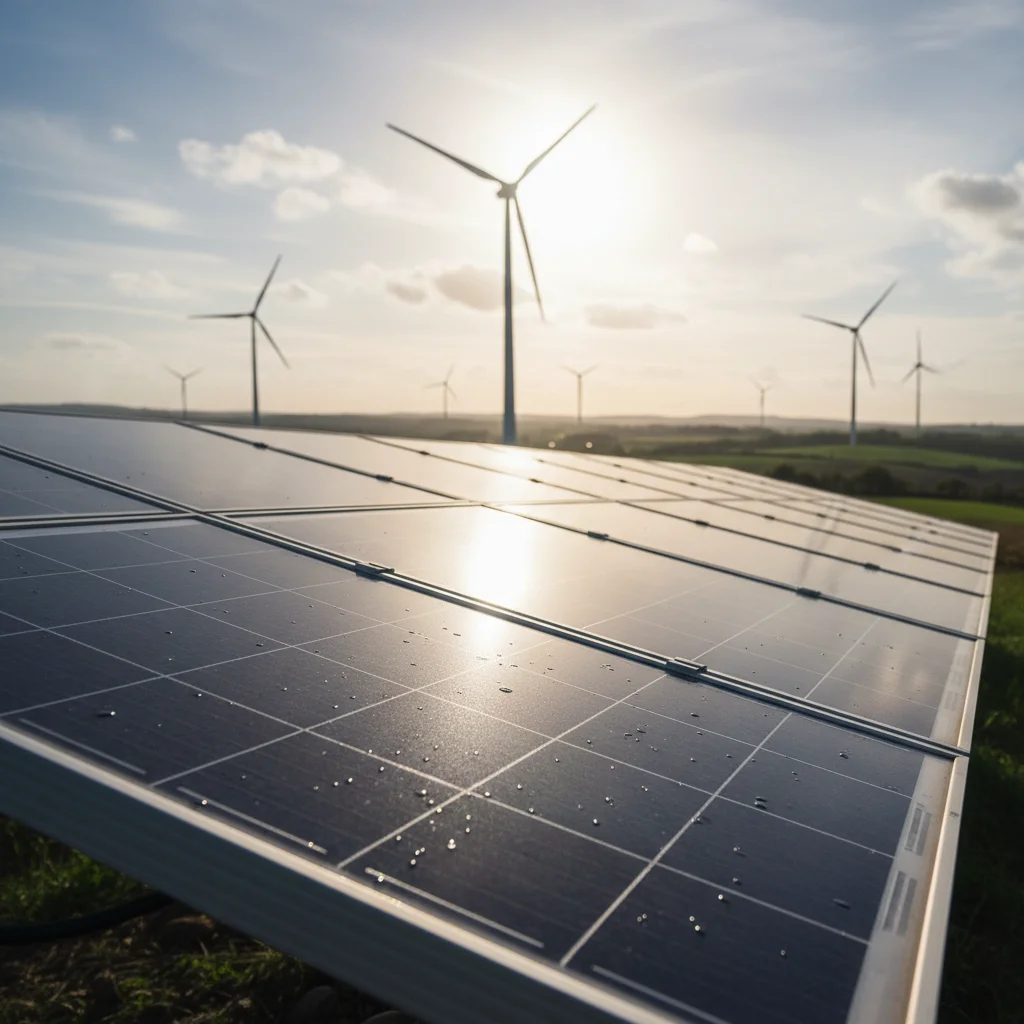
Solar photovoltaic (PV) technology has seen astounding progress. The efficiency of solar panels, measured by the amount of sunlight converted into electricity, has steadily improved, while manufacturing costs have plummeted. This has made solar power the cheapest form of new electricity generation in many parts of the U.S. Looking ahead to 2026, we can expect further incremental gains in panel efficiency, driven by new materials science and manufacturing techniques, such as perovskite solar cells and bifacial modules that capture sunlight from both sides.
However, the innovation in solar extends far beyond the panel itself. Advancements in inverter technology, particularly smart inverters, are enhancing grid integration capabilities, allowing solar installations to provide essential grid services like voltage support. Furthermore, the rise of Building-Integrated Photovoltaics (BIPV) and agrivoltaics (combining solar power generation with agriculture) is opening up new deployment avenues, maximizing land use and aesthetics. Distributed solar, including rooftop installations and community solar projects, will continue to expand, empowered by easier installation, smart home integration, and improved financing options.
Wind Power: Taller Turbines, Offshore Potential
Wind energy has also undergone significant technological evolution. Modern wind turbines are larger, more efficient, and capable of generating more electricity per unit. Blade designs have become more aerodynamic, and advanced control systems optimize power output in varying wind conditions. The trend towards taller turbines with longer blades allows them to capture stronger, more consistent winds at higher altitudes, significantly increasing their capacity factors.
The most transformative development in wind power for the US Renewable Energy sector is the rapid expansion of offshore wind. The U.S. has vast offshore wind resources, particularly along the East Coast, and technological advancements are making these projects increasingly feasible. Floating offshore wind platforms, for instance, are a game-changer for deeper waters, unlocking even more potential. As manufacturing scales and installation techniques become more refined, the cost of offshore wind is projected to fall, making it a major contributor to the U.S. energy mix by 2026.
Energy Storage: The Linchpin of Renewable Integration
Perhaps the most critical technological advancement supporting the growth of intermittent renewables like solar and wind is energy storage, primarily in the form of batteries. Lithium-ion battery technology, initially driven by the electric vehicle market, has seen dramatic cost reductions and improvements in energy density and cycle life. These advancements are making grid-scale battery storage economically viable, allowing renewable energy to be stored when generation is high and dispatched when demand is high or generation is low.
Beyond lithium-ion, research and development are exploring a wide array of alternative storage technologies, including flow batteries, solid-state batteries, and long-duration storage solutions like compressed air energy storage (CAES) and pumped-hydro storage. These diverse options will be crucial for achieving a highly reliable and fully decarbonized grid. By 2026, integrated solutions combining solar or wind generation with co-located battery storage will become the norm, further enhancing the reliability and dispatchability of US Renewable Energy.
Smart Grid and AI Integration
Underpinning all these advancements is the evolution of smart grid technologies and the increasing integration of artificial intelligence (AI) and machine learning. AI-driven forecasting models can predict renewable energy generation and electricity demand with greater accuracy, optimizing grid operations. Smart grid infrastructure enables two-way communication between utilities and consumers, facilitating demand-side management and the integration of distributed energy resources. These digital advancements are essential for managing a complex, decentralized energy system dominated by US Renewable Energy sources.
In essence, the technological frontier of renewable energy is constantly expanding, pushing boundaries in efficiency, cost-effectiveness, and integration capabilities. These innovations are not only making renewable energy competitive but are positioning it as the preferred choice for future power generation in the U.S.
Insight 3: Surging Investment and New Economic Opportunities
The rapid expansion of the US Renewable Energy sector is attracting unprecedented levels of investment, transforming it into a powerhouse of economic activity and a significant creator of new jobs. This influx of capital, driven by both private and public sources, is a clear indicator of the market’s confidence in the long-term viability and profitability of clean energy projects. By 2026, the economic footprint of renewable energy will be even more substantial, generating a wealth of opportunities across various sectors.
Private Sector Investment Boom
Private capital is flowing into the US Renewable Energy sector at an accelerating rate. Institutional investors, including pension funds, sovereign wealth funds, and private equity firms, are increasingly allocating significant portions of their portfolios to sustainable infrastructure. They are attracted by the stable, long-term returns offered by renewable energy projects, often backed by long-term power purchase agreements (PPAs) that provide revenue certainty.
Corporate investment is also surging. Many corporations are setting ambitious renewable energy targets, either by directly investing in projects or by signing PPAs to procure clean electricity. This trend is driven by a combination of corporate social responsibility, brand reputation, and the desire to hedge against volatile fossil fuel prices. The competitive landscape for renewable energy development is becoming more crowded, indicating a healthy and maturing market.
Furthermore, venture capital and growth equity are actively funding innovative startups in areas such as advanced materials for solar cells, novel battery chemistries, grid optimization software, and green hydrogen production. These investments are critical for pushing the next wave of technological breakthroughs that will further enhance the US Renewable Energy ecosystem.

Job Creation and Workforce Development
The growth of the US Renewable Energy sector is a significant engine for job creation. Unlike fossil fuel industries, which are often highly automated, renewable energy projects require a diverse range of skills across manufacturing, installation, operations, and maintenance. Solar installers, wind turbine technicians, manufacturing workers for components, project managers, engineers, and researchers are all in high demand.
The focus on domestic manufacturing, spurred by policies like the IRA, means that more of these jobs are being created within the U.S. This not only strengthens local economies but also provides opportunities for workforce retraining and development, particularly for communities transitioning away from fossil fuel industries. Educational institutions and vocational training programs are adapting to meet this demand, ensuring a skilled workforce for the future of US Renewable Energy.
Economic Benefits Beyond Direct Investment
The economic benefits of renewable energy extend beyond direct investment and job creation. Local communities hosting renewable energy projects often receive significant tax revenues and lease payments, which can be used to fund schools, infrastructure, and other public services. This provides a stable and predictable revenue stream, particularly for rural areas where many large-scale solar and wind farms are located.
Additionally, the shift to renewable energy reduces the U.S.’s reliance on imported fossil fuels, enhancing energy security and stabilizing energy prices. This has macroeconomic benefits, reducing vulnerability to geopolitical shocks and keeping more capital within the domestic economy. The lower operational costs of renewable energy, once built, also contribute to long-term energy affordability for consumers and businesses.
The Rise of Green Finance and ESG Investing
The broader financial landscape is also evolving to support renewable energy. Green bonds and other sustainable finance instruments are gaining popularity, allowing investors to directly fund environmentally beneficial projects. Environmental, Social, and Governance (ESG) investing criteria are becoming mainstream, pushing companies to adopt more sustainable practices and driving capital towards businesses aligned with clean energy transition. This trend ensures a continuous and expanding pool of capital for US Renewable Energy projects.
In conclusion, the economic opportunities presented by the US Renewable Energy sector are vast and growing. The convergence of private capital, job creation, and broader economic benefits positions renewable energy as a key driver of future prosperity and innovation in the United States.
Challenges and the Path Forward for US Renewable Energy
While the outlook for US Renewable Energy is overwhelmingly positive, it’s important to acknowledge and address the challenges that lie ahead. Overcoming these hurdles will be crucial for sustaining the sector’s rapid growth and ensuring a smooth transition to a clean energy economy.
Grid Modernization and Transmission Infrastructure
One of the most significant challenges is the need for substantial upgrades to the U.S. electricity grid and transmission infrastructure. The current grid was largely built for a centralized, fossil-fuel-based power system and is not ideally suited for integrating vast amounts of distributed and intermittent renewable energy. Bottlenecks in transmission can prevent new solar and wind projects from connecting to the grid, delaying deployment and increasing costs. Significant investment in new high-voltage transmission lines, smart grid technologies, and advanced grid controls is essential to accommodate the increasing penetration of US Renewable Energy.
Supply Chain Resilience and Critical Minerals
As the renewable energy sector scales, ensuring a resilient and diversified supply chain for key components and critical minerals becomes paramount. The production of solar panels, wind turbine components, and especially batteries relies on a range of materials, some of which are concentrated in a few geopolitical regions. Building domestic manufacturing capabilities and exploring alternative materials and recycling solutions are vital to mitigate supply chain risks and ensure the long-term sustainability of US Renewable Energy growth.
Permitting and Siting
The process of permitting and siting new renewable energy projects can be complex and time-consuming, involving multiple federal, state, and local agencies. Streamlining these processes while ensuring robust environmental and community engagement is a delicate balance. Efficient permitting is critical to accelerating the deployment of projects and meeting ambitious clean energy targets for the US Renewable Energy sector.
Intermittency and Energy Storage Integration
While energy storage technologies are rapidly advancing, the challenge of intermittency (solar only generates when the sun shines, wind only when the wind blows) remains. Integrating even higher percentages of renewables will require massive deployments of long-duration energy storage solutions, as well as sophisticated demand-side management and grid flexibility measures. Continued investment in R&D for next-generation storage and smart grid solutions is essential.
Workforce Development and Equity
Ensuring that the benefits of the clean energy transition are shared equitably is another important consideration. This includes providing training and reskilling opportunities for workers in declining fossil fuel industries, ensuring access to clean energy technologies for low-income communities, and promoting diversity and inclusion within the US Renewable Energy workforce.
Addressing these challenges will require concerted effort from policymakers, industry, researchers, and communities. However, the strong policy support, technological innovation, and investment momentum indicate that the U.S. is well-positioned to navigate these hurdles and continue its leadership in the global clean energy transition.
Conclusion: A Bright Future for US Renewable Energy by 2026
The outlook for the US Renewable Energy sector by 2026 is one of robust growth, driven by a powerful combination of supportive policies, groundbreaking technological advancements, and a surge in both public and private investment. The insights discussed – the unwavering commitment of policy frameworks, the continuous evolution of efficiency and cost-effectiveness in technologies, and the burgeoning economic opportunities – paint a clear picture of a sector poised for unprecedented expansion.
The U.S. is not merely adopting renewable energy; it is actively shaping its future, becoming a global leader in innovation and deployment. While challenges related to grid infrastructure, supply chains, and permitting remain, the collective will and ongoing investments are setting the stage for overcoming these obstacles. The transition to clean energy is more than an environmental imperative; it is an economic opportunity, a catalyst for job creation, and a cornerstone of future energy security.
As we approach 2026, the US Renewable Energy landscape will be characterized by a more diversified energy mix, a more resilient grid, and a more sustainable economy. Businesses, communities, and individuals stand to benefit from cleaner air, stable energy prices, and a vibrant new industry that is redefining what’s possible in power generation. The journey is ongoing, but the direction is clear, and the momentum is undeniable.