AI Resume Optimization 2026: Pass Automated Screeners
In the rapidly evolving landscape of job applications, traditional resumes are becoming relics of the past. The year 2026 marks a significant shift, with artificial intelligence (AI) becoming an omnipresent gatekeeper in the hiring process. To navigate this new terrain and ensure your application stands out, mastering AI resume optimization is no longer an option but a necessity. This comprehensive guide will walk you through a crucial 3-step strategy to not only pass automated screeners but also impress human eyes, significantly boosting your chances of landing your dream job.
The ubiquity of Applicant Tracking Systems (ATS) and other AI-powered recruitment tools means that your resume’s first audience is rarely human. These sophisticated algorithms are designed to filter out applications that don’t meet specific criteria, often based on keywords, formatting, and structural elements. Without proper AI resume optimization, even the most qualified candidates can find their applications discarded before ever reaching a recruiter’s desk. This article delves deep into understanding how these systems work and, more importantly, how you can leverage that knowledge to your advantage.
The job market of 2026 demands a proactive approach. Simply having a well-written resume is no longer enough. You need a resume that is not only compelling but also strategically engineered to communicate effectively with AI. Our 3-step guide to AI resume optimization is designed to provide you with actionable insights and techniques to transform your resume into an AI-friendly powerhouse. From deconstructing job descriptions to utilizing AI writing tools and understanding ATS logic, we cover all bases to ensure your success.
The Rise of AI in Recruitment: Why Your Resume Needs an Upgrade
The past few years have seen an exponential rise in the adoption of AI in various industries, and recruitment is no exception. Companies are increasingly relying on AI to streamline their hiring processes, reduce bias (theoretically), and efficiently sift through thousands of applications. This shift has profound implications for job seekers. Understanding the mechanisms behind AI-driven recruitment is the first step towards effective AI resume optimization.
How AI and ATS Systems Work
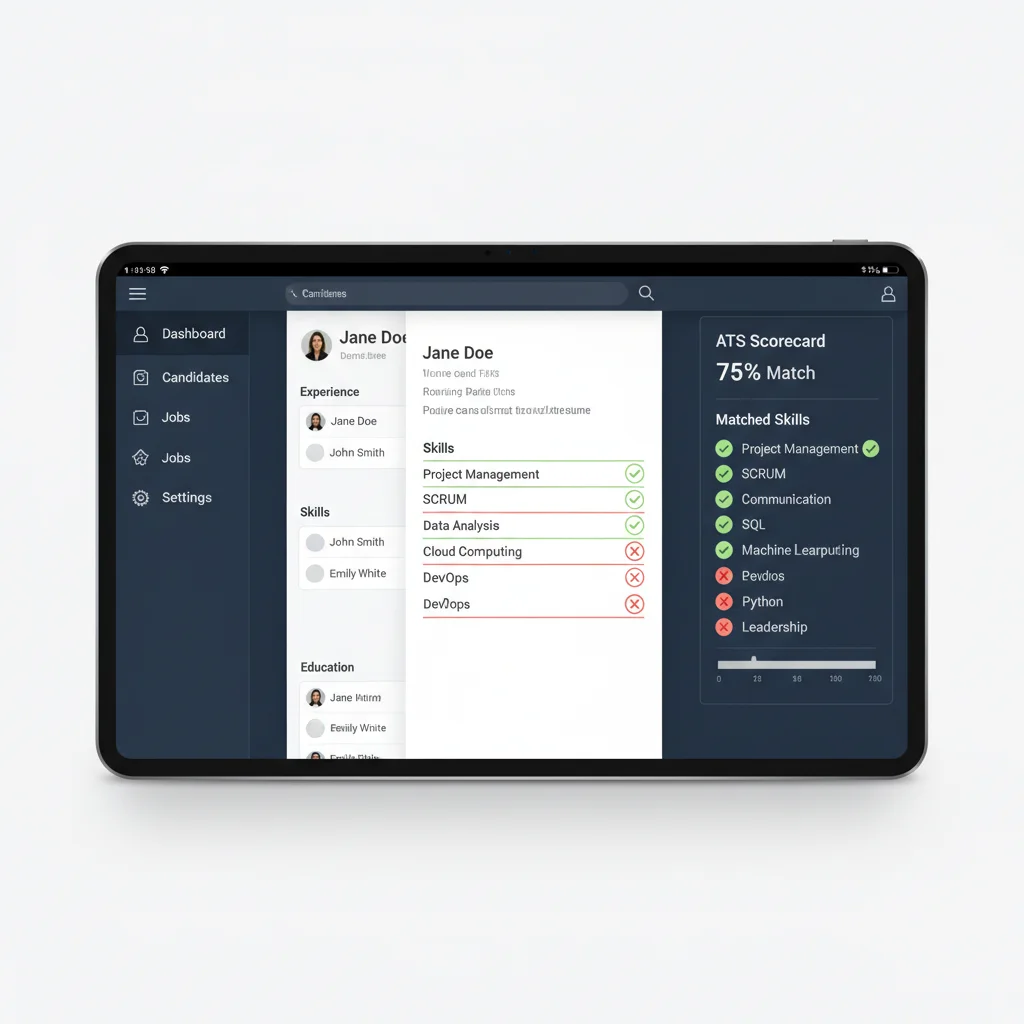
At its core, an ATS is a software application that handles recruitment and hiring needs. When you submit your resume online, it’s typically fed into an ATS. These systems then parse the document, extracting key information such as your contact details, work experience, education, and skills. AI capabilities within these systems go a step further, often employing natural language processing (NLP) to identify keywords, evaluate relevance to job descriptions, and even score candidates based on predetermined criteria.
The primary goal of an ATS is to save recruiters time by presenting them with a curated list of the most suitable candidates. However, this efficiency comes at a cost if your resume isn’t optimized. A poorly formatted resume, or one lacking specific keywords, might be misinterpreted or overlooked entirely by the AI, regardless of your qualifications. This is precisely where the importance of AI resume optimization comes into play.
The Impact on Job Seekers
For job seekers, this means that merely listing your accomplishments isn’t enough. You must present them in a way that AI can easily understand and categorize. This involves a strategic approach to keyword usage, formatting, and content structure. The days of a one-size-fits-all resume are long gone. Each application now requires a degree of customization and strategic optimization to align with the specific demands of the role and the expectations of the AI screener. Ignoring this trend is akin to sending a physical letter in an email-dominated world – it simply won’t reach its intended recipient.
Step 1: Deconstruct the Job Description – The Foundation of AI Resume Optimization
The job description is your blueprint for successful AI resume optimization. It contains all the clues you need to tailor your resume specifically for the role and, more importantly, for the AI tasked with screening it. This step is about meticulous analysis and strategic extraction of information.
Identify Key Skills and Qualifications
Begin by thoroughly reading the job description, not just once, but multiple times. As you read, highlight or list all the essential skills, tools, technologies, and qualifications mentioned. Pay close attention to how they are phrased. For instance, if a job description specifies ‘Proficiency in Python programming,’ ensure your resume uses that exact phrase, rather than just ‘Python skills.’ AI systems are often literal in their keyword matching.
Look for both hard skills (e.g., ‘Data Analysis,’ ‘Cloud Computing,’ ‘Project Management Software’) and soft skills (e.g., ‘Communication,’ ‘Teamwork,’ ‘Problem-Solving’). While hard skills are easier for AI to identify, a balanced representation of both, articulated using the employer’s language, is crucial. Create a master list of these keywords. This list will be your guiding star for the rest of the AI resume optimization process.
Analyze Frequency and Importance
Beyond simply identifying keywords, analyze their frequency and context within the job description. Keywords that appear multiple times are likely considered highly important by the employer and, consequently, by the AI screener. Prioritize incorporating these high-frequency keywords naturally throughout your resume. Consider using a word cloud generator or a simple text analysis tool to visually identify the most prominent terms. This helps you understand the employer’s priorities and align your resume accordingly.
Understand the Nuances of Language
AI systems are becoming more sophisticated, but they still rely heavily on direct matches. Be mindful of synonyms and industry jargon. If the job description uses a specific term, use that term. For example, if it says ‘CRM software experience,’ don’t just put ‘customer relationship management systems’ if ‘CRM’ is consistently used. This level of precision is vital for effective AI resume optimization.
Also, pay attention to action verbs used in the job description. These often indicate the desired behaviors and responsibilities for the role. Incorporate similar action verbs into your bullet points to describe your achievements, showing alignment with the company’s expectations. This not only aids AI but also makes your accomplishments more impactful for human readers.
Step 2: Optimize Your Resume Content – Speaking the AI’s Language
Once you have a clear understanding of the job description’s demands, the next step in AI resume optimization is to strategically integrate those insights into your resume’s content. This involves careful keyword placement, quantifiable achievements, and a clear, concise presentation.
Strategic Keyword Integration
This is arguably the most critical aspect of AI resume optimization. Your goal is to embed the identified keywords naturally throughout your resume, making it highly relevant to the AI without sounding forced or repetitive. Here’s how:
- Summary/Objective Statement: Start strong. Your professional summary or objective is an excellent place to include 3-5 high-impact keywords that immediately signal your relevance to the AI.
- Skills Section: Create a dedicated ‘Skills’ section. Break it down into categories like ‘Technical Skills,’ ‘Software Proficiency,’ ‘Languages,’ etc., and list all relevant keywords identified from the job description. Be specific. Instead of ‘Marketing,’ list ‘Digital Marketing,’ ‘SEO,’ ‘Content Marketing,’ ‘Social Media Strategy.’
- Experience Section: Integrate keywords into your bullet points describing your responsibilities and achievements. For example, instead of ‘Managed projects,’ try ‘Led cross-functional teams in agile project management, delivering X product on time and 10% under budget.’
- Education and Certifications: If the job description mentions specific degrees, certifications, or courses, ensure they are clearly listed and match the phrasing.
Avoid ‘keyword stuffing.’ AI systems are becoming intelligent enough to detect unnatural keyword density, which can actually penalize your application. The key is to integrate them organically so that your resume remains readable and compelling to human recruiters as well.

Quantify Your Achievements
While AI can recognize keywords, it’s the quantifiable achievements that truly impress both AI and human screeners. Numbers demonstrate impact and provide concrete evidence of your capabilities. Whenever possible, use metrics, percentages, and figures to illustrate your contributions.
For example, instead of stating ‘Improved customer satisfaction,’ say ‘Increased customer satisfaction by 15% through the implementation of a new feedback system.’ Or, instead of ‘Managed social media,’ write ‘Grew social media engagement by 25% across platforms, leading to a 10% increase in lead generation.’ Quantifying your achievements makes your resume more impactful and provides AI with measurable data points that can be flagged as highly desirable.
Craft Compelling Bullet Points
Your experience section should be a series of powerful, action-oriented bullet points that showcase your skills and accomplishments. Start each bullet point with a strong action verb. Follow the ‘CAR’ (Challenge, Action, Result) or ‘STAR’ (Situation, Task, Action, Result) method to structure your achievements. This not only makes your accomplishments clear but also helps AI systems identify key contributions and their impact.
Ensure each bullet point is concise and directly relevant to the target role. Remove any superfluous information. The goal is to provide maximum impact with minimal words, a principle that benefits both AI processing and human readability.
Step 3: Format for AI and Human Readability – The Final Polish
Even with perfectly optimized content, poor formatting can derail your AI resume optimization efforts. AI systems, particularly older ATS versions, can struggle to parse complex layouts. This final step focuses on ensuring your resume is both AI-friendly and aesthetically pleasing for human review.
Choose an ATS-Friendly Format
Simplicity is key. Opt for clean, traditional resume templates. Avoid fancy graphics, intricate columns, text boxes, and unusual fonts. While these might look visually appealing to you, they can confuse an ATS, leading to garbled information or missed keywords. Stick to standard sections like ‘Contact Information,’ ‘Summary/Objective,’ ‘Work Experience,’ ‘Skills,’ and ‘Education.’
- Font Choice: Use professional, widely recognized fonts like Arial, Calibri, or Times New Roman. Ensure font sizes are legible (10-12pt for body text, 14-16pt for headings).
- Clear Headings: Use standard, bolded headings for each section. This helps both AI and human readers quickly navigate your resume.
- Bullet Points: Utilize standard bullet points (e.g., solid circles) for lists of responsibilities and achievements.
- White Space: Ensure adequate white space to prevent your resume from looking cluttered. This improves readability for humans and helps AI systems distinguish different sections.
File Type Matters: PDF vs. Word
Generally, PDF is the preferred format for preserving layout and appearance. However, some older ATS systems might struggle to parse PDFs effectively. Always check the job application instructions. If a specific format is requested (e.g., .doc or .docx), adhere to it. If no specific format is mentioned, submitting both a PDF and a Word document (if the system allows for multiple uploads) can be a safe bet, or default to PDF for its universal display consistency.
For AI resume optimization, ensure your PDF is text-searchable, not an image-based PDF. This allows the AI to extract text. Most modern word processors create text-searchable PDFs by default.
Proofread Meticulously (AI & Human)
Even with all the AI resume optimization in the world, typos and grammatical errors can be immediate deal-breakers. Use grammar checkers and spell checkers, but also proofread your resume multiple times manually. Better yet, ask a trusted friend or mentor to review it. A fresh pair of eyes can catch mistakes you might have overlooked.
Consider using an AI-powered writing assistant to check for clarity, conciseness, and tone. These tools can help refine your language, ensuring it is professional and impactful, further enhancing your resume’s appeal to both AI and human recruiters.
Advanced AI Resume Optimization Techniques for 2026
Beyond the core 3 steps, several advanced strategies can give you an edge in the competitive 2026 job market. These techniques leverage cutting-edge AI tools and a deeper understanding of recruitment trends.
Leveraging AI Writing Tools and Analyzers
The same AI technology that recruiters use can also be your ally. Numerous online tools and platforms are designed to help with AI resume optimization. These tools can:
- Resume Scanners: Upload your resume and a job description, and these tools will analyze how well your resume matches the job requirements, highlighting missing keywords or areas for improvement.
- AI Writing Assistants: Tools like ChatGPT, Jasper, or Grammarly can help you rephrase bullet points, suggest stronger action verbs, and ensure your language is concise and professional. They can even help you brainstorm relevant keywords based on your experience and the job description.
- Keyword Density Checkers: Ensure you have a healthy balance of keywords without overstuffing.
While these tools are powerful, remember they are aids, not replacements for human judgment. Always review and refine the suggestions to ensure they accurately reflect your experience and voice.
Building a Strong Online Presence
In 2026, many AI systems go beyond just your resume. They might also scan your online presence, particularly professional networking sites like LinkedIn. Ensure your LinkedIn profile is fully optimized with relevant keywords, a professional headshot, and a detailed summary that mirrors your resume. Consistency across your professional platforms reinforces your brand and provides additional data points for AI to evaluate.
Maintain a professional online footprint. Recruiters and AI alike can easily find information about you. Ensure that what they find aligns with the professional image you want to project.
Tailoring for Different Roles and Industries
The 3-step guide to AI resume optimization emphasizes tailoring for each specific job. However, if you’re applying to roles across different industries or with slightly varying skill sets, consider having multiple versions of your resume. Create a base resume, then adapt it with specific keywords and experiences relevant to each distinct job type. This saves time in the long run and ensures maximum relevance for each application.
For example, a software engineer might have one resume tailored for front-end development roles and another for back-end or data science positions, each with its own set of optimized keywords and highlighted projects.
Common Pitfalls in AI Resume Optimization to Avoid
While striving for optimal AI resume optimization, it’s easy to fall into common traps that can hinder your progress. Being aware of these pitfalls can save you time and frustration.
Keyword Stuffing
As mentioned earlier, over-saturating your resume with keywords in an attempt to trick the ATS is a counterproductive strategy. Modern AI is designed to detect this, and it can flag your application as spam. Furthermore, a resume filled with unnaturally repeated words will be immediately off-putting to human recruiters. Focus on natural integration, not brute-force repetition.
Using Graphics and Non-Standard Fonts
Creative resumes with elaborate designs, infographics, and non-standard fonts might seem appealing, but they are often an ATS’s worst nightmare. These elements can be unreadable or misinterpreted by the system, leading to a garbled output or the complete omission of crucial information. Stick to clean, simple, and standard formatting for optimal AI resume optimization.
Lack of Quantifiable Achievements
A resume that lists responsibilities without demonstrating impact is weak, both for AI and human review. AI looks for measurable outcomes. If your resume is full of vague statements like ‘Responsible for customer service’ instead of ‘Resolved over 50 customer inquiries daily with a 95% satisfaction rate,’ you’re missing a significant opportunity to showcase your value.
Generic Objectives or Summaries
A generic objective or summary statement that could apply to any job seeker offers no value to an AI or a recruiter. These sections are prime real estate for powerful, keyword-rich statements that immediately communicate your fit for the specific role. Tailor these sections meticulously for each application to maximize your AI resume optimization.
Incorrect Contact Information
This may seem obvious, but it’s a critical oversight. Ensure your contact information (email, phone number, LinkedIn URL) is accurate and easily parsable by an ATS. Don’t embed contact info within a header image, for example, as AI might not be able to read it.
The Future of AI in Hiring: Staying Ahead of the Curve
The field of AI is constantly evolving, and so too will its application in recruitment. Staying informed about emerging trends is crucial for continuous AI resume optimization.
Predictive Analytics and Behavioral AI
Beyond keyword matching, future AI systems will increasingly use predictive analytics to assess a candidate’s potential for success within a role or company culture. This could involve analyzing language patterns, sentiment, and even subtle behavioral cues from video interviews (if integrated). While this is still emerging, it highlights the importance of consistent, authentic, and professional communication across all touchpoints.
Skill-Based Hiring
There’s a growing movement towards skill-based hiring, where verifiable skills take precedence over degrees or traditional work experience. AI will play a significant role in identifying and validating these skills. This means that showcasing your skills clearly and providing evidence of mastery (e.g., portfolio links, project examples) will become even more vital for AI resume optimization.
Ethical AI and Bias Reduction
The conversation around ethical AI and bias reduction in hiring is also gaining momentum. Companies are working to train AI systems to be more equitable and less prone to biases found in historical data. As a job seeker, this means focusing on your objective qualifications and achievements, and ensuring your resume clearly articulates your value without relying on assumptions or stereotypes.
Conclusion: Your Path to AI-Powered Job Search Success
The job market of 2026 is undeniably shaped by artificial intelligence. Far from being an insurmountable barrier, AI in recruitment presents an opportunity for those who understand and adapt to its mechanisms. By embracing the principles of AI resume optimization, you can transform your job search from a game of chance into a strategic endeavor.
Our 3-step guide—deconstructing job descriptions, optimizing content, and ensuring AI-friendly formatting—provides a robust framework for success. Remember to:
- Analyze: Meticulously dissect job descriptions for keywords and desired qualifications.
- Optimize: Strategically integrate keywords, quantify achievements, and use compelling language.
- Refine: Ensure your resume is ATS-friendly, free of errors, and visually clean.
The journey to your next career opportunity begins with a resume that speaks directly to the AI gatekeepers and then eloquently to the human decision-makers. Invest the time in mastering AI resume optimization, and you will unlock doors to roles you might have once thought out of reach. The future of hiring is here, and with these strategies, you are well-equipped to conquer it.