
In today’s rapidly evolving job market, U.S. workers are constantly seeking ways to stay competitive and relevant. The traditional four-year degree, while still valuable, often cannot keep pace with the swift changes in industry demands. This is where micro-credential programs step in, offering a nimble and efficient pathway to acquire specialized skills quickly. For those aiming for rapid skill acquisition, understanding how to choose the right micro-credential program is paramount. This comprehensive guide will walk you through a practical 4-step solution, ensuring you make informed decisions that align with your career aspirations and the demands of the modern workforce.
The landscape of education and professional development has been profoundly reshaped by the advent of micro-credentials. These bite-sized, verifiable certifications focus on specific competencies, making them ideal for upskilling, reskilling, and career pivoting. Whether you’re a seasoned professional looking to update your toolkit or someone new to a field seeking an entry point, micro-credential programs offer unparalleled flexibility and relevance. However, with a growing number of options available, selecting the most impactful program can feel overwhelming. This article aims to demystify the process, providing a clear roadmap for U.S. workers to navigate their choices effectively.
Understanding the Micro-credential Landscape for U.S. Workers
Before diving into the selection process, it’s crucial to grasp what micro-credentials are and why they’ve become so vital for U.S. workers. Unlike traditional degrees, which provide broad knowledge, micro-credential programs are hyper-focused. They validate specific skills, knowledge, or competencies, often taking weeks or months to complete, rather than years. This efficiency makes them particularly attractive for individuals who need to adapt quickly to new technologies, industry standards, or job roles.
What Exactly Are Micro-credentials?
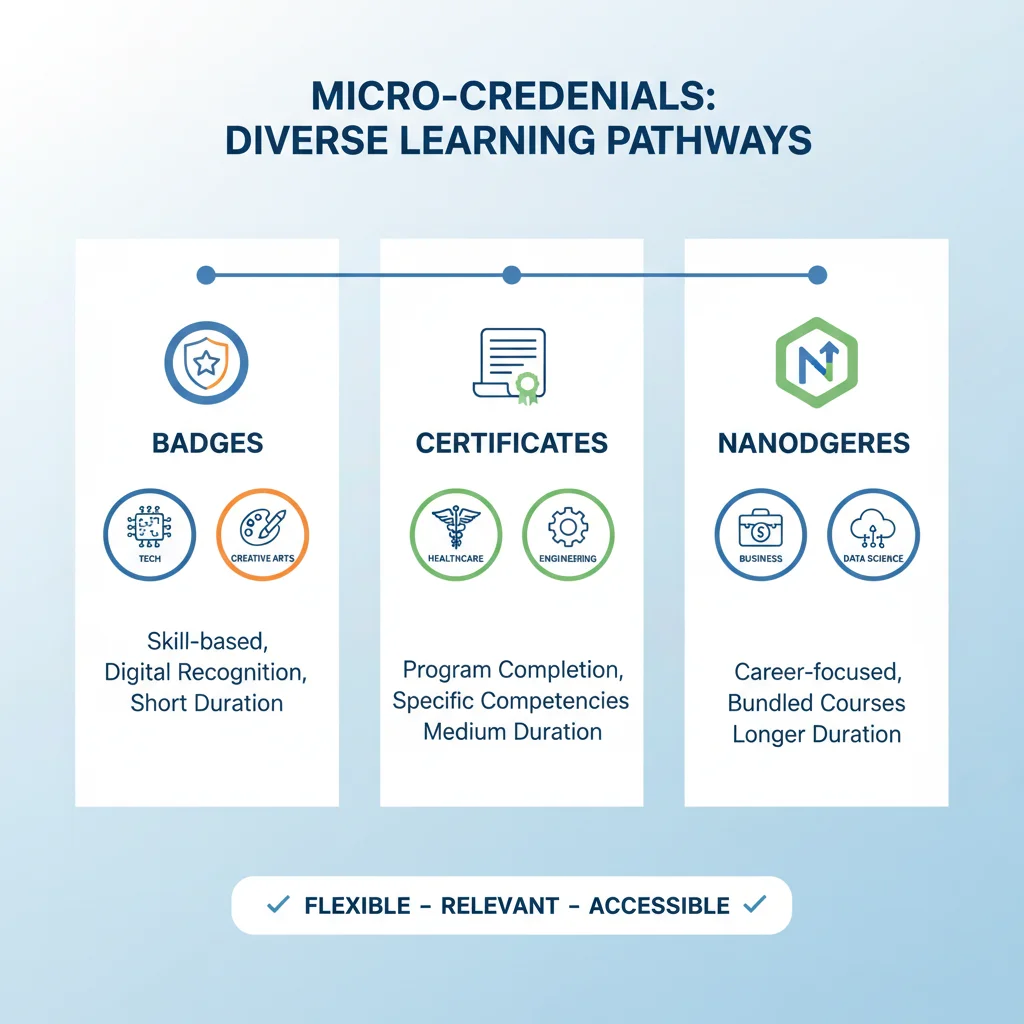
Micro-credentials come in various forms, including digital badges, certificates, specializations, and nanodegrees. They are typically offered by universities, community colleges, professional organizations, and increasingly, by tech companies and online learning platforms. The key characteristic is their granular focus on a particular skill or set of skills, such as data analytics, cybersecurity fundamentals, project management software, or advanced digital marketing techniques. The goal is to provide demonstrable proof of proficiency in a specific area, which can be immediately applied in the workplace.
Why Are They Gaining Traction in the U.S. Job Market?
Several factors contribute to the rising popularity of micro-credential programs among U.S. workers:
- Rapid Skill Acquisition: The most significant advantage is the speed at which you can acquire new, in-demand skills. This is critical in industries where technology and methodologies change at a breakneck pace.
- Cost-Effectiveness: Generally, micro-credentials are far less expensive than traditional degree programs, making advanced learning more accessible.
- Flexibility: Many programs are offered online or in hybrid formats, allowing workers to learn while maintaining their current employment and personal commitments.
- Targeted Learning: You learn exactly what you need, without extraneous coursework, leading to a highly efficient learning experience.
- Employability Enhancement: Employers increasingly recognize and value micro-credentials as indicators of specific, job-ready skills. They can significantly boost a resume and open doors to new opportunities or promotions.
- Career Agility: For those looking to transition careers or explore new fields, micro-credentials offer a lower-risk, faster way to test the waters and build foundational skills.
Understanding these benefits sets the stage for our 4-step solution, designed to guide you through the process of selecting the perfect micro-credential program for your unique career journey.
Step 1: Self-Assessment and Career Goal Alignment
The first and most crucial step in choosing the right micro-credential program is to look inward. A thorough self-assessment will clarify your current skill set, identify gaps, and define your career objectives. Without a clear understanding of where you are and where you want to go, any program selection will be a shot in the dark.
Identify Your Current Skills and Knowledge Gaps
Start by making an inventory of your existing skills. What are you good at? What tasks do you enjoy? What are your current job responsibilities, and what skills do they require? Be honest about areas where you feel your skills are lacking or outdated. Consider:
- Technical Skills: Software proficiency, programming languages, data analysis tools, specific machinery operation.
- Soft Skills: Communication, leadership, problem-solving, critical thinking, teamwork, adaptability.
- Industry-Specific Knowledge: Regulations, market trends, specialized processes.
You can use online skill assessment tools, professional development reviews, or even informal conversations with mentors to help you identify these areas. The goal is to pinpoint specific competencies that, if enhanced, would significantly impact your performance or open new avenues.
Define Your Short-Term and Long-Term Career Goals
Once you understand your current skill landscape, articulate your career goals. Are you looking for a promotion in your current role? Do you want to transition to a new department or an entirely different industry? Are you aiming to start your own business? Your goals will dictate the type of skills you need to acquire.
- Short-Term Goals (6-12 months): Perhaps you need to master a new software tool for a project, or gain a certification that will help you qualify for a specific internal role.
- Long-Term Goals (2-5 years): This might involve a complete career change, moving into a leadership position, or specializing in an emerging field.
For example, if your long-term goal is to become a data scientist, a short-term micro-credential in Python for data analysis could be a perfect stepping stone. Aligning your skill acquisition with both immediate needs and future aspirations ensures that your investment in a micro-credential program is strategic and impactful.
Step 2: Market Research and Program Vetting
With your personal goals in focus, the next step involves researching the job market and thoroughly vetting potential micro-credential programs. This ensures that the skills you acquire are in high demand and that the program itself is reputable and effective.
Research In-Demand Skills and Industry Trends
What skills are employers actively seeking in your target industry or role? Utilize resources such as:
- Job Boards: Analyze job descriptions for roles you aspire to. Look for recurring skill requirements.
- Industry Reports: Publications from organizations like LinkedIn Learning, Burning Glass Technologies, and various industry associations often highlight emerging skill gaps.
- Professional Networking: Talk to people working in your desired field. What skills do they find most valuable? What new technologies are impacting their work?
- Government Labor Statistics: Resources like the Bureau of Labor Statistics (BLS) provide insights into job growth and required skills for various occupations.
This research will help you identify the specific micro-credential programs that will give you the most significant competitive edge for rapid skill acquisition.
Evaluate Program Providers and Credibility
Not all micro-credentials are created equal. The credibility of the issuing institution or platform is crucial. Consider the following when evaluating providers:
- Reputation: Is the provider a recognized university, a reputable industry association, or a well-regarded online learning platform (e.g., Coursera, edX, Udacity, Google Career Certificates)?
- Accreditation/Recognition: While micro-credentials typically aren’t formally accredited like degrees, some may be recognized by industry bodies or have partnerships with accredited institutions. Look for endorsements from relevant professional organizations.
- Instructor Expertise: Who is teaching the course? Do they have real-world experience and recognized expertise in the field?
- Curriculum Quality: Does the program outline clearly state learning objectives? Is the content up-to-date and relevant to current industry practices? Look for programs that emphasize hands-on projects and practical application.
- Student Reviews and Testimonials: What do past learners say about their experience? Were they able to apply the skills learned?
- Employer Recognition: Does the program have a track record of being valued by employers? Some programs are specifically designed in collaboration with industry leaders to meet specific workforce needs.
Thorough vetting ensures you invest your time and money in a program that will genuinely enhance your professional profile and lead to effective rapid skill acquisition.
Step 3: Program Structure, Cost, and Time Commitment
Once you’ve narrowed down potential micro-credential programs based on relevance and credibility, it’s time to delve into the practicalities: how the program is structured, its cost, and the time commitment required.
Analyze Program Format and Learning Methodology
Micro-credentials come in various formats. Consider which best suits your learning style and current lifestyle:
- Online Self-Paced: Offers maximum flexibility, allowing you to learn on your schedule. Requires strong self-discipline.
- Online Instructor-Led: Provides more structure and opportunities for interaction with instructors and peers, often with set deadlines.
- Hybrid: Combines online learning with some in-person sessions.
- In-Person/Bootcamp: Intensive, immersive programs that offer rapid learning but require significant time commitment.
Look for programs that include practical exercises, projects, and assessments that truly test your understanding and ability to apply the skills. A program that culminates in a portfolio piece or a capstone project is often more valuable as it provides tangible evidence of your capabilities.
Assess Cost, Financial Aid, and ROI
The cost of micro-credential programs can vary widely, from a few hundred dollars to several thousands. Consider:
- Tuition Fees: What is the total cost? Are there any hidden fees for materials, software, or certification exams?
- Financial Aid/Scholarships: Many providers offer payment plans, scholarships, or discounts. Check if your employer offers tuition reimbursement or professional development stipends.
- Return on Investment (ROI): While harder to quantify precisely, consider the potential career benefits. Will this micro-credential lead to a higher salary, a promotion, or a new job that justifies the expense? Research average salary increases for roles requiring these skills.
A cost-effective program that delivers high-value skills and a strong ROI is always the best choice for rapid skill acquisition.
Evaluate Time Commitment and Flexibility
How much time can you realistically dedicate to learning each week? Be honest with yourself about your current workload, family responsibilities, and other commitments. Micro-credentials are designed for rapid skill acquisition, but they still require dedicated effort.
- Estimated Hours Per Week: Most programs provide an estimate. Ensure this fits into your schedule without leading to burnout.
- Program Duration: Weeks or months? A shorter duration might be appealing, but ensure it’s sufficient to truly master the skills.
- Deadlines and Pacing: Understand if the program has strict deadlines or if it’s entirely flexible.
Choosing a program that aligns with your available time and preferred learning pace is crucial for successful completion and effective skill integration.
Step 4: Future Integration and Continuous Learning
The final step in selecting a micro-credential program involves looking beyond completion to how the credential integrates into your broader career path and how you plan for continuous learning. This ensures your rapid skill acquisition translates into sustained career growth.
How Does the Micro-credential Integrate with Your Existing Profile?
Consider how the new credential will complement your existing education and experience. Will it fill a critical gap, enhance a current strength, or provide a necessary foundation for a career shift? Think about:
- Resume Enhancement: How will you feature this micro-credential on your resume, LinkedIn profile, and professional portfolios?
- Stackability: Can this micro-credential be ‘stacked’ with others to form a larger qualification, or even count towards a degree in the future? Some institutions offer pathways where multiple micro-credentials can lead to an associate’s or bachelor’s degree.
- Networking Opportunities: Does the program offer opportunities to connect with industry professionals or alumni? Networking can be as valuable as the skills themselves.
A well-chosen micro-credential should seamlessly integrate into your professional narrative, clearly demonstrating your enhanced capabilities to potential employers.
Planning for Continuous Skill Development
The world of work doesn’t stand still, and neither should your learning. Rapid skill acquisition is a continuous process. After completing your chosen micro-credential program, consider:
- Application: Immediately apply your new skills in your current role or seek out projects that allow you to practice. Practical application solidifies learning.
- Further Specialization: Are there advanced micro-credentials or other learning opportunities that build upon what you’ve just learned?
- Staying Current: How will you stay updated on future trends and developments in your newly acquired skill area? This might involve industry newsletters, professional groups, or attending webinars.
Viewing micro-credentials as part of a lifelong learning journey rather than a one-off event will ensure you remain adaptable and valuable in the dynamic U.S. job market.

Real-World Examples: Micro-credentials in Action for U.S. Workers
To illustrate the power of micro-credential programs, let’s look at a few hypothetical scenarios common among U.S. workers:
Case Study 1: The Marketing Professional Seeking Digital Upskilling
Sarah, a marketing manager with 10 years of experience, noticed that her company was increasingly relying on data analytics for campaign optimization. Her traditional marketing background lacked strong data analysis skills. She completed a 6-week online micro-credential in ‘Google Analytics and Data Studio for Marketers.’ This rapid skill acquisition allowed her to immediately contribute to data-driven decision-making, leading to a promotion and a significant salary increase. She also gained confidence in exploring further micro-credentials in advanced SEO and SEM.
Case Study 2: The IT Support Specialist Aiming for Cybersecurity
David worked in IT support but wanted to transition into the high-demand field of cybersecurity. He couldn’t afford a full degree program. He identified that ‘CompTIA Security+’ was a widely recognized industry certification and pursued a micro-credential preparation course. After completing the course and passing the exam, he was able to apply for junior cybersecurity analyst roles, leveraging his existing IT knowledge with his new specialized skill set. This micro-credential served as a crucial stepping stone for his career pivot.
Case Study 3: The Healthcare Administrator Needing Project Management Skills
Maria, an administrator in a large hospital system, was frequently involved in implementing new clinical systems. She realized her lack of formal project management training was hindering her effectiveness. She enrolled in a 12-week ‘Project Management Fundamentals’ micro-credential offered by a local university, which focused on agile methodologies relevant to healthcare. The rapid skill acquisition empowered her to lead projects more efficiently, reduce delays, and ultimately improve patient care processes. Her newfound skills were immediately recognized by her superiors.
These examples highlight how strategically chosen micro-credential programs can lead to tangible career benefits for U.S. workers, enabling rapid skill acquisition and opening new professional doors.
Common Pitfalls to Avoid When Choosing Micro-credential Programs
While micro-credential programs offer immense potential, U.S. workers should be aware of common pitfalls to ensure their investment is worthwhile:
- Choosing Based Solely on Price: The cheapest option isn’t always the best. Prioritize quality, relevance, and employer recognition over cost alone.
- Ignoring Industry Demand: Acquiring a skill that isn’t in demand or is already becoming obsolete is a waste of time and resources. Always conduct thorough market research.
- Overlooking Practical Application: Programs that are purely theoretical without hands-on projects or real-world application will be less effective in preparing you for immediate job readiness.
- Failing to Verify Credibility: Be wary of unverified providers or programs that make exaggerated claims. Always check reviews, instructor credentials, and industry recognition.
- Underestimating Time Commitment: Even short programs require dedication. Don’t enroll if you can’t commit the necessary time, as incomplete programs offer no benefit.
- Not Integrating New Skills: Simply completing a program isn’t enough. You must actively seek opportunities to apply and showcase your newly acquired skills.
By being mindful of these pitfalls, U.S. workers can maximize the benefits of micro-credential programs and ensure successful rapid skill acquisition.
The Future of Work and Micro-credentials for U.S. Workers
The U.S. job market is characterized by constant change, driven by technological advancements, economic shifts, and evolving consumer demands. In this environment, the ability to rapidly acquire new skills is no longer a luxury but a necessity. Micro-credential programs are perfectly positioned to meet this need, offering a flexible, targeted, and efficient solution for continuous professional development.
As employers increasingly shift their focus from traditional degrees to demonstrable skills, the value of micro-credentials will only grow. They empower U.S. workers to take control of their career trajectories, adapt to new challenges, and seize emerging opportunities. By following our practical 4-step solution, you can confidently navigate the world of micro-credentials, making choices that lead to meaningful career advancement and sustained success.
Conclusion: Your Path to Rapid Skill Acquisition Starts Now
Choosing the right micro-credential program is a strategic decision that can significantly impact your career trajectory as a U.S. worker. By systematically approaching the selection process through self-assessment, market research, careful program evaluation, and thoughtful integration, you position yourself for success.
Embrace the power of rapid skill acquisition through micro-credentials. Whether you’re looking to upskill, reskill, or pivot careers, these targeted learning opportunities provide the agility and relevance needed in today’s competitive landscape. Start your journey today, invest in your future, and unlock new possibilities with the right micro-credential program.