Master Learning Retention: 5 Powerful Strategies for Your 2026 Study Plan

Master Learning Retention: 5 Powerful Strategies for Your 2026 Study Plan
Are you tired of studying for hours only to forget most of what you learned a few days later? Do you wish there was a more effective way to make knowledge stick? In today’s fast-paced world, merely acquiring information isn’t enough; the true challenge lies in learning retention strategies. As we look towards 2026, optimizing our study habits is more crucial than ever. Whether you’re a student, a professional seeking to upskill, or simply someone passionate about lifelong learning, mastering the art of retaining information is a game-changer. This comprehensive guide will delve into five powerful, scientifically-backed strategies designed to supercharge your memory and ensure that what you learn stays with you for the long haul.
The human brain is an incredible organ, capable of storing vast amounts of information. However, without the right techniques, much of that information can slip away. Traditional methods often prioritize cramming over genuine understanding and recall, leading to what’s often called the ‘forgetting curve.’ Our goal here is to flatten that curve, transforming transient knowledge into enduring wisdom. By integrating these learning retention strategies into your 2026 study plan, you’ll not only improve your academic and professional performance but also cultivate a deeper, more meaningful relationship with learning itself.
Let’s embark on this journey to transform your learning experience, ensuring that every minute you invest in studying yields lasting results. Prepare to unlock your brain’s full potential and make forgetfulness a thing of the past.
1. Embrace Active Recall: The Ultimate Memory Booster
One of the most potent learning retention strategies is active recall. Instead of passively re-reading notes or highlighting text, active recall involves deliberately retrieving information from your memory. Think of it as exercising your brain’s retrieval muscles. Every time you successfully recall a piece of information, you strengthen the neural pathways associated with that memory, making it easier to access in the future.
What is Active Recall?
Active recall is a study technique where you test yourself on material you’ve learned, rather than just reviewing it. This could involve:
- Closing your book and trying to explain a concept in your own words.
- Using flashcards (more on this later).
- Answering practice questions without looking at your notes.
- Summarizing a chapter or lecture from memory.
- Teaching the material to someone else (or even an imaginary audience).
Why is Active Recall So Effective for Learning Retention?
The effectiveness of active recall stems from several cognitive principles:
- Effortful Retrieval: When you struggle to recall something, your brain works harder, and this effort solidifies the memory. Passive review, by contrast, feels easy and often provides a false sense of familiarity.
- Identification of Gaps: Active recall immediately highlights what you don’t know, allowing you to focus your study time on those specific areas rather than wasting time on what you’ve already mastered.
- Transfer-Appropriate Processing: The way you retrieve information during study should ideally mimic the way you’ll need to retrieve it during an exam or in a real-world scenario. Active recall directly practices this retrieval process.
How to Implement Active Recall in Your 2026 Study Plan:
Incorporating active recall into your routine is straightforward:
- Flashcards: Create physical or digital flashcards. On one side, write a question or a key term; on the other, write the answer or definition. Regularly test yourself, moving cards you know well to a ‘mastered’ pile and frequently reviewing those you struggle with.
- Practice Questions: Seek out or create your own practice questions. After reading a section, formulate questions about the key ideas and try to answer them without referring to your notes.
- Self-Quizzing: At the end of each study session, close your materials and write down everything you remember about the topic. Then, check your notes to identify gaps.
- The Feynman Technique: This powerful method involves explaining a concept in simple terms as if you were teaching it to a child. If you get stuck, go back to your source material. This forces deep understanding and exposes superficial knowledge.
By making active recall a cornerstone of your learning retention strategies, you’ll move beyond superficial memorization and build a robust, accessible knowledge base.
2. Leverage Spaced Repetition: Defeating the Forgetting Curve
The ‘forgetting curve,’ a concept introduced by Hermann Ebbinghaus, illustrates how quickly we forget information if we don’t actively try to retain it. Spaced repetition is a powerful antidote to this natural decline, making it an indispensable part of effective learning retention strategies.
What is Spaced Repetition?
Spaced repetition is an evidence-based learning technique that involves reviewing previously learned material at increasing intervals over time. Instead of reviewing everything every day, you review items you’re about to forget just before you forget them. This strategic timing maximizes retention efficiency.
The Science Behind Spaced Repetition:
Our brains consolidate memories during sleep and through repeated exposure. However, the optimal time for review isn’t immediately after learning, nor is it waiting until the information is completely gone. Spaced repetition systems are designed to present you with information when your memory of it is just beginning to fade. This ‘effortful retrieval’ at the brink of forgetting is incredibly effective for strengthening long-term memory.
Implementing Spaced Repetition in Your 2026 Study Plan:
While the concept might sound complex, practical tools make implementing spaced repetition easy:
- Flashcard Apps: Applications like Anki, Quizlet, and SuperMemo are built on spaced repetition algorithms. They track your performance on each flashcard and schedule future reviews based on how well you know the material. This automates the process and ensures optimal timing for each piece of information.
- Manual Spacing: If you prefer physical flashcards, you can create a simple manual system. Use different boxes or piles for cards you know well (review less often) and cards you struggle with (review more often). Adjust the review intervals as you master concepts.
- Calendar Reminders: For larger topics or summaries, schedule review sessions in your calendar. For instance, review a topic 1 day after learning, then 3 days, 7 days, 14 days, and so on.
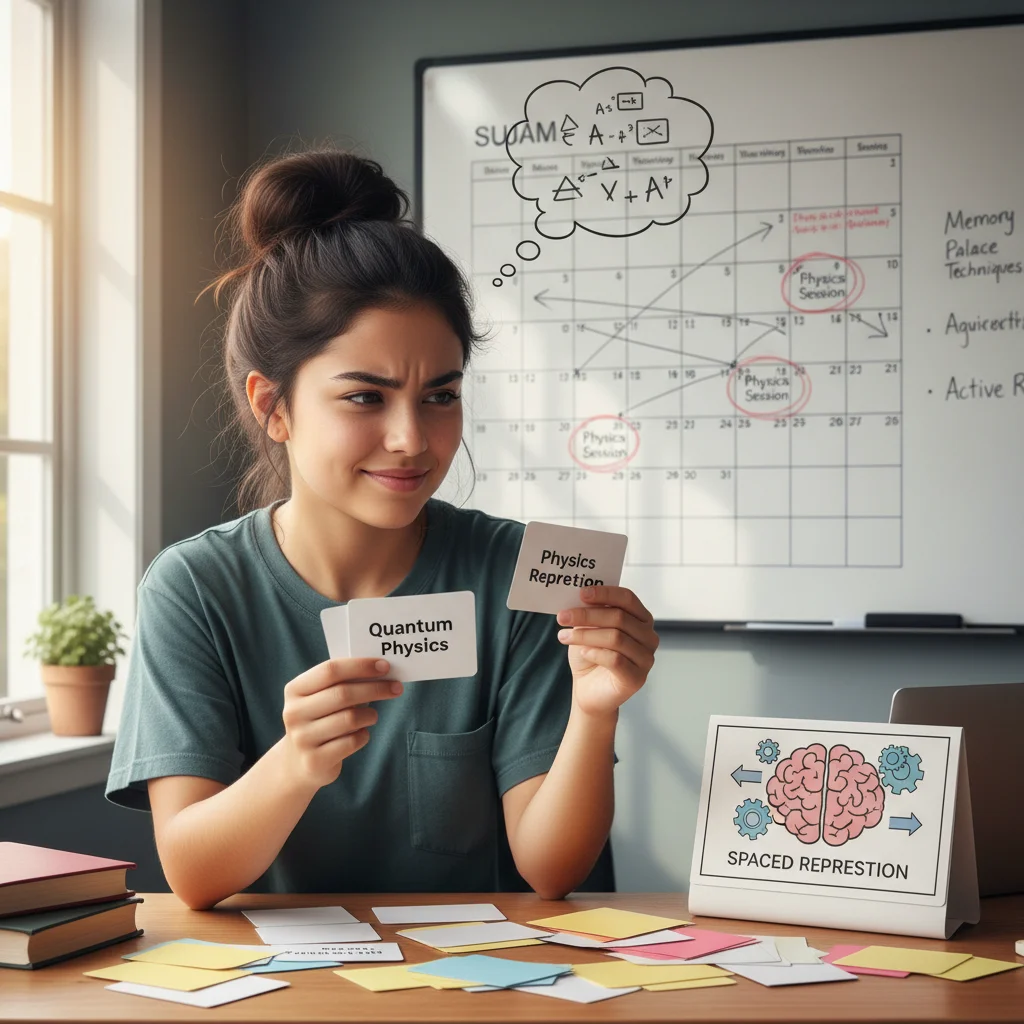
Combining spaced repetition with active recall (often through flashcards) creates a formidable duo for enhancing your learning retention strategies. It ensures that your effort is concentrated where it’s most needed, leading to remarkably efficient and lasting learning.
3. Elaborative Rehearsal: Connecting New Information to Old
Rote memorization, while sometimes necessary, often leads to shallow learning and quick forgetting. Elaborative rehearsal, on the other hand, is one of the most powerful learning retention strategies because it focuses on understanding and connecting new information to existing knowledge. It’s about giving new information context and meaning.
What is Elaborative Rehearsal?
Elaborative rehearsal involves actively thinking about the meaning of the new material and relating it to information you already know. Instead of simply repeating something, you’re asking ‘why’ and ‘how,’ creating a richer, more interconnected web of knowledge in your brain.
The Cognitive Benefits:
When you engage in elaborative rehearsal, you are:
- Creating Multiple Retrieval Paths: By linking new information to several existing concepts, you create more pathways to retrieve that information later. If one path is blocked, you have others to rely on.
- Deepening Understanding: This process forces you to truly grasp the material, moving beyond surface-level recognition. You can’t effectively connect something new if you don’t understand it.
- Making it Personally Relevant: When you find ways to connect new information to your own experiences, interests, or goals, it becomes more personally significant and thus easier to remember.
Practical Ways to Use Elaborative Rehearsal in 2026:
- Ask ‘Why’ and ‘How’: Always question the material. Why is this concept important? How does it relate to other topics I’ve studied? How can I apply this in a real-world scenario?
- Analogy and Metaphor: Try to explain new concepts using analogies or metaphors. For example, if learning about cell structure, think of a cell as a tiny factory with different departments.
- Concept Mapping/Mind Mapping: Visually organize information by drawing connections between ideas, themes, and facts. This helps you see the bigger picture and how individual pieces fit together.
- Summarize and Explain: After learning a new topic, summarize it in your own words, focusing on the core ideas and their relationships. Explain it aloud to yourself or someone else.
- Relate to Personal Experience: Can you connect the new information to something you’ve personally experienced, observed, or are interested in? This personal connection makes it more memorable.
By making elaborative rehearsal a core component of your learning retention strategies, you’ll transform isolated facts into a coherent and deeply understood body of knowledge that is far less susceptible to forgetting.
4. Integrate Interleaving and Varied Practice: Mixing It Up for Better Retention
Many students tend to ‘block’ their practice, meaning they study one topic extensively before moving to the next. While this feels productive, research suggests that interleaving—mixing different types of problems or topics within a single study session—is a far superior method for long-term learning retention strategies.
What is Interleaving?
Interleaving involves mixing different subjects, topics, or problem types within a single study session. Instead of doing 20 math problems of type A, then 20 of type B, you would alternate between type A and type B problems. Similarly, instead of studying history for two hours, then science for two hours, you might alternate between short blocks of each.
The Benefits of Interleaving and Varied Practice:
The effectiveness of interleaving stems from several cognitive advantages:
- Discriminative Learning: When problems are mixed, your brain is forced to identify which strategy or knowledge base applies to each problem. This strengthens your ability to distinguish between concepts, a crucial skill for real-world application and exams.
- Enhanced Problem Solving: Instead of mindlessly applying the same formula, interleaving encourages you to think critically about the underlying principles and choose the correct approach.
- Improved Long-Term Retention: While blocked practice might show immediate gains, interleaved practice leads to better long-term retention and transfer of learning to new situations. It makes the learning process more challenging, but the benefits are substantial.
- Breaks Monotony: Switching between topics can also make study sessions more engaging and prevent mental fatigue.
How to Incorporate Interleaving into Your 2026 Study Plan:
- Mix Problem Types: If you’re studying math, physics, or any subject with different problem types, shuffle them. Don’t solve all similar problems consecutively.
- Alternate Subjects: Instead of dedicating an entire evening to one subject, break your study time into shorter blocks (e.g., 30-45 minutes) and switch between two or three different subjects.
- Vary Study Methods: Within a single topic, don’t just read. Alternate between reading, active recall (flashcards), concept mapping, and practice problems.
- Review Mixed Topics: When doing review sessions, don’t just review one chapter. Pull questions or concepts from various chapters to challenge your brain’s ability to switch contexts.
While interleaving might feel less efficient in the short term (you might make more mistakes initially), its long-term benefits for retention and understanding are undeniable. Make it a key part of your learning retention strategies for 2026.
5. Prioritize Sleep and Mind-Body Connection: The Foundation of Learning
Often overlooked in discussions about learning retention strategies, the critical role of sleep, nutrition, and physical activity cannot be overstated. Your brain isn’t a separate entity; it’s intricately connected to your body, and its optimal functioning depends on your overall well-being.
The Indispensable Role of Sleep:
Sleep is not merely a period of rest; it’s an active process during which your brain consolidates memories. During deep sleep (NREM) and REM sleep, the brain replays and strengthens neural connections formed during the day. Without adequate sleep:
- Memory Consolidation Suffers: New information isn’t properly transferred from short-term to long-term memory.
- Cognitive Function Declines: Concentration, problem-solving abilities, and creativity are all negatively impacted.
- Learning Capacity Decreases: Your ability to acquire new information the following day is significantly reduced.
Aim for 7-9 hours of quality sleep per night, especially after intense study sessions.
Nutrition for Brain Health:
What you eat directly impacts your brain’s ability to learn and remember. Incorporate foods rich in:
- Omega-3 Fatty Acids: Found in fatty fish (salmon, mackerel), flaxseeds, and walnuts, crucial for brain structure and function.
- Antioxidants: Berries, dark chocolate, and leafy greens protect brain cells from damage.
- Complex Carbohydrates: Whole grains provide a steady supply of glucose, the brain’s primary fuel.
- Hydration: Even mild dehydration can impair cognitive function. Drink plenty of water throughout the day.
The Power of Physical Activity:
Regular exercise benefits your brain in numerous ways:
- Increases Blood Flow: Delivers more oxygen and nutrients to the brain.
- Boosts Neurotransmitters: Releases chemicals like endorphins, dopamine, and serotonin, which improve mood, focus, and learning.
- Promotes Neurogenesis: Encourages the growth of new brain cells, particularly in the hippocampus, a region vital for memory.
- Reduces Stress: Chronic stress can impair memory. Exercise is a powerful stress reliever.
Even short breaks for a walk or some stretching can significantly improve your focus and retention during study sessions.

By prioritizing sleep, nutrition, and physical activity, you’re not just taking care of your body; you’re creating the optimal environment for your brain to engage with and retain information. These holistic approaches are fundamental learning retention strategies that lay the groundwork for all other academic endeavors.
Integrating These Strategies into Your 2026 Study Plan
Successfully implementing these learning retention strategies isn’t about adopting one in isolation, but rather integrating them into a cohesive and personalized study plan. Here’s how you can weave them together for maximum impact in 2026:
Create a Structured Study Schedule:
- Allocate Time for Active Recall: After each reading or lecture, set aside 10-15 minutes specifically for self-quizzing or summarizing from memory.
- Schedule Spaced Repetition Reviews: Dedicate daily or weekly slots in your calendar for reviewing flashcards or past topics using a spaced repetition system.
- Plan for Elaborative Rehearsal: During your initial learning phase, consciously ask ‘why’ and ‘how,’ and make time for mind mapping or explaining concepts aloud.
- Incorporate Interleaving: Design your study blocks to switch between subjects or problem types. For example, 45 minutes of Math, 45 minutes of History, then back to Math.
- Prioritize Rest: Schedule your sleep and exercise. These are not optional extras but essential components of your study plan.
Be Flexible and Adapt:
No two learners are exactly alike. Experiment with these strategies to find what works best for you. Some might prefer digital flashcards, others physical. Some might thrive with longer interleaved blocks, others with shorter ones. The key is consistent application and adaptation based on your results.
Track Your Progress:
Use practice tests, quizzes, and self-assessments to monitor your retention. If you find yourself struggling with certain topics, revisit them using a combination of active recall and elaborative rehearsal, and adjust your spaced repetition schedule accordingly.
Maintain a Growth Mindset:
Learning is a journey, not a destination. Embrace challenges, view mistakes as learning opportunities, and celebrate your progress. A positive attitude significantly enhances your brain’s capacity for learning and retention.
Conclusion: Your Path to Lasting Knowledge in 2026 and Beyond
The journey to effective learning retention is a continuous one, but with the right learning retention strategies, you can transform your study habits and achieve profound, lasting understanding. By actively engaging with material through recall, strategically reviewing with spaced repetition, building deep connections through elaborative rehearsal, challenging your brain with interleaving, and nurturing your mind and body, you are setting yourself up for unparalleled success in 2026 and for years to come.
Move beyond the cycle of cramming and forgetting. Embrace these powerful, scientifically-backed techniques to build a robust and accessible knowledge base. Your future self, equipped with deeply retained knowledge, will thank you. Start implementing these strategies today, and witness the remarkable difference they make in your academic, professional, and personal growth. The power to learn effectively and remember for life is within your grasp.