Space Industry Growth 2026: 3 Key U.S. Commercial Opportunities
The cosmos, once the exclusive domain of government agencies and scientific exploration, has rapidly transformed into a vibrant commercial frontier. The U.S. Space Industry is at the forefront of this monumental shift, experiencing an unprecedented surge in investment, innovation, and entrepreneurial spirit. As we look towards 2026 and beyond, the trajectory of this growth is not just upward but exponential, driven by a confluence of technological advancements, decreasing launch costs, and an expanding global demand for space-based services and products.
Understanding the nuances of this burgeoning market is crucial for investors, entrepreneurs, and policymakers alike. The commercial opportunities within the U.S. Space Industry are diverse, ranging from the fundamental infrastructure that supports space operations to the more futuristic ventures like space tourism and asteroid mining. This article will delve into three pivotal insights that illuminate the path of the U.S. Space Industry towards 2026, offering a comprehensive overview of the commercial opportunities that are set to redefine our relationship with space.
The last decade has witnessed a dramatic shift from government-led space programs to a more commercially driven ecosystem. Private companies, fueled by venture capital and a vision for a space-faring future, are innovating at a breakneck pace. This commercialization is not merely about launching more rockets; it’s about creating an entire economic framework in orbit and beyond. From advanced satellite services that connect the most remote corners of the Earth to ambitious plans for lunar bases and Mars missions, the scope of the U.S. Space Industry is expanding in ways previously confined to science fiction.
This dynamic environment is fostering intense competition and collaboration, pushing the boundaries of what’s technologically feasible and economically viable. The U.S. government, through agencies like NASA and the Department of Defense, is increasingly relying on private sector capabilities, further fueling the commercial growth. This partnership model is proving highly effective, allowing government entities to focus on long-term scientific goals while commercial entities drive efficiency and innovation in the operational aspects of space access and utilization. As we dissect the key commercial opportunities, it becomes clear that the U.S. Space Industry is not just growing; it’s evolving into a foundational pillar of the 21st-century global economy.
1. The Revolution of Advanced Satellite Services and Earth Observation
One of the most significant drivers of U.S. Space Industry growth is the continuous innovation in satellite technology and the proliferation of advanced satellite services. Gone are the days when satellites were solely massive, expensive government assets. Today, the landscape is dominated by smaller, more agile, and increasingly capable satellites, often deployed in vast constellations. These advancements are democratizing access to space-based data and communication, unlocking a wealth of commercial opportunities.
Expanding Global Connectivity
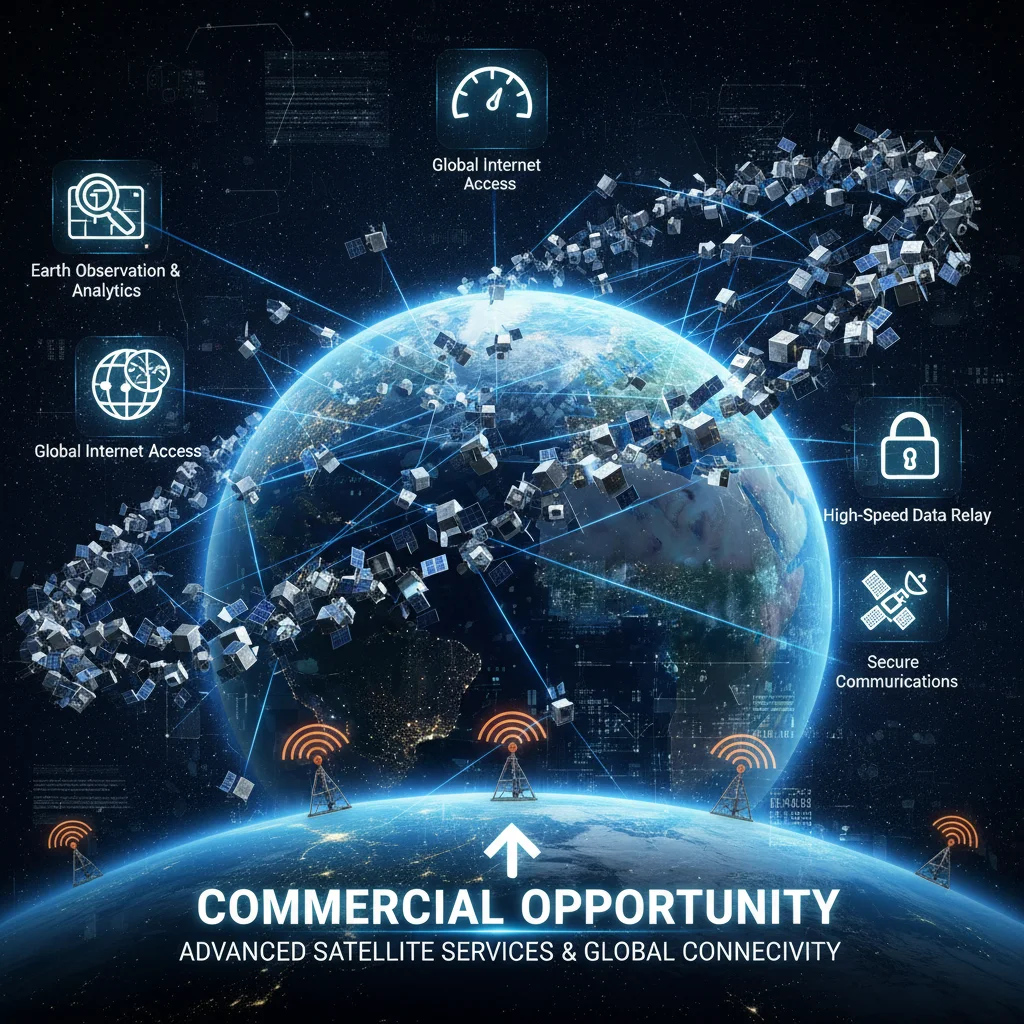
The demand for global broadband internet, particularly in underserved regions, is a massive market opportunity. Companies like SpaceX’s Starlink, Amazon’s Project Kuiper, and OneWeb are deploying thousands of low Earth orbit (LEO) satellites to create interconnected networks that promise high-speed, low-latency internet access anywhere on Earth. This endeavor alone represents billions in potential revenue and is a cornerstone of the future U.S. Space Industry. The ability to provide seamless connectivity not only bridges the digital divide but also empowers new industries, from remote learning and telemedicine to precision agriculture and autonomous vehicles.
Beyond consumer internet, these satellite networks are critical for enterprise applications. Businesses operating in remote locations, maritime industries, and aviation are increasingly relying on satellite internet for their operations. The resilience and ubiquity of satellite communication offer a robust alternative and complement to terrestrial networks, ensuring uninterrupted service even in challenging environments. The ongoing development of these constellations and the associated ground infrastructure will continue to be a dominant trend in the U.S. Space Industry through 2026.
Enhanced Earth Observation and Data Analytics
Another explosive area within advanced satellite services is Earth observation (EO). Satellites equipped with high-resolution cameras, synthetic aperture radar (SAR), and other sophisticated sensors are collecting an unprecedented volume of data about our planet. This data has immense commercial value across a multitude of sectors:
- Agriculture: Monitoring crop health, predicting yields, and optimizing irrigation.
- Environmental Monitoring: Tracking deforestation, glacier melt, pollution, and climate change indicators.
- Disaster Response: Providing real-time imagery for damage assessment and recovery efforts after natural disasters.
- Urban Planning: Monitoring urban sprawl, infrastructure development, and traffic patterns.
- Defense and Intelligence: Offering critical insights for national security and strategic planning.
- Financial Services: Analyzing economic activity by tracking shipping, factory output, and retail foot traffic.
The real commercial opportunity often lies not just in collecting this data but in processing, analyzing, and delivering actionable insights from it. Companies specializing in AI and machine learning are developing algorithms to extract valuable information from satellite imagery, transforming raw data into intelligence that drives decision-making for governments and corporations worldwide. This segment of the U.S. Space Industry is poised for continuous expansion, as the demand for timely, accurate, and comprehensive Earth intelligence only grows.
The miniaturization of satellites, coupled with advancements in sensor technology, has made Earth observation more accessible and affordable. CubeSats and other small satellites can be launched as secondary payloads, significantly reducing costs and increasing the frequency of data collection. This enables a dynamic and responsive approach to monitoring our planet, providing fresh data streams that were once unimaginable. The continued innovation in this domain will solidify the U.S. as a leader in space-based data services.
2. The Dawn of Space Tourism and Commercial Human Spaceflight
Once a futuristic dream, space tourism is rapidly becoming a tangible reality, presenting a significant and potentially lucrative commercial opportunity for the U.S. Space Industry. While still in its nascent stages, the market for sending private citizens into space, whether for suborbital joyrides or orbital experiences, is gaining momentum with several prominent U.S. companies leading the charge.
Suborbital and Orbital Experiences
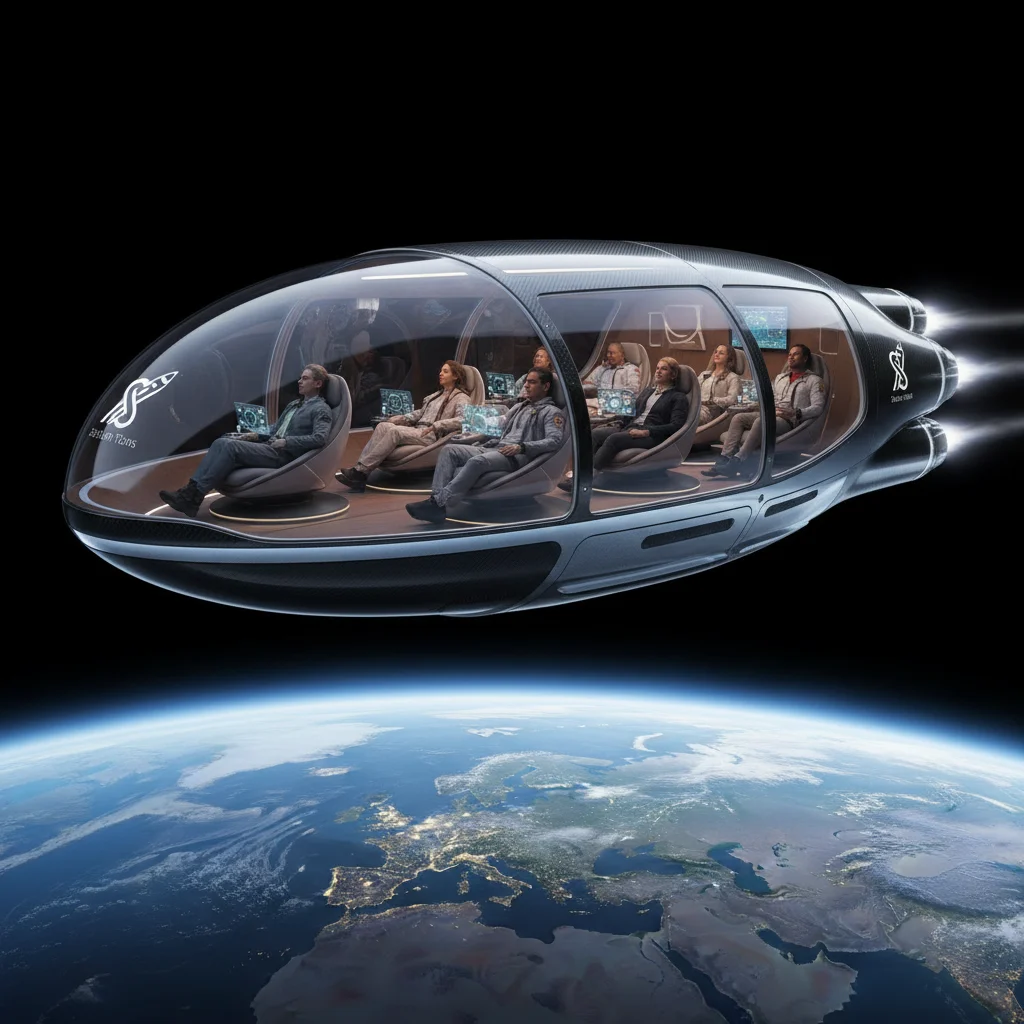
Companies like Virgin Galactic and Blue Origin are pioneering suborbital spaceflight, offering paying customers a brief but unforgettable journey to the edge of space, where they can experience weightlessness and witness the curvature of the Earth against the blackness of space. While these flights last only minutes, the demand is high, with tickets fetching hundreds of thousands of dollars. This segment caters to a niche, ultra-high-net-worth clientele, but as technology advances and costs potentially decrease, the market could expand.
Beyond suborbital flights, orbital space tourism is also taking shape. SpaceX, in collaboration with Axiom Space, has already sent private crews to the International Space Station (ISS), demonstrating the feasibility of commercial orbital missions. These longer-duration stays in space offer a more immersive experience, opening doors for private space stations, orbital hotels, and even destination-based space travel. The infrastructure required to support such endeavors – from specialized spacecraft to astronaut training facilities – represents substantial investment and job creation within the U.S. Space Industry.
Challenges and Opportunities in Space Tourism
The primary challenges for space tourism currently revolve around safety, cost, and regulatory frameworks. Ensuring the highest safety standards for civilian passengers is paramount, and companies are investing heavily in rigorous testing and development. The high cost of tickets remains a barrier to entry for most, but economies of scale and technological innovations are expected to drive prices down over time, making space travel more accessible.
From a commercial perspective, the opportunities extend beyond just ticket sales. The development of specialized habitats, life support systems, and entertainment options for space tourists will create entirely new supply chains and industries. Furthermore, the psychological and physiological research conducted on private astronauts will contribute valuable data to long-duration spaceflight studies, benefiting future deep-space exploration. The growing interest in space as a destination is a powerful catalyst for innovation within the U.S. Space Industry, pushing boundaries in spacecraft design, propulsion, and human factors engineering.
The regulatory landscape is also evolving to accommodate commercial human spaceflight. The Federal Aviation Administration (FAA) is working to establish guidelines that balance innovation with safety, ensuring that the burgeoning space tourism market can grow responsibly. As these frameworks mature, they will provide greater certainty for investors and operators, further accelerating the growth of this exciting sector within the U.S. Space Industry.
3. In-Orbit Services, Manufacturing, and Space Infrastructure Development
The long-term sustainability and expansion of the U.S. Space Industry hinge on the development of robust in-orbit services, manufacturing capabilities, and comprehensive space infrastructure. As more assets are deployed in space, the need for maintenance, refueling, assembly, and even production in orbit becomes increasingly critical and commercially viable.
Satellite Servicing and Debris Management
Satellites are expensive assets with finite lifespans, often limited by fuel or component failure. The ability to service, refuel, or repair satellites in orbit offers massive cost savings compared to launching new ones. Companies are developing technologies for robotic rendezvous and docking, allowing for on-orbit servicing missions that can extend the operational life of valuable satellites. This not only protects existing investments but also reduces the amount of space debris, a growing concern for the long-term viability of space operations.
Space debris management itself is emerging as a significant commercial opportunity. With tens of thousands of objects orbiting Earth, the risk of collisions is increasing. Companies offering solutions for tracking, removing, or de-orbiting space debris will play a crucial role in safeguarding space assets. The development of specialized spacecraft equipped with robotic arms, nets, or harpoons for debris capture represents a new frontier for the U.S. Space Industry, driven by both commercial necessity and environmental responsibility.
In-Space Manufacturing and Assembly
Manufacturing in space offers unique advantages, particularly for components that benefit from microgravity or the vacuum of space. For instance, the production of ultra-pure optical fibers or specialized alloys could be more efficient and yield superior quality in orbit. Furthermore, the ability to assemble large structures in space, rather than launching them fully formed, radically changes the economics of large-scale space projects. Think of massive telescopes, solar power satellites, or even future space habitats that are too large to fit into a single rocket fairing.
The development of robotic assembly techniques, 3D printing in space, and advanced materials science tailored for the space environment are key areas of innovation. Companies are exploring how to utilize in-situ resources (e.g., lunar regolith) for construction on the Moon or Mars, further reducing reliance on Earth-launched materials. This vision of a self-sustaining space economy, where resources are utilized and products manufactured off-world, is a long-term driver for the U.S. Space Industry.
Developing Space Infrastructure
Just as terrestrial economies rely on robust infrastructure (roads, ports, power grids), a thriving space economy will require its own set of foundational elements. This includes:
- Orbital Transfer Vehicles: Space tugs that can move satellites between different orbits efficiently.
- Space Stations and Habitats: Commercial platforms for research, manufacturing, and tourism.
- Lunar and Martian Bases: Long-term outposts for scientific exploration, resource extraction, and eventual colonization.
- Refueling Depots: Stations in orbit or on celestial bodies where spacecraft can resupply.
The construction and operation of this infrastructure represent enormous commercial opportunities. Private companies are already designing and proposing commercial space stations to succeed the ISS, offering research facilities, manufacturing hubs, and tourist accommodations. The vision of a truly multi-planetary humanity, with a robust economy extending beyond Earth, hinges on these foundational elements, making infrastructure development a critical component of the U.S. Space Industry‘s future.
The Broader Economic Impact and Future Outlook
The growth of the U.S. Space Industry is not confined to aerospace companies alone. Its ripple effects are felt across numerous sectors of the economy. Investment in space technology drives innovation in materials science, artificial intelligence, robotics, and advanced manufacturing, leading to spin-off technologies that benefit terrestrial industries. The creation of high-skilled jobs, from engineers and scientists to data analysts and mission controllers, contributes significantly to economic growth and technological leadership.
Moreover, the increasing accessibility of space is fostering a new generation of entrepreneurs and startups. Small businesses are finding niches in areas like payload development, specialized data analytics, and ground station services, contributing to a diverse and resilient space ecosystem. Government policies that encourage private investment, streamline regulations, and foster international collaboration are crucial for sustaining this momentum.
Looking ahead to 2026, the U.S. Space Industry is poised for continued expansion. The convergence of decreasing costs, technological breakthroughs, and increasing demand for space-based services creates a fertile ground for commercial success. While challenges remain, particularly in terms of regulatory clarity, sustainable practices, and ensuring equitable access, the overall outlook is overwhelmingly positive.
The insights discussed – advanced satellite services, the rise of space tourism, and the imperative of in-orbit infrastructure – are not isolated trends but interconnected pillars supporting a new space economy. Each area feeds into the others, creating a symbiotic relationship that accelerates overall growth. As satellite constellations provide global connectivity, they also enable better communication for space tourism ventures and remote operation of in-orbit servicing robots. As manufacturing capabilities in space mature, they can produce components for future space stations and exploration missions. This integrated approach ensures that the U.S. Space Industry is building a sustainable and scalable future.
The global competition in space is also intensifying, with nations like China, India, and the European Union making significant strides. However, the U.S. maintains a leadership position due to its robust private sector, strong venture capital ecosystem, and long history of space innovation. Continued investment in research and development, combined with policies that support commercial endeavors, will be vital for maintaining this competitive edge.
Conclusion: A New Era for the U.S. Space Industry
The U.S. Space Industry stands at the precipice of a new era, characterized by unprecedented commercial activity and transformative growth. The journey to 2026 will see significant advancements in how we utilize and interact with space. From connecting the unconnected through vast satellite networks to offering civilians the awe-inspiring experience of space travel, and building the foundational infrastructure for a truly off-world economy, the opportunities are immense.
These three key commercial insights – advanced satellite services, space tourism, and in-orbit infrastructure – are not merely trends; they are the bedrock upon which the next generation of space exploration and economic activity will be built. For businesses and investors, understanding these areas is paramount to identifying where the most significant returns and impacts will be generated. The future of the U.S. Space Industry is bright, dynamic, and full of potential, promising not only technological marvels but also profound societal and economic benefits.
As we continue to push the boundaries of what is possible beyond Earth, the commercial sector will undoubtedly lead the charge, fostering innovation, creating wealth, and inspiring humanity to reach for the stars. The U.S. Space Industry is not just a sector; it’s a movement, and its growth trajectory towards 2026 signals a future where space is an integral part of our daily lives and global economy.