Micro-credentialing Updates Q1 2026: Essential Guide for US Learners

The landscape of education and workforce development is continually evolving, with Q1 2026 marking a significant period for micro-credentialing in the United States. For US learners, understanding the recent updates in micro-credentialing is not just beneficial; it’s becoming essential for career advancement and staying competitive in a rapidly changing job market. This comprehensive guide delves into the latest trends, policy shifts, and opportunities that these updates present, ensuring you are well-equipped to navigate the future of learning and professional growth.
Micro-credentials, often referred to as digital badges or nanodegrees, are certifications that validate specific skills, competencies, or knowledge acquired through short-term learning experiences. Unlike traditional degrees, they are hyper-focused, flexible, and designed to address immediate skill gaps identified by industries. The demand for these agile learning pathways has surged, driven by technological advancements, economic shifts, and the imperative for continuous upskilling and reskilling.
The Evolution of Micro-credentialing: A Q1 2026 Snapshot
The first quarter of 2026 has witnessed a remarkable acceleration in the adoption and integration of micro-credentials across various sectors in the US. What began as an experimental approach to skill validation has now matured into a recognized and often preferred method for both employers and employees to address specific workforce needs. This evolution is not coincidental; it is a direct response to the dynamic nature of work and the increasing obsolescence of skills in many industries.
Increased Employer Recognition and Integration
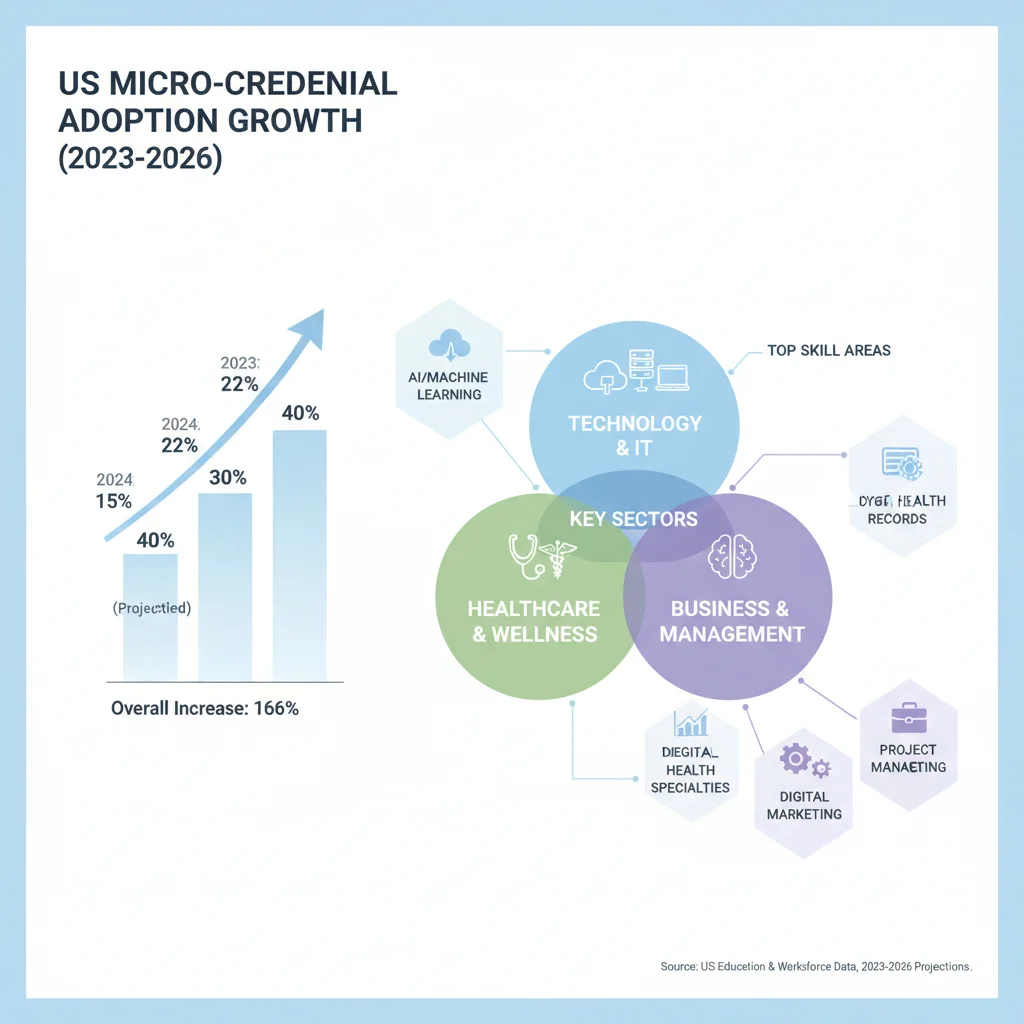
One of the most significant updates in Q1 2026 is the heightened recognition of micro-credentials by US employers. A growing number of companies, from tech giants to healthcare providers, are actively incorporating micro-credentials into their hiring processes and internal training programs. This shift signifies a move away from solely relying on traditional degrees to a more skills-based hiring paradigm. Employers are finding that micro-credentials provide a granular, verifiable, and efficient way to assess a candidate’s proficiency in specific, in-demand skills, such as data analytics, cybersecurity, project management, and digital marketing. This trend is particularly beneficial for micro-credentialing US learners seeking to quickly pivot careers or fill niche roles.
Policy and Accreditation Developments
Government bodies and accreditation agencies have also made substantial strides in Q1 2026 to legitimize and standardize micro-credentials. Several states have introduced pilot programs to integrate micro-credentials into their public education systems, recognizing their potential to bridge the gap between education and employment. Furthermore, discussions around national frameworks for quality assurance and interoperability of micro-credentials are gaining momentum. These developments are crucial for building trust and ensuring the credibility of these alternative credentials, making them more attractive to micro-credentialing US learners and institutions alike.
Expansion into New Sectors
While micro-credentials initially gained traction in technology and IT, Q1 2026 has seen their significant expansion into sectors like healthcare, manufacturing, renewable energy, and creative arts. The healthcare industry, for instance, is leveraging micro-credentials for specialized training in areas such as telehealth, medical coding, and specific medical device operation. This diversification underscores the adaptability of micro-credentials to meet varying skill demands across a broad spectrum of industries, providing more pathways for micro-credentialing US learners to specialize.
Key Trends Shaping Micro-credentialing for US Learners in Q1 2026
Several key trends are defining the micro-credentialing landscape for US learners in Q1 2026. These trends reflect both technological advancements and evolving educational philosophies.
Personalized Learning Pathways
The emphasis on personalized learning has never been stronger. Micro-credentials are at the forefront of this trend, allowing micro-credentialing US learners to curate highly individualized learning journeys. Instead of following a rigid curriculum, individuals can select specific micro-credentials that directly align with their career goals, existing skill gaps, and personal interests. This bespoke approach to education is proving to be more engaging and effective, leading to higher completion rates and better skill acquisition.
AI and Adaptive Learning Integration
Artificial intelligence (AI) and adaptive learning technologies are increasingly being integrated into micro-credential platforms. In Q1 2026, many providers are using AI to assess a learner’s current skill level, recommend relevant micro-credentials, and personalize the learning content and pace. This not only optimizes the learning experience but also ensures that learners are focusing their efforts on areas where they need the most development, making the process more efficient for micro-credentialing US learners.
Stackable Credentials and Pathways to Degrees
The concept of stackable credentials is gaining significant traction. In Q1 2026, more educational institutions are offering pathways where multiple micro-credentials can be combined to earn a larger certificate, diploma, or even contribute credits towards a traditional associate’s or bachelor’s degree. This provides flexibility for micro-credentialing US learners who may not have the time or resources for a full degree program but still desire the long-term benefits of higher education. This ‘building block’ approach makes education more accessible and less daunting.
Focus on Soft Skills and Transversal Competencies
While technical skills remain vital, Q1 2026 has seen a renewed focus on soft skills and transversal competencies within micro-credential programs. Employers increasingly value skills such as critical thinking, problem-solving, communication, collaboration, and adaptability. Micro-credentials are now being specifically designed to cultivate and validate these essential human-centric skills, preparing micro-credentialing US learners for complex, dynamic work environments where interpersonal abilities are as important as technical prowess.
Benefits for US Learners in Q1 2026
The updates in micro-credentialing bring a myriad of benefits for US learners looking to enhance their professional profile and career trajectory.
Enhanced Employability and Career Mobility
Micro-credentials directly address the skill gaps identified by industries, making micro-credentialing US learners highly attractive to employers. By acquiring specific, in-demand skills, individuals can significantly boost their employability, qualify for new roles, or achieve promotions within their current organizations. The flexibility of micro-credentials also enables swift career pivots, allowing learners to adapt to evolving industry demands without the time and cost commitment of a traditional degree.
Cost-Effectiveness and Time Efficiency
Compared to traditional degree programs, micro-credentials are significantly more affordable and time-efficient. They typically range from a few weeks to a few months to complete, making them an ideal option for working professionals or individuals with limited financial resources. This accessibility is a game-changer for many micro-credentialing US learners who might otherwise be unable to pursue further education.
Validation of Informal Learning
For many years, valuable skills acquired through informal learning, on-the-job experience, or self-study went largely unrecognized. Micro-credentials in Q1 2026 offer a formal mechanism to validate these competencies, providing tangible proof of expertise. This is particularly empowering for experienced professionals who wish to demonstrate their accumulated knowledge and skills in a portable and verifiable format.
Flexibility and Accessibility
The majority of micro-credential programs are delivered online, offering unparalleled flexibility. Micro-credentialing US learners can study at their own pace, from anywhere, and fit their education around work, family, and other commitments. This accessibility democratizes education, opening doors for individuals from diverse backgrounds, including those in rural areas or with specific learning needs.
Challenges and Considerations for US Learners
While the benefits are substantial, micro-credentialing US learners should also be aware of potential challenges and considerations.
Quality Assurance and Provider Reputation
With the proliferation of micro-credential providers, ensuring the quality and credibility of the credential is paramount. In Q1 2026, while efforts are underway to standardize accreditation, learners must still exercise due diligence. Researching the provider’s reputation, industry partnerships, and the recognition of their credentials by employers is crucial. Opting for programs offered by reputable universities, industry associations, or well-established online learning platforms is generally a safer bet for micro-credentialing US learners.
Transferability and Stackability
While stackability is a growing trend, not all micro-credentials are universally transferable or stackable towards higher education degrees. Micro-credentialing US learners interested in using their credentials for future academic pursuits should verify the transfer policies with their desired institutions beforehand. This ensures that their investment in micro-credentials aligns with their long-term educational goals.
Staying Current with Industry Demands
The very nature of micro-credentials is to be responsive to rapidly changing industry demands. This means that learners must continuously engage in upskilling and reskilling to keep their credentials relevant. While beneficial for career longevity, it also implies a commitment to lifelong learning that some learners might not be prepared for. The dynamic nature of the job market requires micro-credentialing US learners to be proactive in identifying emerging skill needs.
Practical Steps for US Learners in Q1 2026
For micro-credentialing US learners looking to leverage these updates, here are some practical steps to consider:
1. Identify Your Skill Gaps and Career Goals
Before diving into micro-credentials, conduct a thorough self-assessment of your current skills and identify areas where you need to improve or gain new expertise. Align these skill gaps with your long-term career aspirations. Research job descriptions for your desired roles to understand the specific skills employers are seeking. This strategic approach will help micro-credentialing US learners select the most impactful credentials.
2. Research Reputable Providers and Programs
As mentioned, quality varies. Look for providers with strong industry connections, positive learner reviews, and clear outcomes. Check if the micro-credential is recognized by professional bodies or leading employers in your field. Many universities are now offering micro-credentials, often leveraging their existing faculty and resources, which can be a good indicator of quality for micro-credentialing US learners.
3. Understand the Format and Learning Experience
Micro-credentials come in various formats, including self-paced modules, instructor-led courses, project-based learning, and competency-based assessments. Choose a format that suits your learning style and schedule. Consider the level of support offered, such as mentorship, peer interaction, and career services. This ensures a positive and effective learning experience for micro-credentialing US learners.
4. Explore Funding Options
While more affordable, micro-credentials still represent an investment. Explore potential funding options, such as employer-sponsored training programs, grants, scholarships, or workforce development initiatives. Some states and organizations offer financial assistance for micro-credentialing US learners pursuing in-demand skills.
5. Showcase Your Credentials Effectively
Once you earn a micro-credential, it’s essential to showcase it effectively. Add it to your resume, LinkedIn profile, and professional portfolio. Use the digital badge (if provided) to highlight your newly acquired skills. Be prepared to discuss how the credential has enhanced your capabilities during job interviews. This proactive approach helps micro-credentialing US learners maximize the value of their achievements.

The Future Outlook for Micro-credentialing in the US
Looking beyond Q1 2026, the trajectory for micro-credentialing in the US is one of continued growth and integration. We can anticipate further standardization, increased interoperability between platforms, and a deeper embedding into both corporate training and higher education systems. The emphasis will remain on skills-based learning, preparing the workforce for jobs that may not even exist yet.
Government and Industry Collaboration
Future developments will likely see even stronger collaboration between government agencies, educational institutions, and industry leaders to create a more cohesive and responsive micro-credentialing ecosystem. This collaboration will be crucial for ensuring that the skills validated by micro-credentials remain aligned with the evolving needs of the economy, providing clear pathways for micro-credentialing US learners.
Global Recognition
While this guide focuses on the US, the global nature of work suggests that micro-credentials will increasingly gain international recognition. This will open up opportunities for micro-credentialing US learners to apply their skills in a global context, fostering international career mobility.
Lifelong Learning as the New Norm
Micro-credentials are a cornerstone of the lifelong learning paradigm. As careers become less linear and more dynamic, the ability to continuously acquire, validate, and apply new skills will be paramount. For micro-credentialing US learners, this means embracing a mindset of continuous development, viewing education not as a finite event but as an ongoing journey.
Conclusion
The recent updates in micro-credentialing for Q1 2026 signal a pivotal moment for US learners. These flexible, skills-focused credentials are no longer just an alternative; they are becoming a mainstream and highly effective tool for career advancement, skill development, and adapting to the demands of the modern workforce. By understanding the evolving landscape, embracing the opportunities, and navigating the challenges, micro-credentialing US learners can strategically leverage these powerful educational tools to unlock new possibilities and secure their professional future. The time to engage with micro-credentials is now, positioning yourself at the forefront of the skills revolution.