
Sustainable Business Practices 2026: 5 Key U.S. Industry Insights
The landscape of sustainable business practices is evolving at an unprecedented pace, particularly within U.S. corporations. As we approach 2026, companies are increasingly recognizing that sustainability is not merely a philanthropic endeavor or a regulatory burden, but a fundamental driver of long-term value, competitive advantage, and resilience. Consumers, investors, and employees are demanding greater transparency and accountability, pushing organizations to embed environmental, social, and governance (ESG) considerations into the very core of their operations and strategies. This shift is profound, moving beyond superficial greenwashing to genuine, impactful change.
In this comprehensive article, we will delve into the five most critical insights shaping sustainable business practices for U.S. corporations in 2026. We will explore how these insights are transforming industries, creating new opportunities, and presenting unique challenges. From the imperative of circular economy models to the strategic integration of AI in ESG reporting, understanding these trends is crucial for any business aiming to thrive in the coming years. Our goal is to provide actionable intelligence that can guide your organization toward a more sustainable and prosperous future.
The journey towards comprehensive sustainability is complex, requiring a multi-faceted approach that addresses environmental impact, social equity, and robust governance. It involves rethinking supply chains, innovating products and services, fostering inclusive cultures, and engaging stakeholders at every level. The companies that successfully navigate this transformation will not only mitigate risks but also unlock significant opportunities for growth, innovation, and enhanced brand reputation. Let’s explore the future of sustainable business practices together.
Insight 1: The Pervasive Rise of Circular Economy Models
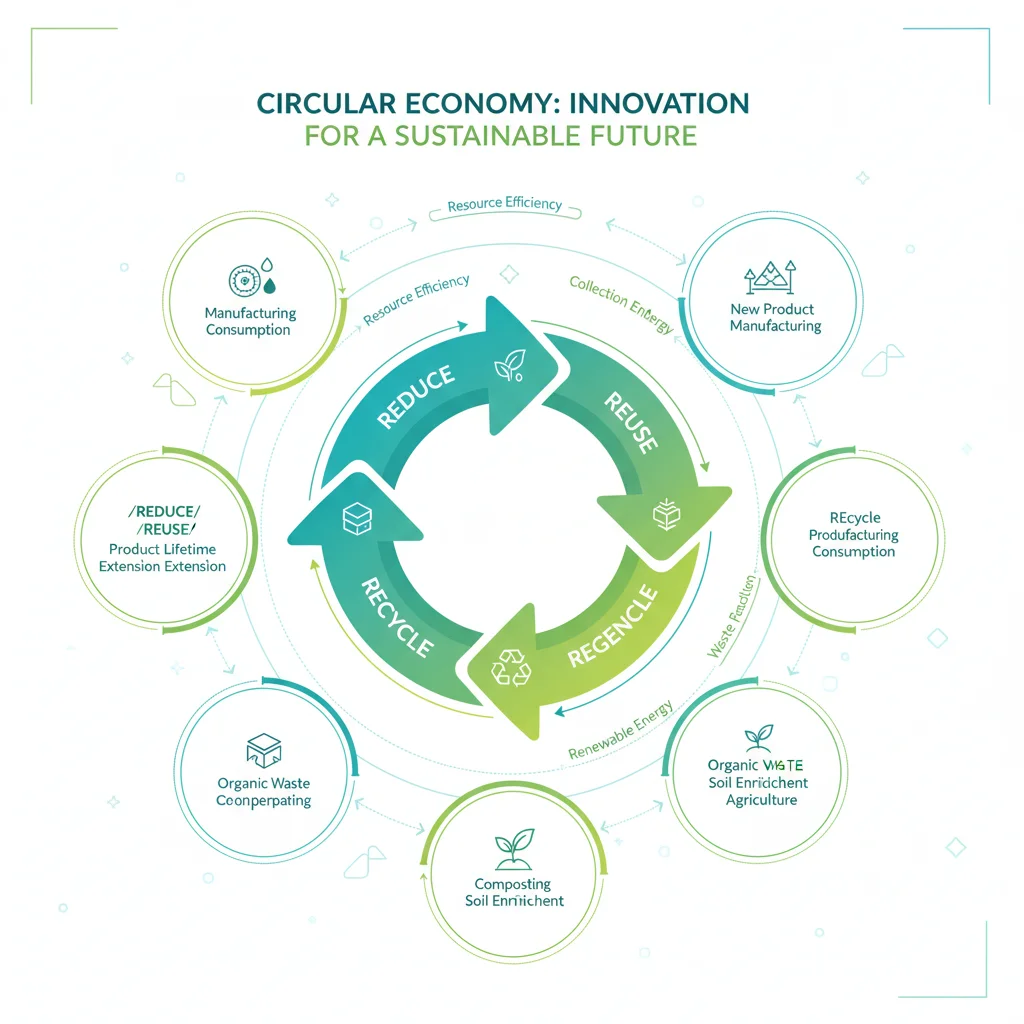
One of the most transformative insights for sustainable business practices in 2026 is the widespread adoption and scaling of circular economy models. Traditionally, businesses have operated on a linear ‘take-make-dispose’ model, which is inherently unsustainable given finite resources and growing waste generation. The circular economy, in contrast, aims to keep resources in use for as long as possible, extract the maximum value from them whilst in use, then recover and regenerate products and materials at the end of each service life. This paradigm shift is gaining significant traction across various U.S. industries, from manufacturing and retail to technology and food services.
Corporations are moving beyond simple recycling initiatives to design products for durability, reuse, repair, and eventual remanufacturing. This involves innovative product design, such as modular components and easily separable materials, as well as new business models like product-as-a-service (PaaS), where companies retain ownership of products and lease them to customers, incentivizing longevity and efficient resource management. For example, furniture companies are offering subscription services, and electronics manufacturers are designing devices that are easier to repair and upgrade.
The benefits of embracing a circular economy are multi-fold. Environmentally, it reduces waste, conserves natural resources, and lowers carbon emissions. Economically, it can lead to significant cost savings through reduced material consumption, create new revenue streams from secondary markets, and foster innovation. Furthermore, it enhances supply chain resilience by reducing dependence on virgin materials, which can be subject to price volatility and geopolitical risks. Companies that proactively integrate circular principles into their operations are better positioned to meet evolving regulatory requirements and consumer expectations for sustainable business practices.
Challenges remain, including the need for new infrastructure for collection, sorting, and processing of materials, as well as a shift in consumer behavior. However, government incentives, technological advancements in material science and digital tracking, and increasing corporate commitment are accelerating this transition. By 2026, a significant portion of U.S. corporations are expected to have clearly defined circular economy strategies, making it a cornerstone of their sustainable business practices portfolio.
Insight 2: ESG Data and AI-Driven Transparency
The second crucial insight for sustainable business practices in 2026 is the escalating importance of robust ESG (Environmental, Social, and Governance) data collection, analysis, and reporting, significantly amplified by artificial intelligence (AI). What was once a niche concern for socially responsible investors has become a mainstream expectation for all stakeholders. Investors are increasingly using ESG metrics to assess risk and opportunity, consumers are making purchasing decisions based on a company’s ethical stance, and employees seek employers aligned with their values.
The demand for high-quality, verifiable ESG data is driving companies to invest in sophisticated data management systems. This goes beyond simple annual reports; it requires real-time monitoring of environmental impacts (e.g., emissions, water usage), social metrics (e.g., diversity, equity, inclusion, labor practices), and governance structures (e.g., board diversity, executive compensation, ethics). The Securities and Exchange Commission (SEC) and other regulatory bodies are also tightening disclosure requirements, making accurate ESG reporting a matter of compliance as well as reputation.
AI and machine learning are playing a pivotal role in this transformation. AI-powered tools can analyze vast amounts of data from various sources – supply chain information, sensor data from facilities, social media sentiment, and regulatory filings – to identify trends, pinpoint risks, and streamline reporting processes. This not only enhances the accuracy and efficiency of ESG reporting but also provides deeper insights into a company’s sustainability performance. For instance, AI can predict supply chain disruptions related to climate change or identify areas for energy optimization that might otherwise be overlooked.
Furthermore, AI can help companies engage with their stakeholders more effectively by providing personalized and transparent ESG information. This increased transparency builds trust and strengthens relationships with investors, customers, and employees. By 2026, U.S. corporations that are leaders in sustainable business practices will be those that have successfully integrated AI into their ESG data strategies, moving from reactive reporting to proactive, data-driven sustainability management. This strategic integration is not just about compliance; it’s about unlocking new avenues for value creation and demonstrating genuine commitment to sustainability.
Insight 3: Supply Chain Decarbonization and Resilience
The third major insight for sustainable business practices in 2026 centers on the imperative of decarbonizing and building resilience within global supply chains. The COVID-19 pandemic, geopolitical tensions, and increasing climate-related disasters have starkly revealed the vulnerabilities of complex, globally dispersed supply chains. Simultaneously, the urgency to reduce greenhouse gas emissions across scope 1, 2, and 3 has intensified, with a significant portion of a company’s total emissions often residing within its supply chain.
U.S. corporations are therefore focusing on two interconnected goals: reducing the carbon footprint of their entire value chain and enhancing its ability to withstand shocks. Decarbonization efforts involve a range of strategies, including sourcing materials from suppliers using renewable energy, optimizing logistics and transportation routes, shifting to lower-emission freight options (e.g., electric vehicles, sustainable shipping fuels), and encouraging suppliers to adopt more energy-efficient manufacturing processes. Companies are also leveraging blockchain technology to track products and their environmental impact from source to consumer, ensuring greater transparency and accountability.
Building supply chain resilience goes hand-in-hand with decarbonization. This includes diversifying supplier bases to reduce reliance on single regions or providers, nearshoring or reshoring critical production to mitigate long-distance risks, and implementing advanced predictive analytics to foresee potential disruptions. Furthermore, fostering strong, collaborative relationships with suppliers, often involving capacity building and financial support for their sustainability transitions, is becoming a key aspect of sustainable business practices.
The financial implications are substantial. While initial investments in decarbonization and resilience can be significant, the long-term benefits include reduced operational costs (e.g., lower energy bills), enhanced brand reputation, and improved access to capital from ESG-focused investors. Companies failing to address these issues risk regulatory penalties, reputational damage, and severe operational disruptions. By 2026, a resilient and decarbonized supply chain will not be a differentiator but a fundamental requirement for competitive U.S. corporations.
Insight 4: Social Equity and Inclusive Business Models
The fourth critical insight shaping sustainable business practices in 2026 is the profound emphasis on social equity and the development of truly inclusive business models. Beyond environmental concerns, the ‘S’ in ESG is gaining unprecedented prominence. This involves addressing issues such as diversity, equity, and inclusion (DEI) within the workforce, fair labor practices across the supply chain, community engagement, and ensuring equitable access to products and services.
U.S. corporations are realizing that a truly sustainable business cannot thrive in an inequitable society. There’s a growing understanding that social disparities can lead to instability, talent shortages, and reduced market opportunities. Consequently, companies are moving beyond token gestures to embed social equity into their core business strategies. This means setting ambitious DEI targets, implementing transparent reporting on workforce demographics, and actively dismantling systemic barriers to inclusion.
Fair labor practices are also under intense scrutiny. This includes ensuring living wages, safe working conditions, respecting human rights throughout the global supply chain, and empowering workers. Companies are investing in ethical sourcing programs and conducting rigorous due diligence to prevent forced labor and child labor. The pressure from consumers and advocacy groups for ethical supply chains is driving this change, making it a non-negotiable aspect of modern sustainable business practices.
Furthermore, inclusive business models are emerging that aim to serve underserved communities and create shared value. This could involve developing affordable and accessible products, investing in local economic development, or partnering with social enterprises. The goal is to create positive social impact while also generating financial returns. By 2026, corporations that excel in sustainable business practices will be those that genuinely foster an equitable and inclusive environment, both within their organizations and in the communities they operate in, recognizing that social justice is intrinsically linked to business success.

Insight 5: Nature-Positive and Regenerative Business Strategies
The final, yet increasingly vital, insight for sustainable business practices in 2026 is the shift towards nature-positive and regenerative business strategies. For decades, the focus of environmental sustainability was largely on minimizing negative impacts – reducing pollution, cutting emissions, and conserving resources. While still critical, a new paradigm is emerging: actively contributing to the restoration and regeneration of natural systems.
This means moving beyond ‘doing less harm’ to ‘doing more good.’ Companies are recognizing that their long-term viability is intrinsically linked to healthy ecosystems. This involves investing in initiatives that restore biodiversity, improve soil health, regenerate forests, and enhance water quality. For instance, agricultural businesses are adopting regenerative farming practices that sequester carbon, enhance biodiversity, and reduce the need for synthetic fertilizers. Fashion brands are exploring materials derived from regenerative agriculture, and real estate developers are designing buildings that enhance local ecosystems rather than degrade them.
The concept of ‘nature-positive’ is gaining momentum, advocating for businesses to leave nature in a better state than they found it. This requires a deep understanding of ecological principles and a willingness to collaborate with conservation organizations, local communities, and scientific experts. It also necessitates a shift in accounting to value natural capital and ecosystem services, recognizing them as critical assets rather than externalities.
The drivers for this shift are manifold: increasing public awareness of biodiversity loss, emerging regulatory frameworks (e.g., related to deforestation-free supply chains), and the clear scientific consensus on the interdependence of human well-being and a thriving natural world. Companies that embrace nature-positive and regenerative strategies will not only mitigate environmental risks but also unlock new opportunities for innovation, build stronger brand loyalty, and contribute to a more resilient planet. By 2026, these advanced sustainable business practices will differentiate leading U.S. corporations, positioning them as true stewards of both economic and ecological prosperity.
Implementation Strategies for U.S. Corporations
Understanding these five insights is the first step; effective implementation is where real change happens. For U.S. corporations looking to embed these sustainable business practices into their operations, several strategic approaches are crucial:
- Integrate Sustainability into Core Strategy: Sustainability should not be a siloed department but woven into the corporate strategy, influencing decision-making from the C-suite to frontline operations. This requires board-level commitment and dedicated leadership.
- Invest in Data and Technology: Leverage AI, blockchain, and other digital tools to enhance data collection, analysis, and reporting for ESG metrics, supply chain transparency, and environmental impact. Accurate data is the foundation for informed decisions.
- Foster Collaboration Across the Value Chain: Engage with suppliers, customers, and industry peers to drive collective action on circularity, decarbonization, and social equity. Partnerships can amplify impact and share best practices.
- Develop a Culture of Sustainability: Educate and empower employees at all levels to understand their role in achieving sustainability goals. An engaged workforce is a powerful asset in driving sustainable change.
- Innovate Products and Business Models: Continuously seek opportunities to design more sustainable products, create circular business models, and develop nature-positive solutions. Innovation is key to competitive advantage in the sustainable economy.
- Engage Stakeholders Proactively: Maintain open dialogue with investors, regulators, customers, and communities. Transparency and responsiveness build trust and mitigate risks.
- Set Ambitious, Measurable Goals: Establish clear, time-bound targets for environmental, social, and governance performance. Regularly track progress and report on outcomes to demonstrate accountability and commitment to sustainable business practices.
The path to comprehensive sustainability is a continuous journey of learning, adaptation, and improvement. It requires a long-term vision and a willingness to embrace change. However, the benefits – enhanced resilience, reduced costs, improved brand reputation, increased innovation, and access to new markets – far outweigh the challenges.
Conclusion: Paving the Way for a Sustainable Future
As we look towards 2026, the imperative for U.S. corporations to adopt robust sustainable business practices has never been clearer. The five insights discussed – the rise of circular economy models, AI-driven ESG transparency, supply chain decarbonization and resilience, social equity and inclusive business models, and nature-positive regenerative strategies – are not isolated trends but interconnected pillars of a future-proof business strategy. Companies that proactively integrate these insights will not only meet the growing demands of regulators, investors, and consumers but also position themselves as leaders in the transition to a more sustainable and equitable global economy.
The conversation has shifted from ‘why’ to ‘how.’ The challenges are significant, but so are the opportunities. By embracing innovation, fostering collaboration, and committing to genuine impact, U.S. corporations can play a pivotal role in creating a sustainable future for all. The time for action is now, and the rewards for those who lead the way in sustainable business practices will be enduring and profound.