Cybersecurity Market Growth: Forecasting a 20% Expansion in US Demand by January 2027 (FINANCIAL IMPACT)

The digital age, while offering unprecedented opportunities for innovation and connectivity, also presents a burgeoning landscape of threats. As businesses and individuals increasingly rely on interconnected systems, the demand for robust protection has skyrocketed. In the United States, this demand is not just a trend; it’s a monumental wave, with projections indicating a staggering 20% expansion in the cybersecurity market by January 2027. This anticipated growth, focusing on US Cybersecurity Growth, represents not only a critical necessity for national security and economic stability but also a fertile ground for investment and innovation. Understanding the nuances of this expansion requires a deep dive into its drivers, its financial implications, and the evolving strategies required to navigate the complex digital frontier.
The concept of US Cybersecurity Growth is multifaceted, encompassing a wide array of services, technologies, and expertise designed to safeguard digital assets. From advanced threat detection systems and secure cloud solutions to data privacy compliance and incident response, the scope of cybersecurity is continuously expanding. This article aims to unpack the various dimensions of this projected growth, offering insights for businesses, policymakers, investors, and individuals alike.
The Unstoppable March of Digitalization: Fueling US Cybersecurity Growth
At the heart of the projected 20% expansion in the US cybersecurity market lies the relentless march of digitalization across every sector of the economy. Businesses, government agencies, and even personal lives are increasingly intertwined with digital platforms. This pervasive reliance on technology creates an ever-widening attack surface for malicious actors, thereby amplifying the need for sophisticated cybersecurity measures. The digital transformation isn’t just about adopting new technologies; it’s about fundamentally changing how operations are conducted, services are delivered, and data is managed. Each new digital initiative, from AI integration to IoT deployment, introduces new vulnerabilities that cybersecurity solutions must address.
The COVID-19 pandemic significantly accelerated this trend, forcing a rapid shift to remote work models and cloud-based operations. This sudden pivot exposed existing vulnerabilities and highlighted the critical importance of secure remote access, endpoint protection, and cloud security. Even as the world transitions back to a hybrid model, the lessons learned from this period have permanently altered the cybersecurity landscape, cementing the need for resilient and adaptable security frameworks. The ongoing investment in digital infrastructure, coupled with the increasing complexity of IT environments, ensures that the demand for cybersecurity services will continue its upward trajectory.
Furthermore, the proliferation of data, often referred to as the ‘new oil,’ underscores the urgency of data protection. Organizations collect, process, and store vast amounts of sensitive information, from customer data to intellectual property. The compromise of such data can lead to catastrophic financial losses, reputational damage, and severe legal repercussions. Consequently, robust data security, a core component of US Cybersecurity Growth, has become a top priority for businesses across all industries.
The Evolving Threat Landscape: A Catalyst for Expansion
The adversaries in the digital realm are not static; they are constantly evolving, developing new tactics, techniques, and procedures (TTPs) to bypass existing defenses. This dynamic threat landscape is a primary driver for the projected 20% growth in the US cybersecurity market. From sophisticated nation-state attacks targeting critical infrastructure to financially motivated cybercriminal syndicates exploiting vulnerabilities for ransomware and data theft, the threats are diverse and relentless.
Sophistication of Cyber Attacks
Modern cyber attacks are characterized by their increasing sophistication. Advanced Persistent Threats (APTs), zero-day exploits, and highly targeted phishing campaigns are becoming more common. These attacks often leverage artificial intelligence and machine learning to evade detection, making traditional signature-based security solutions less effective. The need for AI-driven cybersecurity tools that can predict, detect, and respond to these advanced threats in real-time is paramount, contributing significantly to the demand for cutting-edge solutions within the US Cybersecurity Growth narrative.
Ransomware Epidemic
Ransomware continues to be a pervasive and highly damaging threat. Attacks on businesses, healthcare providers, and even government entities have demonstrated the devastating impact of these extortion schemes. The average cost of a ransomware attack has risen dramatically, prompting organizations to invest heavily in preventative measures, robust backup and recovery strategies, and incident response capabilities. This ongoing battle against ransomware is a major contributor to the surge in cybersecurity spending.
Supply Chain Vulnerabilities
The interconnected nature of global supply chains has also emerged as a significant vulnerability. A compromise in one link of the chain can have a cascading effect, impacting numerous organizations downstream. High-profile supply chain attacks have underscored the need for comprehensive security assessments of third-party vendors and the implementation of supply chain risk management frameworks. Addressing these complex interdependencies is a key area of focus for future cybersecurity investments.
Regulatory Imperatives and Compliance Driving Investment
Beyond the direct threat of cyberattacks, a growing body of regulatory imperatives and compliance requirements is compelling organizations to bolster their cybersecurity postures. Governments worldwide are enacting stricter data protection and privacy laws, with significant penalties for non-compliance. In the US, regulations like HIPAA for healthcare, GDPR (which impacts US companies dealing with EU citizens’ data), CCPA in California, and various industry-specific mandates are forcing businesses to invest in robust security controls and privacy-enhancing technologies.
HIPAA and Healthcare Security
The healthcare sector, a prime target for cybercriminals due to the sensitive nature of patient data, faces stringent HIPAA compliance requirements. Breaches can result in hefty fines and severe reputational damage. Consequently, healthcare organizations are continuously upgrading their security infrastructures, implementing advanced encryption, access controls, and regular security audits, all contributing to the US Cybersecurity Growth trajectory.
Financial Sector Regulations
The financial services industry is another highly regulated sector, subject to mandates from bodies like the SEC, FINRA, and state banking authorities. Protecting financial data and ensuring the integrity of transactions are paramount. These regulations often require sophisticated fraud detection systems, secure transaction processing, and continuous monitoring, driving innovation and investment in specialized cybersecurity solutions.
Privacy Laws and Data Governance
The increasing focus on data privacy, exemplified by laws like CCPA and the upcoming American Data Privacy and Protection Act (ADPPA), necessitates significant investment in data governance, anonymization techniques, and privacy-by-design principles. Organizations must not only protect data from external threats but also manage it responsibly and transparently, adding another layer of complexity and cost to their cybersecurity strategies.
Financial Impact and Investment Opportunities
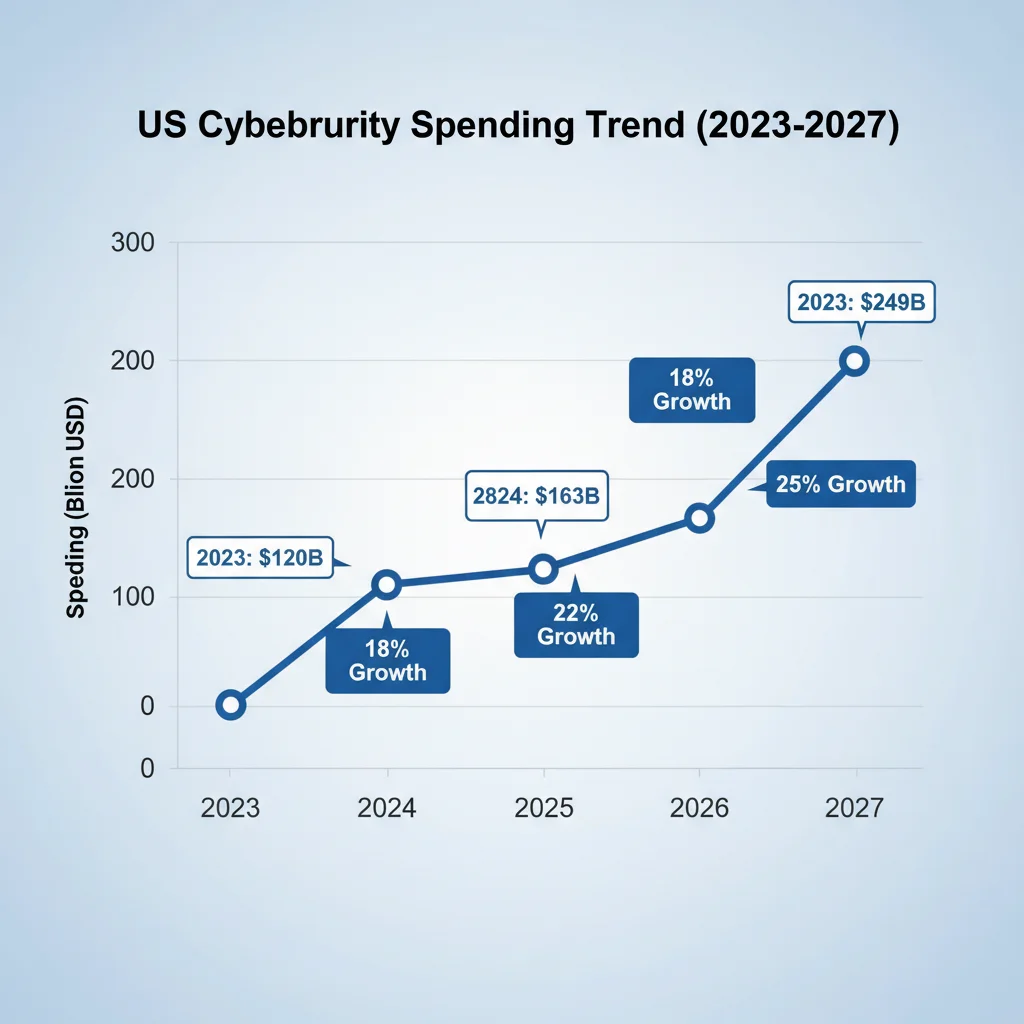
The projected 20% growth in the US cybersecurity market by January 2027 translates into substantial financial implications and presents lucrative investment opportunities. This expansion is not merely an increase in spending; it signifies a fundamental shift in how businesses perceive and prioritize digital security. The market size, already in the hundreds of billions, is set to swell further, attracting both established tech giants and innovative startups.
Market Valuation and Revenue Streams
The overall market valuation for cybersecurity in the US is expected to see a significant uplift. This growth will be reflected in increased revenue streams for cybersecurity vendors, service providers, and consulting firms. Key segments driving this revenue include cloud security, managed security services (MSSPs), endpoint detection and response (EDR), Security Information and Event Management (SIEM), and identity and access management (IAM).
Startup Innovation and Venture Capital
The dynamic nature of cyber threats fuels continuous innovation. This environment is highly conducive to cybersecurity startups developing cutting-edge solutions. Venture capital and private equity firms are keenly aware of the robust growth prospects in this sector, leading to increased funding for promising new technologies. Investors are particularly interested in solutions that leverage AI, machine learning, and automation to address emerging threats and improve operational efficiency for security teams. The robust US Cybersecurity Growth attracts significant capital, fostering a vibrant ecosystem of innovation.
Mergers and Acquisitions
As the market matures and consolidates, mergers and acquisitions are expected to accelerate. Larger cybersecurity companies will look to acquire smaller, innovative firms to expand their product portfolios, gain market share, and integrate advanced technologies. This M&A activity offers exit opportunities for successful startups and allows established players to remain competitive in a rapidly evolving landscape.
Key Technologies Driving US Cybersecurity Growth
The 20% expansion isn’t just about more spending; it’s about smarter spending on technologies that offer the most effective defense against modern threats. Several key technological advancements are at the forefront of this growth:
Artificial Intelligence and Machine Learning (AI/ML)
AI and ML are revolutionizing cybersecurity by enabling predictive threat intelligence, automated threat detection, and faster incident response. These technologies can analyze vast amounts of data to identify patterns, anomalies, and potential threats that human analysts might miss. Their ability to learn and adapt makes them indispensable in combating sophisticated, evolving cyberattacks. The integration of AI/ML into security operations is a significant factor in US Cybersecurity Growth.
Cloud Security Solutions
With the widespread adoption of cloud computing, securing cloud environments has become a top priority. Cloud security solutions encompass everything from cloud access security brokers (CASBs) and cloud workload protection platforms (CWPPs) to secure configuration management and data loss prevention for cloud-hosted data. As more enterprises migrate to the cloud, the demand for specialized cloud security expertise and tools will continue to surge.
Zero Trust Architecture
The traditional perimeter-based security model is increasingly obsolete in a world of remote work and cloud-based applications. Zero Trust, a security framework that dictates ‘never trust, always verify,’ is gaining widespread adoption. It assumes that no user or device, whether inside or outside the network, should be trusted by default. Implementing Zero Trust requires robust identity and access management, micro-segmentation, and continuous verification, representing a significant area of investment for organizations.
Extended Detection and Response (XDR)
XDR platforms integrate and correlate security data from multiple sources – endpoints, networks, cloud, email – to provide a unified view of threats and enable faster, more effective detection and response. By breaking down data silos, XDR offers enhanced visibility and automation, helping security teams to proactively address threats and reduce the mean time to detect and respond (MTTD/MTTR).
Challenges and Opportunities in the Cybersecurity Workforce
Despite the robust US Cybersecurity Growth, the industry faces a critical challenge: a severe shortage of skilled cybersecurity professionals. This talent gap can hinder the effective implementation and management of advanced security solutions, potentially undermining the benefits of increased spending.
The Talent Gap
The demand for cybersecurity experts far outstrips the supply. Roles ranging from security analysts and engineers to incident responders and ethical hackers are in high demand. This shortage drives up salaries and makes it difficult for organizations to build and retain strong security teams. Addressing this gap is crucial for sustaining the projected market growth.

Education and Training Initiatives
To combat the talent shortage, significant investment is needed in cybersecurity education and training programs. Universities, community colleges, and private training providers are developing specialized curricula to equip individuals with the necessary skills. Government initiatives and industry partnerships are also vital in creating pathways for aspiring cybersecurity professionals. Encouraging diversity and inclusion within the workforce can also broaden the talent pool.
Automation and AI as Force Multipliers
While not a complete substitute for human expertise, automation and AI can act as force multipliers for existing security teams. By automating repetitive tasks, triaging alerts, and providing intelligent insights, these technologies can free up human analysts to focus on more complex, strategic challenges. This synergy between human intelligence and artificial intelligence is key to navigating the talent crunch.
The Role of Government and Public-Private Partnerships
Government plays a pivotal role in fostering US Cybersecurity Growth, not only through regulation but also through direct investment, threat intelligence sharing, and the promotion of public-private partnerships. The cybersecurity of critical infrastructure, government agencies, and national defense is a matter of national security, requiring concerted effort.
National Cybersecurity Strategy
The US government continues to refine and implement national cybersecurity strategies aimed at protecting federal networks, critical infrastructure, and the broader economy. These strategies often involve mandates for enhanced security practices, funding for research and development, and collaboration with the private sector to share threat intelligence and best practices.
Information Sharing and Analysis Centers (ISACs)
ISACs are vital platforms for sharing threat intelligence and vulnerability information across specific sectors. These organizations facilitate collaboration between government and industry, enabling more proactive and coordinated responses to cyber threats. Strengthening these partnerships is essential for building a resilient national cybersecurity posture.
Investment in R&D
Government funding for cybersecurity research and development helps push the boundaries of what’s possible in digital defense. Investments in areas like post-quantum cryptography, homomorphic encryption, and advanced behavioral analytics are crucial for staying ahead of future threats and maintaining technological superiority.
Future Outlook: Beyond 2027
While the focus is on the 20% expansion of the US Cybersecurity Growth by January 2027, the trajectory of this market suggests continued robust growth well beyond this timeframe. The digital transformation is an ongoing process, and with it, the need for cybersecurity will only intensify. Emerging technologies, such as quantum computing, advanced AI, and pervasive IoT, will introduce new challenges and demand innovative security solutions.
Quantum Computing and Cryptography
The advent of practical quantum computing poses a long-term threat to current cryptographic standards. Anticipating this, research into post-quantum cryptography is already underway. The development and implementation of quantum-resistant algorithms will be a significant area of focus and investment in the coming decades.
AI in Attack and Defense
As AI becomes more sophisticated, it will be used not only for defense but also by attackers to launch more potent and evasive cyberattacks. This arms race will drive continuous innovation in AI-driven security, with an emphasis on adaptive and autonomous defense systems.
The Human Element
Ultimately, cybersecurity remains a human endeavor. While technology provides powerful tools, human vigilance, awareness, and ethical conduct are indispensable. Investing in security awareness training for all employees, fostering a culture of cybersecurity within organizations, and continuously developing the skills of security professionals will remain paramount.
Conclusion
The projected 20% expansion in the US cybersecurity market by January 2027 is a clear indicator of the critical importance of digital security in the modern world. This growth is driven by the relentless pace of digitalization, an ever-evolving threat landscape, and stringent regulatory requirements. It presents significant financial opportunities for investors and businesses, while also highlighting the urgent need to address the cybersecurity talent gap.
As we look towards 2027 and beyond, the commitment to robust cybersecurity will be a defining factor for national security, economic prosperity, and individual privacy. The journey of US Cybersecurity Growth is not just about defending against threats; it’s about building a resilient, secure, and trustworthy digital future for all.