Gig Economy 2026: Key Shifts for US Professionals

The gig economy, once considered a fringe aspect of the labor market, has cemented its position as a transformative force, reshaping how millions of US professionals earn a living. As we approach 2026, this dynamic landscape continues to evolve at an unprecedented pace, driven by technological advancements, changing worker preferences, and ongoing economic shifts. For anyone operating within or considering entering this flexible work model, understanding the upcoming trajectory is not just beneficial, but essential for sustained success.
This comprehensive article delves into the critical shifts expected to define the gig economy in the next few years. We will explore three major market transformations that US professionals must recognize and adapt to, providing recent updates and strategic insights to help navigate this evolving terrain. From the escalating demand for specialized skills to the deepening integration of AI and the ever-present regulatory complexities, the gig economy of 2026 will present both challenges and unparalleled opportunities.
Prepare to gain a deeper understanding of the forces at play, equipping you with the knowledge to thrive in the gig economy’s future. Our focus is on practical, actionable intelligence for freelancers, independent contractors, and anyone eyeing the flexible work revolution.
The Gig Economy 2026: A New Era of Work
The gig economy has experienced exponential growth over the past decade, and its momentum shows no signs of slowing down. Defined by short-term contracts or freelance work as opposed to permanent jobs, it offers individuals flexibility, autonomy, and the ability to diversify income streams. For businesses, it provides access to a global talent pool, specialized expertise on-demand, and reduced overheads. However, this symbiotic relationship is undergoing significant adjustments as we look towards 2026.
Recent data indicates a continued uptick in gig participation across various sectors. A report by Statista projected that the gig economy workforce in the US could reach 86.5 million by 2027, highlighting a substantial and sustained expansion. This growth is fueled by several factors, including the lingering effects of the pandemic, which normalized remote work and independent contracting, and a generational shift in attitudes towards traditional employment.
The concept of a ‘job for life’ is rapidly fading, replaced by a portfolio career approach where professionals leverage their skills across multiple projects and clients. This shift demands a proactive mindset, continuous learning, and a keen awareness of market trends. The gig economy 2026 will reward those who are agile, adaptable, and entrepreneurial in their approach to work.
Beyond the sheer numbers, the nature of gig work is also transforming. While ride-sharing and food delivery services often dominate headlines, the fastest-growing segments are in skilled professional services: IT, marketing, consulting, design, and content creation. This evolution points to a more sophisticated and specialized gig market, moving beyond low-barrier entry jobs to encompass highly complex and strategic roles.
Understanding these foundational changes is crucial for US professionals. The competitive landscape is intensifying, and the demands on gig workers are becoming more nuanced. Success in 2026 will hinge on anticipating these shifts and positioning oneself strategically within this dynamic ecosystem.
Shift 1: The Escalating Demand for Highly Specialized Skills
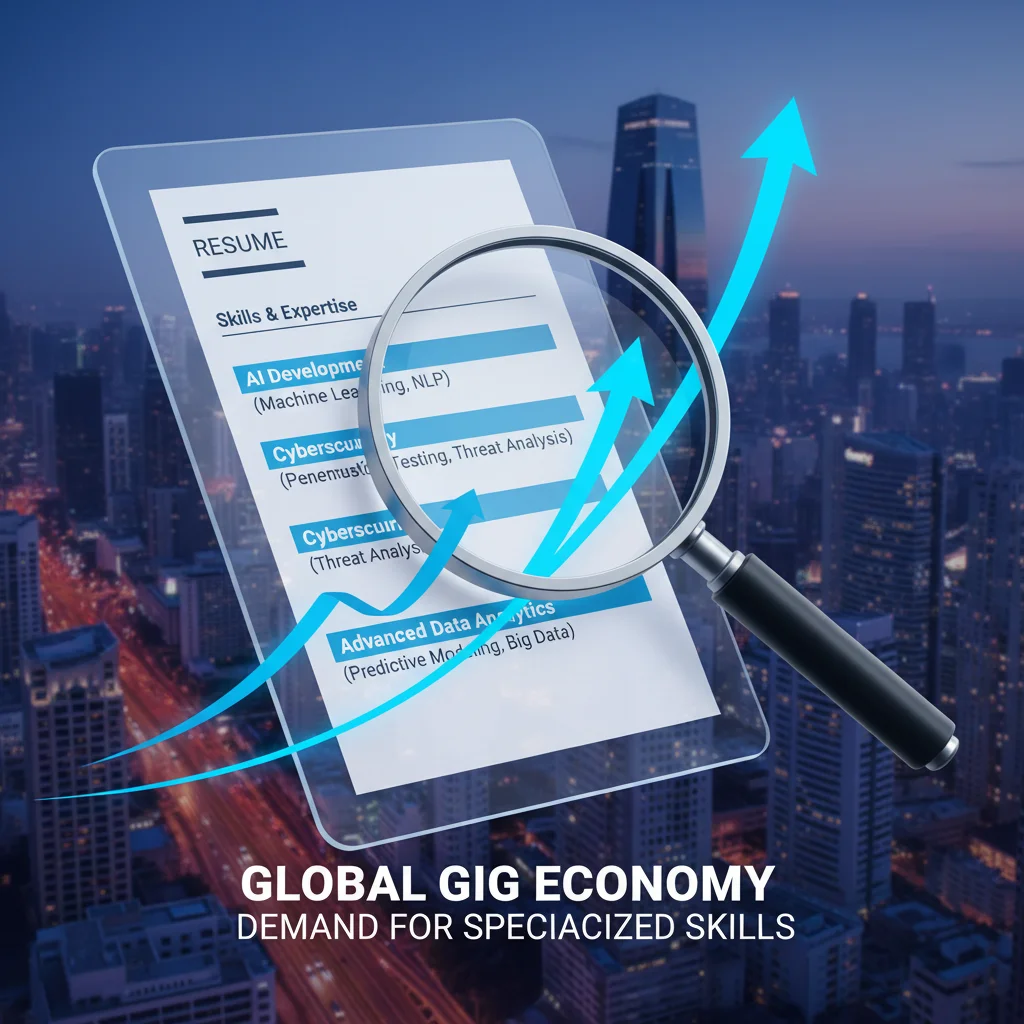
One of the most profound shifts defining the gig economy 2026 is the accelerating demand for highly specialized skills. The era of generalists is giving way to a premium placed on niche expertise, particularly in technology-driven fields. Businesses are increasingly turning to gig workers not just for cost savings, but for access to capabilities that may be expensive or difficult to maintain in-house on a full-time basis.
Consider the rapid advancements in artificial intelligence, machine learning, cybersecurity, blockchain, and advanced data analytics. Companies across all industries are grappling with how to integrate these technologies, and the talent pool for these specific skills is often limited within traditional employment structures. This creates a fertile ground for gig professionals who possess these sought-after competencies.
For example, a small to medium-sized enterprise (SME) might not have the budget for a full-time AI ethics consultant or a senior blockchain developer. However, they can readily hire a gig worker with that precise expertise for a project-based engagement. This model allows businesses to remain competitive and innovative without the long-term commitment of a permanent hire.
What does this mean for US professionals? It signifies a critical need for continuous skill development and specialization. Generic skills, while foundational, will not command the same premium as deep, focused expertise. Professionals who can demonstrate proficiency in emerging technologies or highly specific, in-demand areas will find themselves in a much stronger negotiating position.
Key Areas of Specialization to Watch:
- Artificial Intelligence & Machine Learning: From AI model training and deployment to ethical AI frameworks and prompt engineering, these skills are skyrocketing in demand.
- Cybersecurity: With increasing cyber threats, experts in penetration testing, security architecture, and incident response are invaluable.
- Data Science & Analytics: The ability to extract insights from vast datasets, perform predictive modeling, and create compelling data visualizations remains a top priority for businesses.
- Cloud Computing: Proficiency in platforms like AWS, Azure, and Google Cloud, including architecture, migration, and optimization, is crucial.
- Digital Marketing (Niche): Beyond general marketing, specialized areas like SEO for AI-generated content, programmatic advertising, and advanced conversion rate optimization are highly valued.
- UX/UI Design (Advanced): Designing intuitive and engaging user experiences for complex applications and AI interfaces.
To capitalize on this trend, US professionals should proactively identify skill gaps in their current repertoire and invest in training and certifications. Online courses, bootcamps, and professional development programs can provide the necessary credentials. Furthermore, building a portfolio that showcases specific specialized projects will be essential for attracting high-value clients in the gig economy 2026.
This shift also implies a move away from purely transactional gig work towards more strategic partnerships. Clients will seek gig professionals not just to execute tasks, but to provide expert consultation and contribute to core business objectives. This elevates the role of the gig worker from a temporary resource to a strategic partner, commanding higher rates and more fulfilling work.
Shift 2: The Deepening Integration of AI and Automation
The second major shift that will profoundly impact the gig economy 2026 is the deepening integration of artificial intelligence and automation. While some view AI as a threat to human jobs, for gig professionals, it presents a powerful set of tools and new avenues for specialization.
AI and automation are already streamlining many routine and repetitive tasks that once formed the backbone of certain gig roles. Content writing, basic graphic design, data entry, and even some coding functions are increasingly being augmented or partially automated by AI tools. This doesn’t necessarily mean the elimination of these roles, but rather a transformation of them.
For US professionals, this translates into a need to become ‘AI-literate.’ Understanding how to leverage AI tools to enhance productivity, improve quality, and offer more sophisticated services will be a significant differentiator. Professionals who can master AI prompts, integrate AI into their workflows, and even develop or customize AI solutions will be highly sought after.
AI’s Impact on Gig Work:
- Efficiency Gains: AI tools can automate administrative tasks, research, and initial drafts, freeing up gig workers to focus on higher-level strategic thinking, creativity, and client interaction.
- New Service Offerings: The rise of AI creates entirely new service categories, such as AI prompt engineering, AI model auditing, ethical AI consulting, and AI-powered data analysis.
- Enhanced Creativity: AI can serve as a co-creator, generating ideas, variations, and prototypes in fields like design, music, and content creation, allowing human professionals to refine and add their unique artistic touch.
- Personalized Client Solutions: AI can help gig workers analyze client data more effectively, leading to more personalized and impactful service delivery.
- Competitive Pressure: Professionals who fail to adapt to AI tools may find themselves outcompeted by those who can deliver faster, more cost-effectively, and with greater innovation due to AI integration.
The gig economy 2026 will see a clear division between those who master AI as a co-pilot and those who are displaced by it. This isn’t about AI replacing humans entirely, but rather AI-augmented humans outperforming non-augmented humans. Therefore, investing time in understanding and applying AI technologies is paramount.
Platforms for gig work are also integrating AI to improve matching algorithms, predict project success, and even assist in proposal writing. This means gig workers will need to optimize their profiles and proposals to be recognized by these intelligent systems, using relevant keywords and demonstrating their AI proficiency.
Furthermore, the ethical implications of AI will become a growing concern, creating another specialization opportunity. Professionals who can consult on data privacy, algorithmic bias, and responsible AI deployment will be invaluable to companies navigating this complex landscape. The ethical use of AI in content creation, for instance, will be a critical area of expertise for writers and marketers.
For US professionals, the message is clear: embrace AI, learn its capabilities, and integrate it into your professional toolkit. Those who do will not only survive but thrive in the gig economy 2026, transforming challenges into opportunities for innovation and growth.
Shift 3: The Evolving Regulatory and Legal Landscape
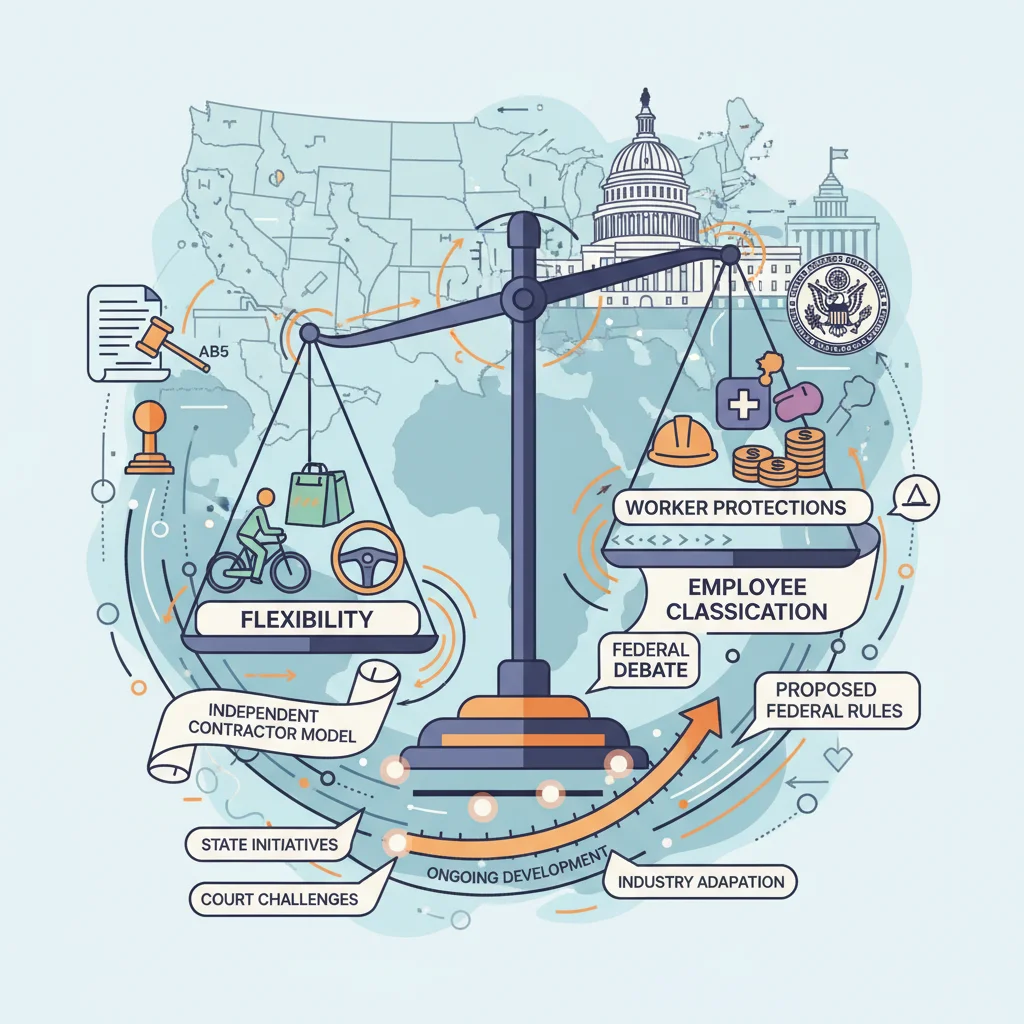
The third significant shift impacting the gig economy 2026 is the constantly evolving regulatory and legal landscape. As the gig economy expands and matures, governments at both federal and state levels are grappling with how to classify and protect gig workers, leading to a patchwork of regulations that US professionals must navigate.
Historically, gig workers have often been classified as independent contractors, which offers businesses flexibility but provides fewer benefits and protections compared to traditional employees. However, this distinction has been increasingly challenged, with debates centered on issues like minimum wage, overtime pay, healthcare access, and the right to collective bargaining.
California’s AB5 law, which aimed to reclassify many gig workers as employees, served as a significant flashpoint, illustrating the complexities and controversies surrounding worker classification. While subsequent propositions and legal battles have created carve-outs and adjustments, the fundamental question of worker status remains a central issue.
As we approach 2026, it is highly probable that more states will consider or implement legislation similar to AB5, or alternative models that aim to provide some level of benefits and protections to gig workers without fully reclassifying them as employees. This could include portable benefits programs, where benefits are tied to the worker rather than a specific employer, or new categories of ‘dependent contractors’ that offer a middle ground.
Implications for US Professionals in the Gig Economy 2026:
- Understanding Worker Classification: Gig workers will need to be acutely aware of their classification status in different states or for different clients, as this impacts their rights, responsibilities, and tax obligations.
- Tax Complexities: Changes in classification or new benefit structures could lead to increased tax complexities. Professionals will need reliable accounting advice tailored to gig work.
- Benefit Access: While some regulations might mandate benefits, gig workers may still need to proactively secure their own health insurance, retirement plans, and disability coverage. The rise of specialized platforms offering these benefits to independent contractors will likely continue.
- Contract Review: More rigorous contract review will be essential to ensure agreements align with current legal standards and adequately protect the gig worker’s interests.
- Advocacy and Collective Action: The growing number of gig workers might lead to stronger collective action and advocacy groups pushing for more favorable legislation. Staying informed about these movements can be beneficial.
The regulatory environment is not just about worker classification; it also extends to consumer protection, data privacy, and platform accountability. Gig workers operating through platforms will need to understand the terms of service and how these platforms comply with evolving legal requirements.
For US professionals, this necessitates a proactive approach to legal and financial literacy. Consulting with legal and tax professionals specializing in the gig economy will become increasingly important. Furthermore, building a robust personal brand and a diverse client base can provide a buffer against potential disruptions caused by regulatory shifts impacting specific platforms or industries.
The gig economy 2026 will undoubtedly be characterized by ongoing debates and adjustments in this area. Staying informed, adaptable, and ensuring proper legal and financial protections will be crucial for maintaining stability and success.
Preparing for the Gig Economy 2026: Strategies for Success
Navigating the dynamic landscape of the gig economy 2026 requires more than just awareness; it demands strategic preparation and continuous adaptation. For US professionals, success will hinge on a multi-faceted approach that embraces continuous learning, smart networking, and robust self-management.
1. Continuous Skill Development and Niche Specialization:
As highlighted in Shift 1, the demand for specialized skills is paramount. Identify emerging technologies and industry trends relevant to your field. Invest in certifications, online courses, and hands-on projects to develop deep expertise in a niche area. Don’t just be good at something; be uniquely good at a specific, in-demand skill set. This not only increases your market value but also allows you to command higher rates and attract premium clients.
Think about combining skills in innovative ways (e.g., a marketer specialized in AI-driven content strategy, or a developer specializing in secure blockchain applications for healthcare). This interdisciplinary approach can create unique value propositions.
2. Master AI and Automation Tools:
Embrace AI as an indispensable partner in your work. Learn to use AI tools for research, content generation, data analysis, project management, and even client communication. Understand prompt engineering to get the best results from AI. The goal isn’t to be replaced by AI, but to leverage it to increase your efficiency, expand your service offerings, and deliver superior results. Stay updated on the latest AI advancements and integrate them into your workflow to remain competitive.
Consider offering services that specifically involve AI integration or optimization for clients, positioning yourself as an expert in this transformative technology.
3. Build a Strong Personal Brand and Network:
In a crowded gig market, your personal brand is your most valuable asset. Develop a professional online presence (LinkedIn, personal website, portfolio) that clearly articulates your specialized skills and value proposition. Actively network with other professionals, potential clients, and industry leaders, both online and offline. Referrals and word-of-mouth remain powerful drivers of gig work. A strong network can also provide support, collaboration opportunities, and insights into new market trends.
Engage in thought leadership by sharing insights, creating content, or participating in industry discussions. This positions you as an expert and builds trust with potential clients.
4. Prioritize Financial and Legal Literacy:
Given the evolving regulatory landscape (Shift 3), it’s crucial to understand the financial and legal aspects of independent contracting. Consult with tax advisors specialized in gig work to optimize your financial planning, understand deductions, and manage self-employment taxes. Research insurance options (health, liability, disability) tailored for independent professionals. Familiarize yourself with contract law and consider having legal counsel review significant agreements.
Maintain meticulous records of income, expenses, and client contracts. This not only helps with taxes but also provides a clear overview of your business performance.
5. Diversify Your Income Streams and Client Base:
Relying on a single client or a single type of gig work can be risky. Diversify your income by working with multiple clients across different industries. Explore various gig platforms, direct client relationships, and even passive income streams related to your expertise (e.g., online courses, digital products). This strategy provides financial stability and reduces vulnerability to market fluctuations or regulatory changes affecting a specific sector.
A diversified portfolio of work also allows you to continuously refine your skills and adapt to new challenges, keeping your expertise fresh and relevant.
6. Cultivate Adaptability and Resilience:
The gig economy is inherently dynamic. Market demands can shift, technologies can emerge, and regulations can change rapidly. Cultivate a mindset of continuous learning, problem-solving, and adaptability. Be prepared to pivot, acquire new skills, and adjust your service offerings as needed. Resilience in the face of uncertainty and the ability to embrace change will be key determinants of long-term success.
Regularly assess your business model and service offerings. Are they still relevant? Are there new opportunities you should explore? Proactive self-assessment is vital.
Conclusion: Thriving in the Gig Economy 2026
The gig economy 2026 is poised to be a more sophisticated, specialized, and technologically advanced landscape than ever before. For US professionals, this presents an exciting array of opportunities, but also demands a strategic and proactive approach to career development.
By understanding and adapting to the three major shifts – the escalating demand for highly specialized skills, the deepening integration of AI and automation, and the evolving regulatory and legal landscape – gig workers can position themselves for sustained success. The future belongs to those who are not just participants in the gig economy, but active shapers of their own professional destiny within it.
Embrace lifelong learning, master new tools, build a robust personal brand, and secure your financial and legal foundations. The gig economy is not just a temporary trend; it is the future of work for millions. By heeding these insights and preparing diligently, US professionals can confidently navigate the challenges and harness the immense potential of the gig economy 2026, transforming uncertainty into unprecedented opportunities for growth and fulfillment.
The journey ahead promises innovation, flexibility, and the chance to redefine what it means to work in the modern age. Are you ready to seize it?