OER’s Impact on US Workforce: 2026 Cost Savings & Accessibility

The landscape of the American workforce is in a constant state of evolution, driven by rapid technological advancements, shifting economic demands, and an increasing need for continuous upskilling and reskilling. As we look towards 2026, one powerful force is emerging as a critical enabler of this transformation: Open Educational Resources (OER). OER, defined as teaching, learning, and research materials in any medium – digital or otherwise – that reside in the public domain or have been released under an open license that permits no-cost access, use, adaptation, and redistribution by others, are poised to revolutionize U.S. workforce development. This article will delve into the profound impact of OER on the U.S. workforce, focusing specifically on the significant cost savings and enhanced accessibility they offer, shaping a more agile, skilled, and equitable future for American workers.
The Shifting Sands of Workforce Development
Before exploring the direct impact of OER, it’s essential to understand the context of modern workforce development. The traditional model of education, often culminating in a degree and a lifelong career path, is increasingly insufficient. Today’s professionals must engage in lifelong learning to remain competitive. Automation, artificial intelligence, and global competition necessitate a workforce that can adapt quickly, acquire new skills, and pivot to emerging industries. However, the costs associated with traditional education and training can be prohibitive, creating significant barriers for many individuals and businesses. This is where the power of OER workforce development truly shines.
The demand for flexible, affordable, and relevant training has never been higher. Employers struggle to find candidates with the right skill sets, while individuals often face financial hurdles or time constraints that prevent them from accessing necessary educational opportunities. This gap highlights a critical need for innovative solutions that can democratize access to high-quality learning materials. OER represents just such a solution, offering a sustainable and scalable model for addressing these challenges head-on. By leveraging openly licensed materials, educational institutions, businesses, and individuals can significantly reduce the financial burden of learning, making professional development more attainable for a broader segment of the population.
OER and Unlocking Significant Cost Savings by 2026
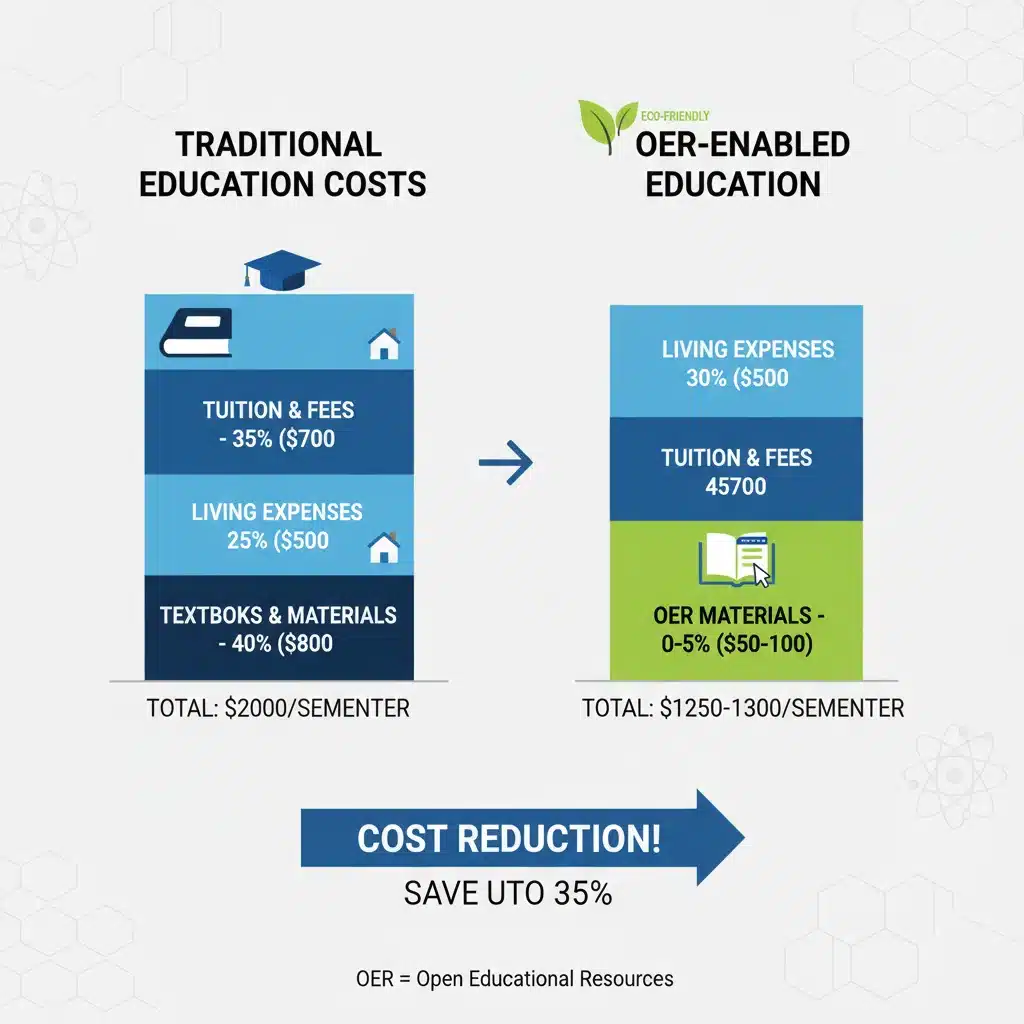
One of the most compelling arguments for the widespread adoption of OER in U.S. workforce development is the immense potential for cost savings. Traditional textbooks and proprietary course materials represent a substantial expense for individuals and institutions alike. For a single course, these costs can run into hundreds of dollars, and for comprehensive training programs, they can easily reach thousands. This financial barrier often deters individuals from pursuing further education or specialized training, directly impacting their career progression and the overall skill level of the workforce.
By 2026, OER is projected to significantly alleviate these financial pressures. Imagine a scenario where foundational knowledge for entry-level positions or advanced skills for highly specialized roles can be accessed without the burden of textbook purchases. This translates into direct savings for students, employees, and training providers. For individuals, these savings can free up resources for other critical needs or allow them to enroll in multiple courses they might otherwise forgo. For employers, the ability to offer training programs utilizing free, high-quality OER can dramatically reduce their training budgets, allowing them to invest more in other areas of employee development or expand the scope of their training initiatives.
Furthermore, OER can reduce the administrative overhead associated with managing traditional copyrighted materials, such as licensing fees, procurement processes, and distribution costs. Educational institutions and corporate training departments can reallocate these saved resources to develop new courses, hire more instructors, or invest in better learning technologies. The ripple effect of these cost efficiencies is profound, creating a more economically viable pathway to a skilled workforce. The OER workforce development model fosters an environment where quality education is not contingent on the ability to pay for expensive materials.
Case Study: Industry-Specific Training with OER
Consider the manufacturing sector, which is undergoing a significant digital transformation. Training workers in robotics, advanced analytics, and cybersecurity is crucial. Traditionally, developing such curriculum and sourcing materials would be incredibly expensive. With OER, a consortium of manufacturers and community colleges could collaboratively create and share modules on these topics, adapting them for specific regional needs. This shared development model drastically cuts individual costs while ensuring high-quality, relevant content.
Another example lies in the healthcare sector, where continuous professional development is mandated. OER can provide up-to-date modules on new medical procedures, ethical guidelines, or technological advancements without requiring practitioners to purchase expensive new editions of textbooks every few years. This not only saves money but also ensures that critical, life-saving information is disseminated rapidly and widely across the professional community.
Enhancing Accessibility: Breaking Down Barriers to Learning
Beyond cost savings, OER fundamentally transforms accessibility in workforce development. Accessibility in this context encompasses several dimensions: geographical, temporal, financial, and pedagogical. Traditional education often requires physical presence, adherence to fixed schedules, and significant financial investment, creating insurmountable barriers for many potential learners.
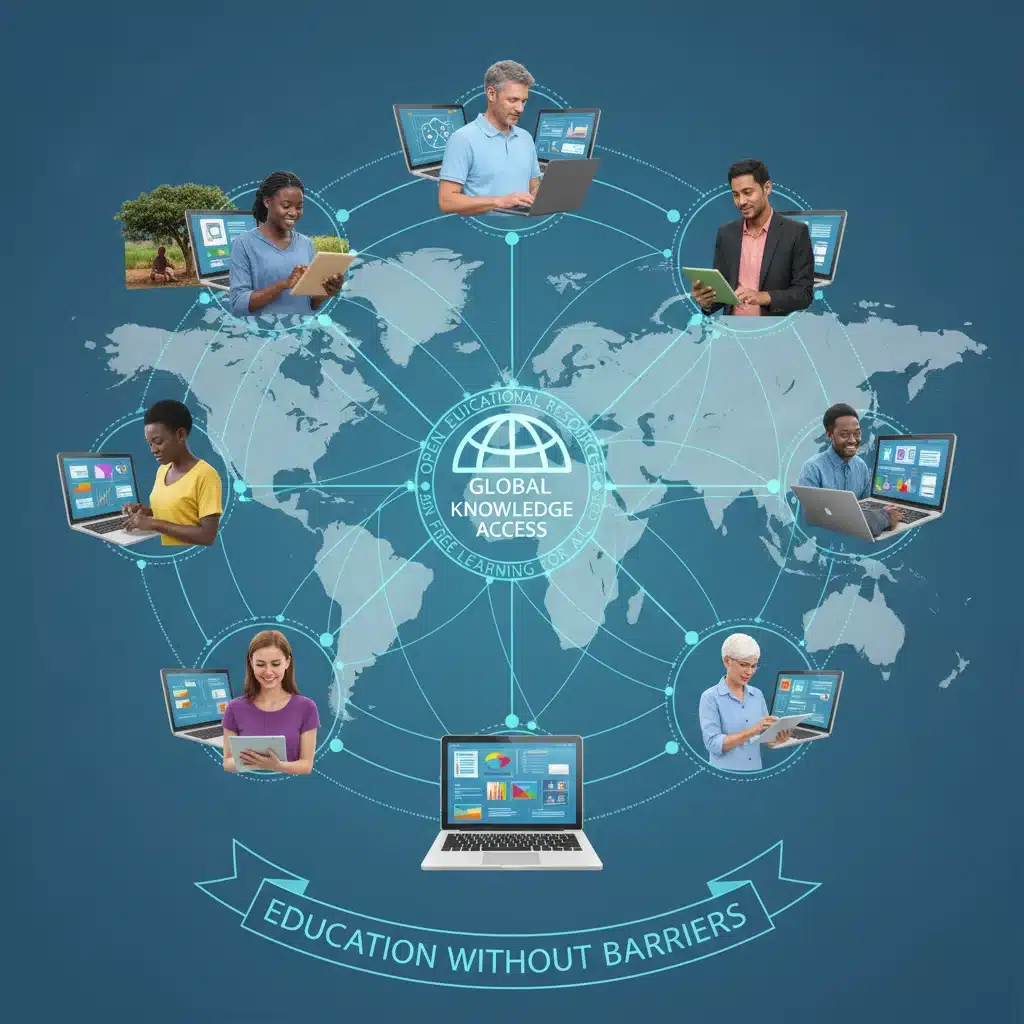
OER, by its very nature, is designed to be openly available, meaning it can be accessed anytime, anywhere, by anyone with an internet connection. This dramatically benefits individuals in rural areas with limited access to educational institutions, working professionals juggling family responsibilities, or those with disabilities who may find traditional classroom settings challenging. The flexibility offered by OER empowers individuals to learn at their own pace and on their own schedule, integrating education seamlessly into their lives rather than requiring significant disruptions.
Moreover, the open licenses associated with OER allow for adaptation and localization. This means that materials can be translated into different languages, modified to suit specific learning styles, or contextualized for particular industries or regions. This level of customization ensures that learning content is not only available but also relevant and effective for a diverse learner population. For instance, a technical training manual developed for urban manufacturing could be adapted with local examples and terminology for a rural agricultural community, making the content far more impactful.
By 2026, the pervasive nature of OER will mean that a single parent working two jobs can still acquire new IT skills by studying OER modules late at night, or a veteran transitioning to civilian life can access career readiness courses from a remote location. This democratized access is critical for fostering an inclusive workforce where talent is nurtured regardless of socio-economic background or geographical location. The OER workforce development model actively works to bridge educational divides.
The Role of OER in Reskilling and Upskilling Initiatives
The rapid pace of technological change means that skills can become obsolete quickly. Reskilling (training individuals for new jobs) and upskilling (enhancing existing skills) are no longer optional but essential for individual career longevity and national economic competitiveness. OER provides an ideal framework for these continuous learning needs.
For individuals, OER offers a low-stakes environment to explore new fields or brush up on fundamental concepts without committing to expensive programs. This exploratory phase is crucial for making informed career decisions. For employers, OER enables the rapid deployment of training modules to address immediate skill gaps within their workforce. Instead of waiting for new textbooks to be published or custom courses to be developed, companies can leverage existing OER, adapt it, and deploy it swiftly.
Furthermore, OER facilitates the creation of micro-credentials and stackable certifications. Learners can complete small, focused OER modules, earn badges or certificates, and then combine these to demonstrate proficiency in broader skill areas. This modular approach is highly flexible and responsive to industry needs, allowing individuals to build skills incrementally and employers to verify specific competencies efficiently. By 2026, we anticipate a proliferation of such OER-powered micro-credentialing programs that will significantly streamline the reskilling and upskilling process across various sectors.
Addressing the Digital Divide with OER
While OER offers immense benefits, its effectiveness is intrinsically linked to digital access. The digital divide, the gap between those who have ready access to computers and the Internet and those who do not, remains a challenge. However, OER initiatives are actively working to mitigate this. Many OER platforms offer downloadable content for offline use, and community initiatives are often formed to provide public access points or refurbished devices. Moreover, as internet infrastructure continues to expand, especially in underserved areas, the reach of OER will naturally grow.
Government policies and philanthropic efforts aimed at universal broadband access will further amplify the impact of OER, ensuring that its benefits are not limited to digitally privileged populations. The goal is to make OER workforce development truly equitable, reaching every corner of the nation.
Challenges and Opportunities for OER Adoption
Despite its undeniable potential, the widespread adoption of OER in U.S. workforce development faces certain challenges. One primary hurdle is awareness. Many individuals, educators, and employers are still unaware of what OER is or how to effectively find and utilize it. Promoting OER requires concerted efforts from government agencies, educational institutions, industry associations, and non-profit organizations.
Another challenge lies in quality assurance. While many OER materials are of exceptionally high quality, the open nature means that quality can vary. Developing robust curation processes, peer review systems, and community rating mechanisms are crucial for ensuring that learners and employers can trust the reliability and effectiveness of the OER they use. By 2026, we expect to see more sophisticated OER repositories and platforms that incorporate these quality control measures, making it easier to discover and implement high-quality resources.
However, these challenges also present significant opportunities. The collaborative spirit inherent in the OER movement can foster partnerships between academia and industry. Businesses can contribute their expertise to develop industry-specific OER, ensuring its relevance and practicality. Educational institutions can leverage OER to innovate their curricula, offering more dynamic and responsive programs. Furthermore, the development of OER creates new roles for instructional designers, content curators, and digital librarians, contributing to job creation within the educational technology sector.
The Future of Workforce Training: OER at the Core
Looking ahead to 2026 and beyond, it is clear that OER will play a central role in shaping the future of U.S. workforce training. The economic imperative for cost savings, coupled with the societal demand for greater accessibility, makes OER an indispensable tool. It moves us towards a model where learning is less about exclusive access to proprietary content and more about open access to shared knowledge.
The implications extend beyond mere cost reduction and access. OER fosters a culture of sharing, collaboration, and continuous improvement within the educational ecosystem. Educators can adapt and improve upon existing materials, sharing their enhancements with the global community. This iterative process leads to higher quality, more current, and more effective learning resources for everyone. Businesses can engage directly with the development of training materials, ensuring that the skills taught are precisely what the industry needs, thereby reducing the skills gap.
The integration of OER into existing learning management systems (LMS) and corporate training platforms will become seamless. Artificial intelligence and machine learning will further enhance the discoverability and personalization of OER, recommending relevant materials to learners based on their career goals and existing skill sets. This personalized learning pathway, powered by OER, will empower individuals to take greater ownership of their professional development.
Policy and Advocacy for OER Integration
To fully realize the potential of OER in U.S. workforce development, supportive policies and sustained advocacy are crucial. Government bodies at federal, state, and local levels can play a pivotal role by:
- Funding OER Initiatives: Providing grants and financial incentives for the creation, adoption, and adaptation of OER for workforce training programs.
- Promoting Awareness: Launching campaigns to educate employers, educational institutions, and the public about the benefits and availability of OER.
- Developing Infrastructure: Investing in digital infrastructure to ensure equitable access to OER for all Americans, particularly in underserved communities.
- Establishing Standards: Supporting the development of best practices and quality assurance frameworks for OER content.
Advocacy groups, industry associations, and educational consortia also have a vital role in championing OER. By sharing success stories, demonstrating return on investment, and building collaborative networks, they can accelerate the mainstream adoption of OER. The collective effort to integrate OER into the fabric of workforce development will be a defining factor in its success by 2026.
Conclusion: A Smarter, More Accessible Future with OER
By 2026, Open Educational Resources are set to be a cornerstone of U.S. workforce development. Their ability to deliver substantial cost savings, coupled with an unparalleled enhancement in accessibility, positions them as a transformative force. OER empowers individuals to pursue continuous learning without financial burden, enabling them to adapt to the evolving demands of the job market. It allows businesses to efficiently upskill and reskill their employees, fostering a more competitive and innovative economy.
The journey towards full OER integration is ongoing, but the trajectory is clear. As awareness grows, quality assurance mechanisms mature, and supportive policies take root, OER will increasingly become the default choice for high-quality, flexible, and affordable workforce training. This will lead to a more skilled, adaptable, and equitable American workforce, ready to meet the challenges and seize the opportunities of the future. The impact of OER workforce development will be felt across every industry, creating a stronger economic foundation for the nation.