US Manufacturing 2026: Automation, Reskilling, and Industry Trends
US Manufacturing 2026: Automation, Reskilling, and Industry Trends
The landscape of US manufacturing is undergoing a profound transformation, driven by technological advancements, evolving global dynamics, and a renewed focus on domestic capabilities. As we approach 2026, understanding the pivotal trends shaping this sector is crucial for businesses aiming to thrive and remain competitive. This article delves into five key insights that will define US manufacturing in the coming years, with a strong emphasis on the critical interplay of automation and workforce reskilling.
The Dawn of Hyper-Automation: Beyond Simple Robotics
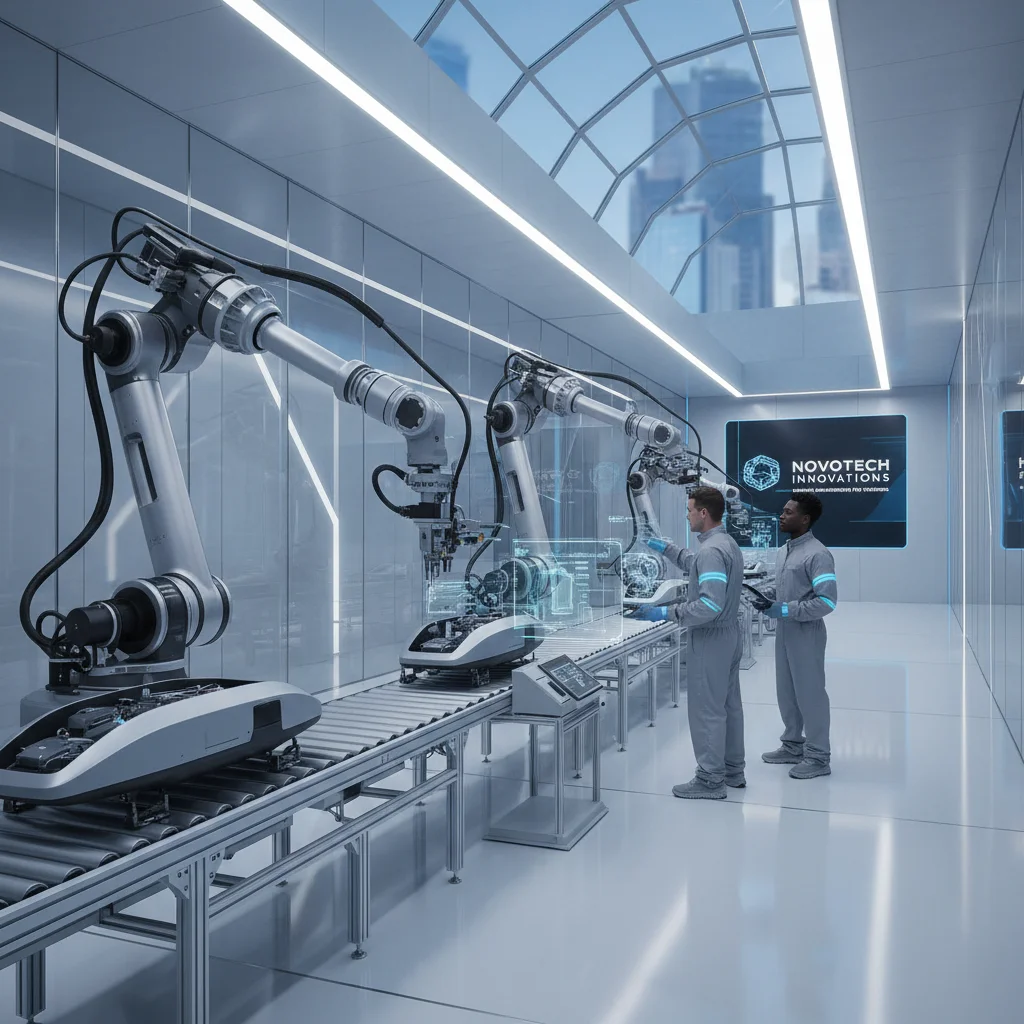
Automation in US manufacturing is no longer just about deploying robotic arms for repetitive tasks. By 2026, we will see the widespread adoption of hyper-automation, an approach that combines multiple advanced technologies such as Artificial Intelligence (AI), Machine Learning (ML), Robotic Process Automation (RPA), and Internet of Things (IoT) to automate processes end-to-end. This isn’t just about efficiency; it’s about creating intelligent, self-optimizing manufacturing ecosystems.
The integration of AI and ML into manufacturing operations means that machines can learn from data, predict maintenance needs, optimize production schedules, and even identify quality control issues with unprecedented accuracy. This leads to significant reductions in downtime, waste, and errors, boosting overall productivity and output quality. For instance, predictive maintenance, powered by AI, analyzes sensor data from machinery to anticipate failures before they occur, allowing for proactive repairs and minimizing costly disruptions. This shift is fundamental to the future of US Manufacturing Trends 2026.
Furthermore, collaborative robots (cobots) are becoming increasingly sophisticated, working safely alongside human employees, augmenting their capabilities rather than replacing them entirely. These cobots can handle strenuous or dangerous tasks, freeing up human workers to focus on more complex problem-solving, quality assurance, and innovation. This symbiotic relationship is a cornerstone of the evolving manufacturing floor, enhancing both safety and productivity. The rise of hyper-automation underscores the imperative for businesses to invest not only in technology but also in the skills required to manage and leverage these advanced systems effectively.
The benefits of hyper-automation extend beyond the factory floor. It impacts supply chain management, inventory optimization, and even product design. By automating data collection and analysis across various stages of the manufacturing process, companies gain deeper insights into their operations, enabling more informed decision-making and continuous improvement. This comprehensive approach to automation is a defining characteristic of US Manufacturing Trends 2026, setting new benchmarks for operational excellence.
Workforce Reskilling and Upskilling: The Human Element in US Manufacturing Trends 2026
While automation takes center stage, the human workforce remains indispensable. However, the nature of work is changing dramatically. The most critical insight for US Manufacturing Trends 2026 is the urgent need for comprehensive workforce reskilling and upskilling initiatives. As machines handle more routine and physically demanding tasks, human workers must evolve into roles that require higher-order cognitive skills, digital literacy, and adaptability.
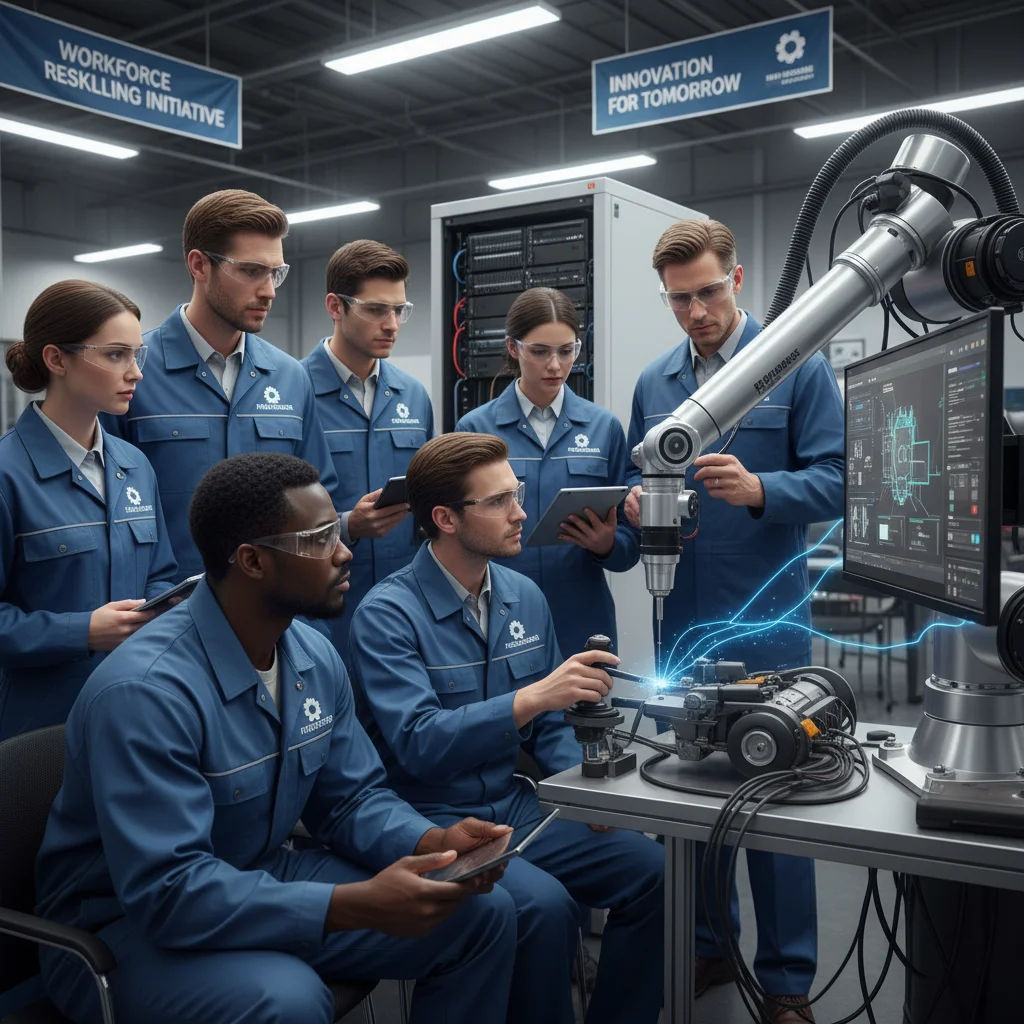
The demand for workers proficient in data analytics, AI interpretation, robot programming, cybersecurity, and advanced troubleshooting will skyrocket. Manufacturers are recognizing that investing in their existing workforce through targeted training programs is not just a social responsibility but a strategic imperative. This involves creating partnerships with educational institutions, establishing internal training academies, and leveraging virtual reality (VR) and augmented reality (AR) for immersive learning experiences.
Reskilling programs will focus on transitioning workers from traditional manual roles to positions that involve monitoring automated systems, managing data flows, and collaborating with AI-powered tools. Upskilling, on the other hand, will enhance the capabilities of existing skilled workers, equipping them with advanced knowledge in areas like additive manufacturing, advanced materials science, and complex system integration. This continuous learning model is vital for maintaining a competitive and adaptable labor force in US manufacturing.
Failing to address the skills gap will be a significant impediment to realizing the full potential of advanced manufacturing technologies. Companies that proactively invest in their people will not only attract and retain top talent but also foster a culture of innovation and resilience. The human-machine collaboration will be optimized when both elements are operating at their highest potential, making workforce development a cornerstone of US Manufacturing Trends 2026.
Supply Chain Resilience and Regionalization: Learning from Disruption
The global disruptions of recent years have highlighted the vulnerabilities of extended and complex supply chains. By 2026, a major trend in US manufacturing will be an intensified focus on building supply chain resilience and strategic regionalization. This involves diversifying supplier bases, nearshoring or reshoring critical production capabilities, and leveraging digital tools for enhanced visibility and agility.
Manufacturers are actively seeking to reduce their reliance on single-source suppliers and geographically concentrated production hubs. This means exploring domestic and regional suppliers, fostering closer relationships with partners, and even investing in vertical integration where feasible. The goal is to minimize exposure to geopolitical risks, natural disasters, and unexpected global events that can disrupt the flow of materials and components.
Digital technologies like blockchain, AI-driven demand forecasting, and real-time inventory management systems are playing a crucial role in enhancing supply chain visibility. These tools allow manufacturers to track goods from raw materials to finished products, identify potential bottlenecks, and react swiftly to disruptions. Predictive analytics can help anticipate supply chain risks, enabling proactive mitigation strategies.
Regionalization also brings environmental benefits by reducing transportation distances and carbon footprints, aligning with growing sustainability objectives. Furthermore, it can stimulate local economies and create new job opportunities within the US. This strategic shift towards more robust and localized supply chains is a direct response to past challenges and a key differentiator for successful US Manufacturing Trends 2026.
Companies are also exploring the use of ‘digital twins’ for their supply chains, creating virtual models that can simulate various scenarios and stress tests, identifying weaknesses before they manifest in the physical world. This proactive approach to risk management is becoming standard practice, ensuring continuity and stability in an increasingly unpredictable global environment. The emphasis on resilience will redefine how businesses source, produce, and deliver, making it a critical insight for US Manufacturing Trends 2026.
Sustainability and Circular Economy Principles: A Core Business Driver
Environmental, Social, and Governance (ESG) considerations are no longer ancillary but are becoming fundamental drivers for US manufacturing. By 2026, sustainability and circular economy principles will be deeply embedded in manufacturing processes, product design, and business models. This trend is fueled by consumer demand, regulatory pressures, and the recognition of long-term economic benefits.
Manufacturers are focusing on reducing waste, conserving energy, and minimizing their carbon footprint throughout the product lifecycle. This includes adopting renewable energy sources, optimizing production processes for energy efficiency, and implementing advanced waste management and recycling programs. The concept of the circular economy, where products and materials are kept in use for as long as possible, is gaining significant traction. This involves designing products for durability, repairability, and recyclability, as well as exploring take-back programs and remanufacturing initiatives.
Investment in sustainable materials, such as bio-based plastics, recycled metals, and responsibly sourced components, is also on the rise. Beyond environmental benefits, embracing sustainability can lead to cost savings through reduced resource consumption and waste disposal fees. It also enhances brand reputation, attracts environmentally conscious consumers, and can open up new market opportunities.
Regulations such as extended producer responsibility (EPR) schemes are pushing manufacturers to take greater accountability for the entire lifecycle of their products. This necessitates a shift in thinking from a linear ‘take-make-dispose’ model to a circular one that prioritizes resource efficiency and waste reduction. For US Manufacturing Trends 2026, sustainability is not just a buzzword; it’s a strategic imperative that influences everything from product design to supply chain partnerships.

Advanced Manufacturing Technologies: Additive Manufacturing and Digital Twins
Beyond hyper-automation, the broader landscape of advanced manufacturing technologies will continue to revolutionize US industry. Two areas of particular significance for US Manufacturing Trends 2026 are the widespread adoption of additive manufacturing (3D printing) and the proliferation of digital twins.
Additive manufacturing has matured beyond prototyping and is now being used for producing end-use parts across various industries, including aerospace, medical devices, and automotive. Its ability to create complex geometries, customize products on demand, and reduce material waste offers unparalleled advantages. As materials science advances and printing speeds increase, 3D printing will become an even more integral part of flexible and localized production strategies. This technology enables rapid iteration and innovation, allowing manufacturers to bring new products to market faster and respond to evolving customer needs more effectively.
Digital twins are virtual replicas of physical assets, processes, or systems. By 2026, their application will expand significantly, offering real-time insights into performance, predicting potential issues, and optimizing operations without impacting physical production. A digital twin can simulate various scenarios, test design changes, and even train operators in a risk-free virtual environment. This technology is invaluable for predictive maintenance, process optimization, and product lifecycle management, leading to substantial cost savings and efficiency gains.
The combination of these advanced technologies creates a powerful synergy. For instance, a digital twin can be used to design and optimize a part, which can then be rapidly produced using additive manufacturing. This iterative process accelerates innovation and allows for highly customized production runs, catering to niche markets and specific customer requirements. Both additive manufacturing and digital twins represent significant leaps forward in manufacturing capabilities and are central to understanding US Manufacturing Trends 2026.
Furthermore, the convergence of these technologies with AI and IoT creates intelligent factories where every machine, product, and process is interconnected and constantly generating data. This data, when analyzed effectively, provides a holistic view of operations, enabling continuous improvement and unprecedented levels of control and optimization. The smart factory concept, once a futuristic vision, is becoming a tangible reality, driven by these advanced manufacturing technologies.
Navigating the Future: Strategies for Success in US Manufacturing 2026
To successfully navigate the dynamic landscape of US Manufacturing Trends 2026, businesses must adopt a multi-faceted strategy. This involves not only technological investment but also a profound commitment to workforce development and operational agility. Here are some actionable strategies:
- Strategic Technology Adoption: Don’t just implement technology for technology’s sake. Conduct thorough assessments to identify where hyper-automation, AI, and advanced manufacturing technologies can provide the most significant ROI and address specific business challenges. Prioritize solutions that enhance efficiency, quality, and flexibility.
- Continuous Learning Culture: Establish robust internal training programs and foster partnerships with vocational schools, community colleges, and universities. Encourage a culture of continuous learning and adaptation among employees. Offer incentives for skill development and create clear career pathways for workers transitioning into new roles.
- Supply Chain Audit and Diversification: Regularly audit your supply chain for vulnerabilities. Identify critical components and raw materials, and develop strategies for diversifying your supplier base, including exploring nearshoring and reshoring options. Invest in digital tools for real-time supply chain visibility and risk management.
- Embrace Circularity: Integrate sustainability into your core business strategy. Design products with their end-of-life in mind, explore opportunities for remanufacturing and recycling, and seek to minimize waste across all operations. Communicate your sustainability efforts transparently to stakeholders.
- Data-Driven Decision Making: Leverage the vast amounts of data generated by automated systems and digital twins. Invest in data analytics capabilities to extract actionable insights that can inform strategic decisions, optimize processes, and predict future trends.
- Collaboration and Ecosystem Building: Engage with industry consortia, technology providers, and academic institutions. Collaborate on research and development, share best practices, and contribute to the development of industry standards. Building a strong ecosystem can accelerate innovation and collective growth.
The challenges are significant, but so are the opportunities. Manufacturers who proactively embrace these trends will not only survive but thrive, cementing the US’s position as a global leader in advanced manufacturing. The focus on US Manufacturing Trends 2026 is not just about adapting to change, but about actively shaping the future of industrial production.
The Economic Impact of Evolving US Manufacturing
The shifts in US manufacturing are not isolated to factory floors; they have profound economic implications. The move towards advanced manufacturing, fueled by automation and reskilling, promises to boost productivity, leading to higher output per worker and potentially increased wages for skilled labor. This can contribute to a stronger, more resilient domestic economy, less susceptible to global shocks.
Moreover, the emphasis on regionalization and supply chain resilience can lead to the creation of new domestic jobs, not just in manufacturing but also in supporting sectors like logistics, technology development, and specialized training. The growth of additive manufacturing and advanced materials science also fosters innovation, creating entirely new industries and product categories that can drive economic expansion.
However, the transition is not without its challenges. The initial investment in automation and reskilling can be substantial, requiring government support, tax incentives, and accessible financing options for small and medium-sized enterprises (SMEs). Ensuring an equitable transition for workers whose roles are displaced by automation is also paramount, necessitating robust social safety nets and accessible retraining programs.
The economic benefits of a modernized US manufacturing sector extend to national security, reducing reliance on foreign supply chains for critical goods and technologies. It also enhances competitiveness in global markets, allowing US-made products to compete on quality, innovation, and efficiency, rather than solely on labor cost. Understanding these broader economic impacts is essential when discussing US Manufacturing Trends 2026.
Conclusion: A Resilient and Innovative Future for US Manufacturing
The year 2026 will mark a significant milestone in the evolution of US manufacturing. The insights discussed – hyper-automation, critical workforce reskilling, robust supply chain resilience, deep integration of sustainability, and the proliferation of advanced technologies like additive manufacturing and digital twins – collectively paint a picture of an industry that is more efficient, adaptable, and innovative than ever before. The future of US Manufacturing Trends 2026 is one where technology and human ingenuity converge to create a powerful engine for economic growth and global competitiveness.
For manufacturers, the message is clear: proactive adaptation is key. Embracing these trends, investing in both technology and talent, and fostering a culture of continuous improvement will be essential for success. The journey towards 2026 is not just about adopting new tools, but about fundamentally reimagining how products are made, how businesses operate, and how the workforce contributes to a more advanced and sustainable industrial future. The resilience and innovation forged in these transformations will define the strength of American industry for decades to come.