US Manufacturing Trends: Automation, Reshoring, and Digital Transformation
The United States manufacturing sector is in the midst of a profound transformation, driven by technological innovation, shifting global dynamics, and a renewed focus on domestic production. Far from being a static industry, US manufacturing is evolving at an unprecedented pace, embracing automation, rethinking supply chains, and integrating digital technologies to enhance competitiveness and resilience. Understanding these US manufacturing trends is crucial for businesses, policymakers, and workers alike.
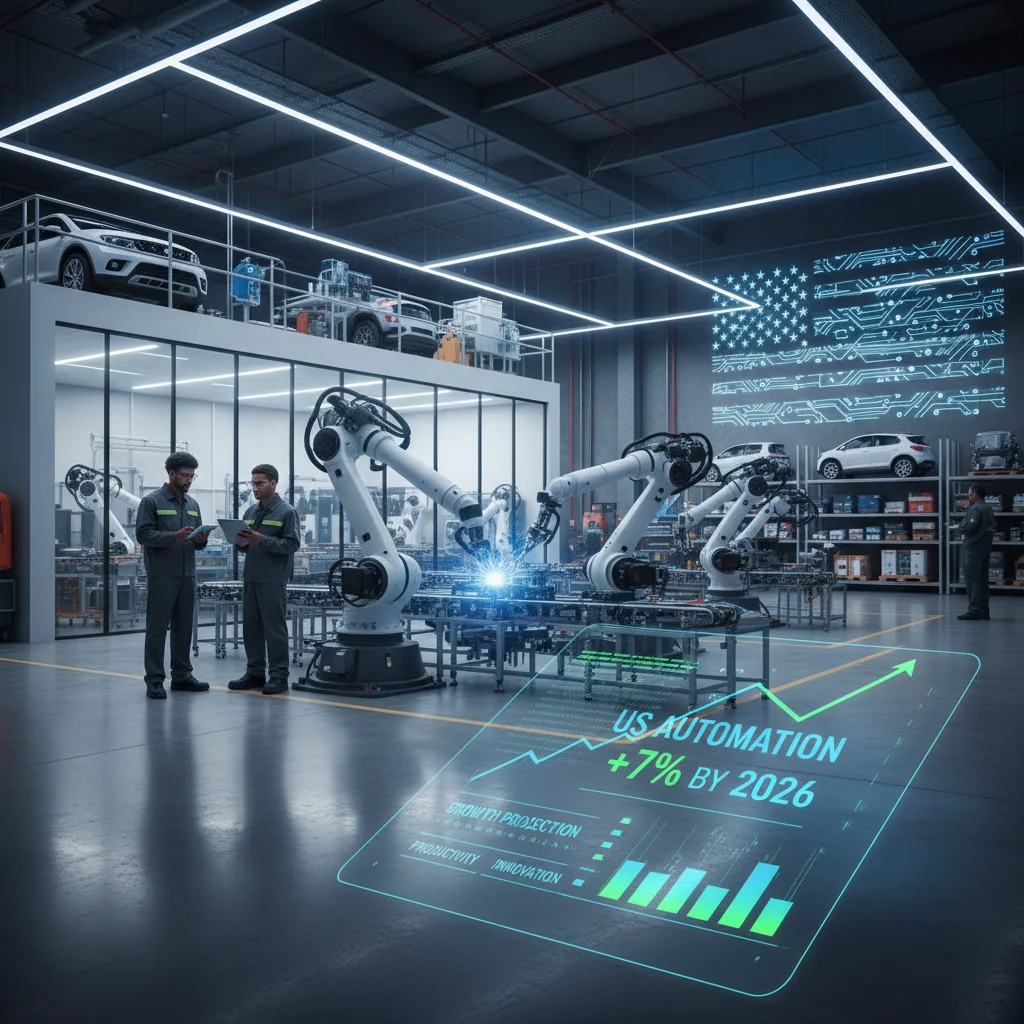
Recent data and projections paint a clear picture of this evolution. Automation, for instance, is not just a buzzword but a tangible force, with projections indicating a significant 7% rise in its adoption by 2026. This isn’t merely about replacing human labor; it’s about augmenting capabilities, improving precision, and enabling entirely new production paradigms. Simultaneously, the concept of reshoring, once a niche topic, has gained considerable momentum, as companies seek to mitigate risks associated with complex global supply chains and capitalize on domestic advantages.
This comprehensive analysis will delve into the three most impactful US manufacturing trends shaping the industry today: the accelerating pace of automation, the strategic imperative of reshoring and nearshoring, and the pervasive influence of digital transformation. We will explore the drivers behind these trends, their implications for the workforce, and the opportunities they present for sustained growth and innovation within the American industrial landscape. By understanding these shifts, stakeholders can better navigate the complexities and capitalize on the immense potential of modern US manufacturing.
The Accelerating Pace of Automation in US Manufacturing
Automation has long been a part of the manufacturing narrative, but its current trajectory in the US is unlike anything seen before. The projected 7% rise in automation by 2026 is a testament to its critical role in enhancing productivity, quality, and overall competitiveness. This isn’t just about replacing repetitive tasks; it’s about integrating advanced robotics, artificial intelligence (AI), and machine learning (ML) into complex production processes, leading to smarter factories and more efficient operations. This is one of the most significant US manufacturing trends.
Drivers of Automation Growth
Several factors are fueling this rapid adoption of automation:
- Labor Shortages and Rising Wages: A persistent challenge for US manufacturers has been finding and retaining skilled labor. Automation offers a solution by filling critical gaps and allowing existing workers to focus on higher-value tasks.
- Increased Demand for Customization and Flexibility: Modern consumers expect personalized products and rapid delivery. Automated systems, particularly collaborative robots (cobots), can be quickly reprogrammed and reconfigured to handle diverse product lines and smaller batch sizes, offering unparalleled flexibility.
- Enhanced Quality and Precision: Robots can perform tasks with a level of accuracy and repeatability that human operators often cannot match, leading to fewer defects, less waste, and higher product quality. This is especially crucial in industries with stringent quality requirements, such as aerospace and medical devices.
- Cost Reduction and Efficiency Gains: While the initial investment in automation can be substantial, the long-term benefits in terms of reduced labor costs, increased throughput, and optimized resource utilization often lead to significant cost savings and improved profitability.
- Safety Improvements: Automating dangerous or physically demanding tasks reduces the risk of workplace injuries, creating safer environments for human employees.
- Global Competitiveness: To compete effectively with manufacturers in other highly automated regions, US companies must embrace similar technologies to maintain their edge in terms of cost, speed, and quality.
Impact on the Workforce
The rise of automation often sparks concerns about job displacement. While some tasks may be automated, the overall impact is more nuanced. Automation is creating new types of jobs that require different skill sets, such as robotics technicians, data analysts, and AI specialists. It also frees up human workers from mundane tasks, allowing them to engage in more creative problem-solving, innovation, and strategic planning. Companies are increasingly investing in upskilling and reskilling programs to prepare their workforce for these evolving roles, ensuring that human capital remains a vital asset in automated environments. This shift in workforce dynamics is a critical aspect of current US manufacturing trends.
The Role of Advanced Robotics and AI
The next generation of automation goes beyond simple repetitive tasks. Advanced robotics, equipped with AI and machine learning capabilities, can perceive their environment, learn from experience, and adapt to changing conditions. This enables them to handle more complex and unstructured tasks, work safely alongside humans (cobots), and even perform predictive maintenance on themselves. AI-powered vision systems can inspect products with incredible speed and accuracy, while machine learning algorithms optimize production schedules and identify potential bottlenecks before they occur. These sophisticated applications are propelling the 7% rise in automation and redefining what’s possible in US manufacturing.
Reshoring and Nearshoring: Rebuilding Domestic Supply Chains
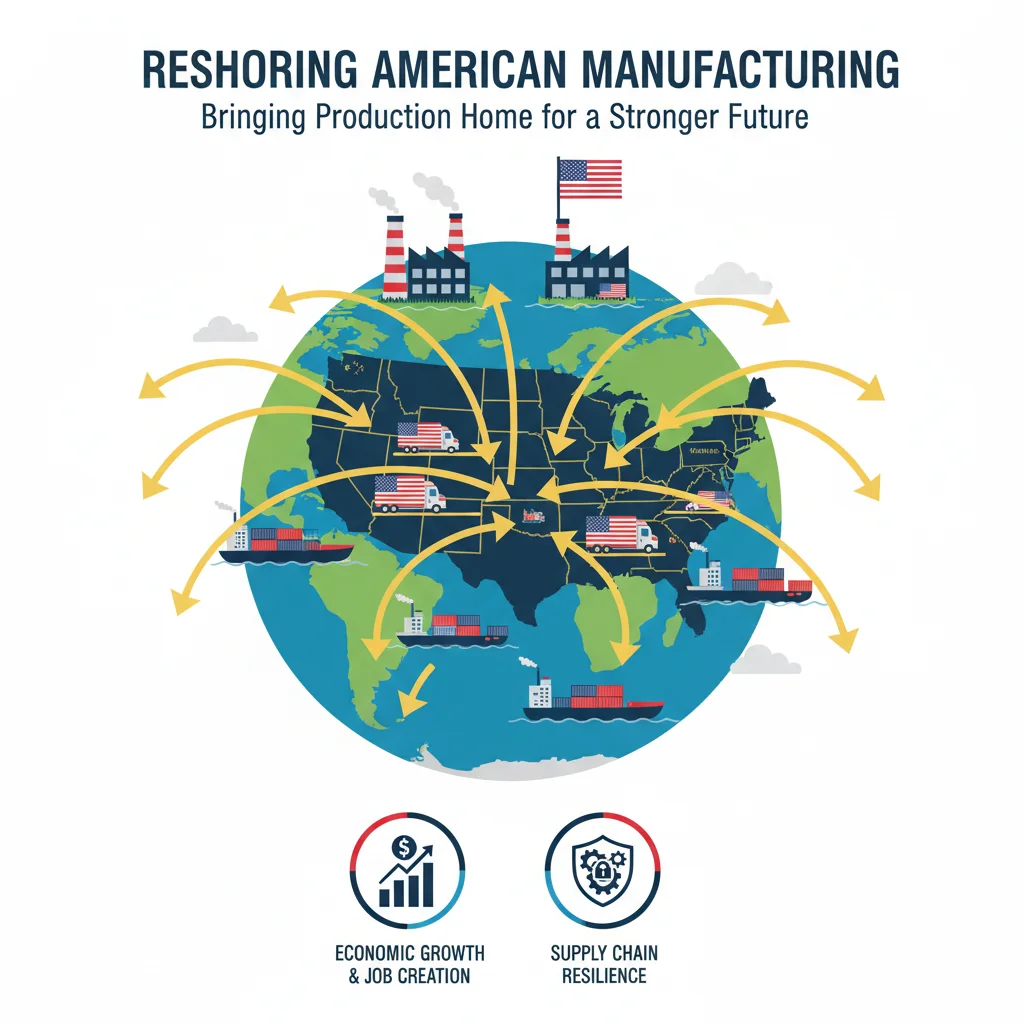
The vulnerabilities exposed by global events such as pandemics, geopolitical tensions, and natural disasters have underscored the fragility of extended global supply chains. This realization has catalyzed a significant movement towards reshoring (bringing manufacturing back to the US) and nearshoring (relocating production to nearby countries like Mexico or Canada). This strategic realignment of supply chains is another dominant force among US manufacturing trends.
Drivers of Reshoring and Nearshoring
Several compelling reasons are driving companies to reconsider their offshore manufacturing strategies:
- Supply Chain Resilience: The primary driver is the desire to build more robust and less susceptible supply chains. Shorter distances mean fewer transit delays, reduced exposure to international shipping disruptions, and greater control over the entire production process.
- Geopolitical Risk Mitigation: Tensions between major global powers, trade disputes, and changing regulatory landscapes make relying heavily on distant manufacturing hubs increasingly risky. Reshoring offers a way to insulate operations from these external shocks.
- Quality Control and Intellectual Property Protection: Bringing manufacturing closer to home provides companies with greater oversight of quality standards and better protection for their intellectual property, which can be challenging to enforce in some foreign jurisdictions.
- Faster Time to Market: Localized production allows for quicker response times to market demands, enabling companies to innovate faster, adapt to consumer preferences, and get products to shelves more rapidly.
- Reduced Transportation Costs: While initial labor costs might be higher, reduced shipping expenses, tariffs, and inventory carrying costs can make domestic production economically viable, especially for heavy or bulky goods.
- Government Incentives and "Buy American" Initiatives: Both federal and state governments are offering incentives, tax breaks, and favorable policies to encourage manufacturers to bring jobs and production back to the US. Public sentiment also increasingly favors domestically produced goods.
- Sustainability Goals: Shorter supply chains often translate to a reduced carbon footprint, aligning with corporate sustainability objectives and consumer preferences for environmentally responsible products.
Economic and Social Impact
The resurgence of reshoring has significant economic benefits, including job creation, increased investment in domestic infrastructure, and a strengthening of the US industrial base. It also fosters a more diversified economy, reducing reliance on specific sectors and enhancing national security. Socially, it can revitalize communities that have historically suffered from manufacturing decline, providing stable employment and contributing to local economies. This makes reshoring a vital component of positive US manufacturing trends.
Challenges and Considerations
Despite the advantages, reshoring is not without its challenges. Higher labor costs, the availability of a skilled workforce, and the need for significant capital investment in new facilities or retooling existing ones are major hurdles. Companies must conduct thorough cost-benefit analyses, considering the total cost of ownership rather than just direct labor expenses, to make informed decisions about where to produce. The integration of automation often plays a crucial role in making reshoring economically feasible by offsetting some of the higher domestic labor costs.
Digital Transformation: The Backbone of Modern Manufacturing
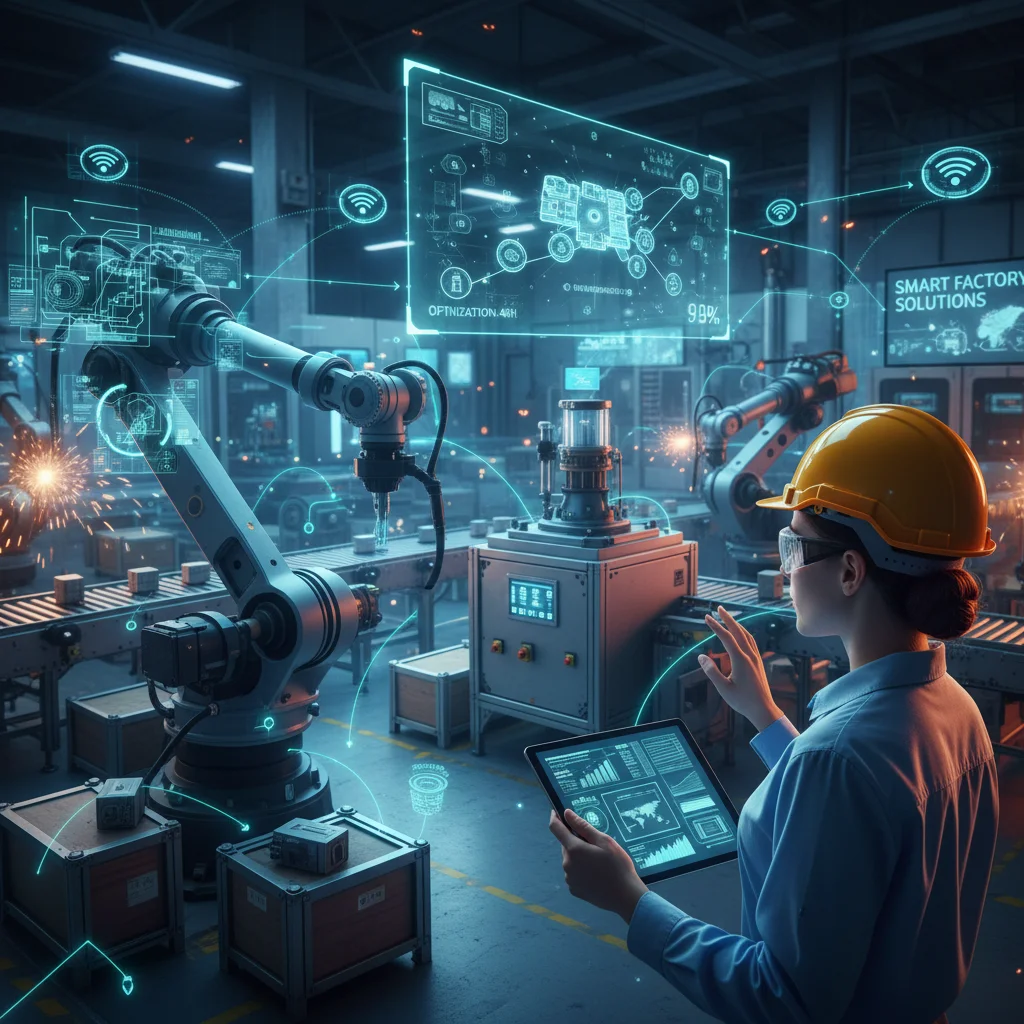
Digital transformation, often referred to as Industry 4.0, is not a single technology but a holistic integration of various digital tools and processes across the entire manufacturing value chain. It is fundamentally reshaping how products are designed, produced, distributed, and serviced, and it is arguably the most transformative of all US manufacturing trends. This encompasses everything from the Internet of Things (IoT) and big data analytics to cloud computing, cybersecurity, and additive manufacturing.
Key Pillars of Digital Transformation
The digital transformation of US manufacturing rests on several interconnected pillars:
- Internet of Things (IoT): Connected sensors and devices embedded in machinery, products, and even the factory floor collect vast amounts of real-time data. This data provides unprecedented visibility into production processes, equipment performance, and supply chain status.
- Big Data Analytics and AI/ML: The sheer volume of data generated by IoT devices would be overwhelming without advanced analytics. AI and machine learning algorithms are used to process this data, identify patterns, predict outcomes (e.g., equipment failure), optimize processes, and make data-driven decisions.
- Cloud Computing: The cloud provides the scalable infrastructure needed to store and process massive datasets, run complex simulations, and host applications that power smart factories. It also enables remote access and collaboration across geographically dispersed teams.
- Cybersecurity: As manufacturing operations become more interconnected and data-dependent, robust cybersecurity measures are paramount to protect sensitive information, intellectual property, and operational integrity from cyber threats.
- Additive Manufacturing (3D Printing): This technology allows for the creation of complex parts layer by layer, enabling rapid prototyping, custom manufacturing, and the production of lightweight, high-performance components. It’s particularly impactful for specialized parts and small-batch production.
- Digital Twins: A digital twin is a virtual replica of a physical product, process, or system. It allows manufacturers to simulate performance, test changes, predict maintenance needs, and optimize operations in a virtual environment before implementing them physically, saving time and resources.
- Augmented Reality (AR) and Virtual Reality (VR): AR and VR are being used for training, remote assistance, maintenance, and even product design, providing immersive and interactive experiences that enhance efficiency and reduce errors.
Benefits of Digital Transformation
The adoption of these digital technologies offers a multitude of benefits for manufacturers:
- Increased Efficiency and Productivity: Real-time data and AI-driven insights lead to optimized production schedules, reduced downtime, and more efficient resource utilization.
- Improved Product Quality: Data from sensors and advanced analytics can identify and rectify quality issues much faster, leading to higher-quality products and reduced scrap rates.
- Enhanced Agility and Flexibility: Digital tools enable quicker adaptation to market changes, faster product development cycles, and the ability to handle greater product variety.
- Better Decision-Making: Access to comprehensive, real-time data empowers managers and operators to make more informed and proactive decisions.
- Predictive Maintenance: IoT sensors can monitor machine health and predict potential failures, allowing for proactive maintenance that minimizes costly unexpected downtime.
- New Business Models: Digital transformation can enable manufacturers to offer new services, such as product-as-a-service or customized manufacturing, opening up new revenue streams.
Challenges in Implementation
Implementing digital transformation is a complex undertaking. Challenges include the significant upfront investment in technology, the need for a digitally skilled workforce, integrating legacy systems with new technologies, and ensuring robust cybersecurity. Companies often need to undergo a cultural shift, embracing data-driven decision-making and continuous innovation. However, the long-term benefits in terms of competitiveness and resilience make it an imperative for modern US manufacturers.
The Interplay of These US Manufacturing Trends
It is important to recognize that these three US manufacturing trends are not isolated phenomena but are deeply interconnected and mutually reinforcing. Automation often relies on digital transformation technologies like IoT and AI to function optimally. For example, advanced robots require sophisticated sensors (IoT) and data analysis (AI/ML) to perform complex tasks and adapt to changing conditions. Similarly, reshoring efforts are often made more viable by the ability to automate production processes, thereby offsetting higher labor costs in the US. A reshoring factory can be a "smart factory," leveraging automation and digital tools to achieve efficiency and quality levels that compete with offshore alternatives.
Digital transformation acts as the foundational layer, providing the tools and infrastructure for both advanced automation and efficient, resilient supply chains. Predictive analytics (part of digital transformation) can optimize inventory levels for reshoring initiatives, while automated logistics (enabled by automation and digital tools) can streamline the domestic supply chain. The synergy between these trends is creating a new paradigm for US manufacturing – one that is more agile, intelligent, and robust than ever before.
Future Outlook and Strategic Implications
The trajectory of US manufacturing trends suggests a future characterized by highly automated, digitally integrated, and domestically oriented production. This evolution carries several strategic implications for businesses, policymakers, and the workforce.
For Businesses:
- Strategic Investment: Companies must strategically invest in automation and digital technologies, viewing them not just as expenses but as critical enablers of long-term growth and competitiveness.
- Workforce Development: Prioritizing upskilling and reskilling programs is essential to ensure that the workforce can adapt to new roles created by automation and digital transformation.
- Supply Chain Re-evaluation: A thorough re-evaluation of supply chain strategies, with a focus on resilience and risk mitigation through reshoring or nearshoring, is paramount.
- Data-Driven Culture: Fostering a data-driven culture that leverages insights from IoT and analytics will be crucial for continuous improvement and innovation.
For Policymakers:
- Incentivize Innovation: Governments should continue to provide incentives for R&D in manufacturing technologies and for companies adopting advanced automation and digital tools.
- Support Workforce Training: Invest in educational programs and vocational training that equip individuals with the skills needed for the jobs of the future in manufacturing.
- Infrastructure Development: Support the development of robust digital infrastructure (e.g., broadband access) and physical infrastructure necessary for advanced manufacturing and efficient domestic supply chains.
- Trade Policies: Develop trade policies that support domestic manufacturing while maintaining beneficial international relationships.
For the Workforce:
- Embrace Lifelong Learning: Workers must be prepared for continuous learning and skill development to remain relevant in an evolving manufacturing landscape.
- Adaptability: Flexibility and adaptability to new technologies and work processes will be key attributes for success.
- Focus on "Human-Centric" Skills: Skills such as critical thinking, problem-solving, creativity, and collaboration will become even more valuable as automation handles routine tasks.
The journey of US manufacturing is dynamic and complex, but the current US manufacturing trends point towards a more efficient, resilient, and technologically advanced future. By strategically embracing automation, reshoring, and digital transformation, the US manufacturing sector can cement its position as a global leader, driving economic prosperity and innovation for decades to come.
Addressing Specific Industry Sectors within US Manufacturing Trends
While the broader US manufacturing trends of automation, reshoring, and digital transformation apply across the board, their impact and implementation vary significantly across different industry sectors. Understanding these sector-specific nuances provides a more granular view of the evolving landscape.
Automotive Industry: Leading the Charge in Automation
The automotive sector has historically been a pioneer in automation, and this trend continues to accelerate. From robotic welding and painting to automated assembly lines, the industry is constantly pushing the boundaries. The 7% rise in automation by 2026 will see further integration of AI for quality inspection, predictive maintenance of complex machinery, and advanced robotics in electric vehicle (EV) battery production. Reshoring in automotive is also prominent, driven by the desire to shorten supply chains for critical components like semiconductors and batteries, as well as to meet growing domestic demand for EVs. Digital twins are increasingly used to simulate entire factory layouts and vehicle designs, optimizing production before a single physical component is made. Cybersecurity is paramount due to the interconnected nature of modern vehicles and production lines.
Aerospace and Defense: Precision and Digital Integration
In aerospace and defense, precision and reliability are non-negotiable. Automation, particularly advanced robotics for composite material handling and intricate assembly, is crucial for meeting stringent quality standards. Digital transformation, especially through additive manufacturing (3D printing) for complex, lightweight parts and the use of digital twins for entire aircraft lifecycles, is revolutionizing design and production. Reshoring in this sector is often driven by national security concerns and the need for tight control over the supply chain for critical components. The focus here is on leveraging data analytics to ensure product integrity and optimize maintenance schedules.
Medical Devices: High-Stakes Automation and Quality Control
The medical device sector demands extreme precision, sterility, and regulatory compliance. Automation is vital for repetitive, high-accuracy tasks, as well as for handling delicate materials and ensuring aseptic conditions. The projected increase in automation will see more sophisticated robots performing micro-assembly and packaging. Digital transformation, including IoT for tracking devices and components, and AI for quality control and defect detection, is essential for maintaining high standards and navigating complex regulatory environments. Reshoring is a significant consideration for medical device manufacturers looking to ensure supply chain stability for life-saving products and to maintain strict control over manufacturing processes.
Electronics Manufacturing: Speed, Scale, and Reshoring
The electronics industry, characterized by rapid innovation and high volume, is heavily reliant on automation for efficient assembly of intricate components. The drive for faster production cycles and smaller, more complex devices means automation continues to evolve rapidly. Digital transformation, particularly in areas like factory automation software, real-time data analytics for yield optimization, and AI for rapid prototyping, is critical. Reshoring in electronics is gaining traction, especially for critical components like semiconductors, driven by geopolitical concerns and the need for more resilient supply chains to avoid future shortages.
Food and Beverage: Efficiency and Safety
Automation in the food and beverage industry focuses on increasing efficiency, ensuring consistency, and maintaining food safety standards. Robots are used for packaging, sorting, and even preparing certain food items. The rise in automation will see more advanced vision systems for quality inspection and robotic systems for handling perishable goods. Digital transformation, through IoT sensors monitoring temperature and humidity, and AI for demand forecasting and supply chain optimization, enhances efficiency and reduces waste. Reshoring efforts aim to shorten supply chains for fresh ingredients and finished products, ensuring faster delivery and reducing spoilage, while also responding to consumer demand for locally sourced goods.
Textiles and Apparel: Customization and Agility
Traditionally a labor-intensive industry, textiles and apparel are seeing increased automation in areas like cutting, sewing, and material handling. The focus is on enabling greater customization and faster turnaround times. Digital transformation, including 3D design software, digital printing, and AI-driven demand forecasting, is allowing manufacturers to respond quickly to fashion trends and reduce inventory waste. Reshoring in this sector is driven by the desire for greater agility, ethical production practices, and the ability to produce small-batch, customized orders more economically.
Navigating the Future: A Holistic Approach
The varied impact of these US manufacturing trends across sectors underscores the need for a tailored, yet holistic, approach. Companies cannot simply adopt technologies; they must integrate them into a coherent strategy that considers their specific industry demands, workforce capabilities, and long-term business goals. The interplay between automation, reshoring, and digital transformation creates a powerful synergy that, when leveraged effectively, can unlock unprecedented levels of efficiency, innovation, and resilience for US manufacturers across all sectors. The future of US manufacturing is not just about producing goods; it’s about intelligent, adaptable, and sustainable production that is deeply integrated into the digital economy.
Conclusion: A Resilient and Innovative Future for US Manufacturing
The American manufacturing sector is undergoing a profound and exciting metamorphosis, shaped by a confluence of technological advancements and strategic shifts. The three dominant US manufacturing trends – the accelerating adoption of automation, the strategic imperative of reshoring and nearshoring, and the pervasive influence of digital transformation – are collectively forging a landscape that is more resilient, efficient, and innovative than ever before.
The projected 7% rise in automation by 2026 is not merely a statistic; it represents a fundamental redefinition of the manufacturing workplace. It signifies a move towards smarter factories where advanced robotics and AI augment human capabilities, leading to enhanced precision, productivity, and safety. This evolution demands a skilled workforce, necessitating continuous investment in education and training to prepare individuals for the jobs of tomorrow.
Simultaneously, the drive towards reshoring and nearshoring is a strategic response to the vulnerabilities exposed by global supply chain disruptions. By bringing production closer to home, US manufacturers are building more robust and agile supply chains, mitigating geopolitical risks, and fostering domestic economic growth. This shift not only creates jobs but also strengthens the nation’s industrial base and reduces reliance on distant suppliers for critical goods.
Underpinning these transformations is the relentless march of digital transformation. From the Internet of Things (IoT) collecting vast amounts of real-time data to AI and machine learning extracting actionable insights, digital technologies are the backbone of modern manufacturing. They enable predictive maintenance, optimize production processes, facilitate rapid innovation, and provide the agility needed to respond to ever-changing market demands.
These trends are not isolated; they are deeply interconnected and mutually reinforcing. Automation leverages digital tools for intelligence, while reshoring is often made economically viable by the efficiencies gained through advanced automation and digital integration. The synergy created by their combined force is propelling US manufacturing into a new era of global competitiveness.
For businesses, the path forward involves strategic investment in these technologies, a commitment to workforce development, and a proactive re-evaluation of supply chain strategies. For policymakers, it means fostering an environment that incentivizes innovation, supports education, and builds resilient infrastructure. For the workforce, it necessitates a commitment to lifelong learning and adaptability.
In conclusion, the current US manufacturing trends paint a picture of an industry that is actively embracing the future. By strategically navigating these shifts, the United States is poised to reinforce its position as a global manufacturing powerhouse, driving economic prosperity, fostering innovation, and building a more secure and sustainable industrial future for generations to come.