Cybersecurity Threats 2026: New Standards for US Enterprises
The digital frontier is in constant flux, and as we approach 2026, the landscape of cybersecurity threats 2026 is evolving at an unprecedented pace. For U.S. enterprises, understanding and adapting to these changes is not merely an option but a critical imperative for survival and sustained growth. The sophistication of cyber-attacks continues to escalate, driven by advancements in artificial intelligence, quantum computing, and the increasing interconnectedness of our digital world. This comprehensive article delves into the projected cybersecurity threats 2026, new industry standards, and the robust protection protocols U.S. businesses must implement to secure their digital ecosystems.
The year 2026 promises a new era of digital challenges. Cybercriminals are no longer relying on rudimentary phishing schemes; instead, they are leveraging advanced technologies to launch targeted, highly evasive attacks. Enterprises must therefore shift from reactive defense mechanisms to proactive, predictive security postures. This involves not only technological upgrades but also a fundamental re-evaluation of organizational culture, employee training, and incident response strategies. The goal is to build resilience, ensuring that even when breaches occur, the impact is minimized, and recovery is swift and efficient.
The Evolving Threat Landscape: What to Expect in Cybersecurity Threats 2026
The nature of cyber threats is dynamic, with new attack vectors emerging regularly. In 2026, several key trends will define the threat landscape:
1. AI-Powered Attacks and Defenses
Artificial intelligence (AI) is a double-edged sword. While it offers powerful tools for threat detection and automated response, it also empowers attackers. We anticipate a surge in AI-powered phishing, malware generation, and autonomous attack agents capable of learning and adapting to defensive measures in real-time. These sophisticated tools will enable threat actors to bypass traditional security perimeters with greater ease, making human-driven analysis and response increasingly difficult. Adversarial AI, where attackers manipulate AI models to produce incorrect or malicious outputs, will also become a significant concern. This could impact everything from fraud detection systems to autonomous vehicle safety.
2. Quantum Computing’s Dual Impact
The nascent but rapidly advancing field of quantum computing presents both a long-term threat and a potential solution. While widespread quantum computers capable of breaking current encryption standards are still some years away, the threat of ‘harvest now, decrypt later’ attacks is real. Malicious actors may be collecting encrypted data today, intending to decrypt it once quantum capabilities mature. Simultaneously, quantum cryptography and quantum-resistant algorithms are emerging as vital defenses. U.S. enterprises must begin exploring and implementing post-quantum cryptographic solutions to future-proof their data.
3. Supply Chain Vulnerabilities Amplified
The interconnectedness of global supply chains means that a vulnerability in one vendor’s system can compromise an entire network of enterprises. In 2026, supply chain attacks will become more sophisticated and prevalent, targeting not just software components but also hardware, firmware, and even human elements within the chain. Enterprises will need to scrutinize their third-party vendors more rigorously, demanding higher security standards and transparency. The focus will shift from merely checking compliance to actively verifying the security posture of every link in the supply chain.
4. IoT and Edge Computing as New Attack Surfaces
The proliferation of Internet of Things (IoT) devices and the growth of edge computing expand the attack surface exponentially. Each connected device, from smart sensors to industrial control systems, represents a potential entry point for attackers. Many IoT devices are deployed with weak security defaults, making them easy targets. Cybersecurity threats 2026 will increasingly involve exploiting these devices to gain access to corporate networks, launch DDoS attacks, or manipulate critical infrastructure. Securing the edge will require robust device authentication, continuous monitoring, and micro-segmentation strategies.
5. Ransomware Evolution: Double Extortion and Beyond
Ransomware will continue to evolve, moving beyond simple data encryption. Double extortion, where data is exfiltrated before encryption and threatened with public release, will become standard. We may also see triple extortion, adding DDoS attacks or direct harassment of customers/partners. Ransomware-as-a-Service (RaaS) models will make these sophisticated attacks accessible to a wider range of threat actors. Enterprises must invest in advanced data backup and recovery solutions, alongside robust endpoint detection and response (EDR) and extended detection and response (XDR) platforms.
New Industry Standards and Regulatory Landscape for Cybersecurity Threats 2026
To counter the escalating cybersecurity threats 2026, regulatory bodies and industry organizations are developing new standards and strengthening existing ones. U.S. enterprises must remain vigilant and compliant to avoid hefty fines and reputational damage.
1. NIST Cybersecurity Framework 2.0 and Beyond
The National Institute of Standards and Technology (NIST) Cybersecurity Framework (CSF) remains a cornerstone of U.S. cybersecurity policy. CSF 2.0, with its expanded scope to include governance and supply chain risk management, provides a more holistic approach to cybersecurity. In 2026, we anticipate further refinements and widespread adoption of CSF 2.0, potentially with sector-specific overlays. Enterprises will need to demonstrate adherence to these updated guidelines, integrating them into their risk management strategies.
2. CISA’s Evolving Directives
The Cybersecurity and Infrastructure Security Agency (CISA) will play an increasingly central role in coordinating national cybersecurity efforts. CISA’s directives, especially for critical infrastructure sectors, will become more stringent, emphasizing proactive threat hunting, vulnerability management, and information sharing. Enterprises in these sectors will need to establish robust reporting mechanisms and participate actively in CISA-led initiatives to enhance collective defense.
3. International Cooperation and Data Sovereignty
While this article focuses on U.S. enterprises, the global nature of cyber threats necessitates international cooperation. New standards will emerge from collaborations with allies, influencing data residency, cross-border data flows, and shared threat intelligence. Data sovereignty concerns will continue to drive localized data storage and processing requirements, complicating cloud strategies for multinational corporations.
4. Zero Trust Architecture Mandates
The Zero Trust security model, which assumes no user or device can be trusted by default, will move from recommendation to mandate in many sectors. Government agencies and critical infrastructure operators are already adopting Zero Trust principles. By 2026, a comprehensive Zero Trust architecture, encompassing identity verification, device authentication, and least-privilege access, will be a fundamental requirement for securing enterprise networks against cybersecurity threats 2026.
5. Enhanced Privacy Regulations
Beyond security, data privacy will remain a paramount concern. New state-level privacy laws, potentially a federal privacy law, and evolving international regulations like GDPR and its successors, will impose stricter requirements on how enterprises collect, process, and store personal data. Compliance will require sophisticated data governance frameworks, privacy-by-design principles, and transparent data handling practices.
Essential Protection Protocols for U.S. Enterprises
To effectively combat the cybersecurity threats 2026, U.S. enterprises must implement a multi-faceted approach to security. This involves a combination of advanced technologies, robust processes, and a highly trained workforce.
1. Advanced Threat Intelligence and Predictive Analytics
Moving beyond reactive security, enterprises need to invest in advanced threat intelligence platforms that leverage AI and machine learning to predict emerging threats. These platforms should aggregate data from various sources, including dark web monitoring, vulnerability databases, and geopolitical intelligence, to provide actionable insights. Predictive analytics can help identify potential attack vectors and strengthen defenses before an attack materializes.
2. Holistic Identity and Access Management (IAM)
A strong IAM framework is foundational to Zero Trust. This includes multi-factor authentication (MFA) for all users and systems, continuous authentication, and adaptive access policies that adjust based on context (user behavior, device posture, location). Privileged Access Management (PAM) solutions are crucial for securing accounts with elevated permissions, which are prime targets for attackers.
3. Cloud Security Posture Management (CSPM) and Cloud Workload Protection Platforms (CWPP)
As more enterprises migrate to the cloud, securing cloud environments becomes paramount. CSPM tools help identify and remediate misconfigurations and compliance violations in cloud infrastructure. CWPPs provide runtime protection for workloads (VMs, containers, serverless functions) across hybrid and multi-cloud environments. These tools are essential for maintaining visibility and control over dynamic cloud resources against cybersecurity threats 2026.
4. Automated Vulnerability Management and Patching
Vulnerabilities are constantly discovered, and attackers are quick to exploit them. Enterprises need automated solutions for continuous vulnerability scanning, prioritization, and patching. This includes not just operating systems and applications but also network devices, IoT endpoints, and cloud configurations. A rapid and efficient patching cycle is critical to close security gaps before they can be exploited.
5. Robust Data Encryption and Data Loss Prevention (DLP)
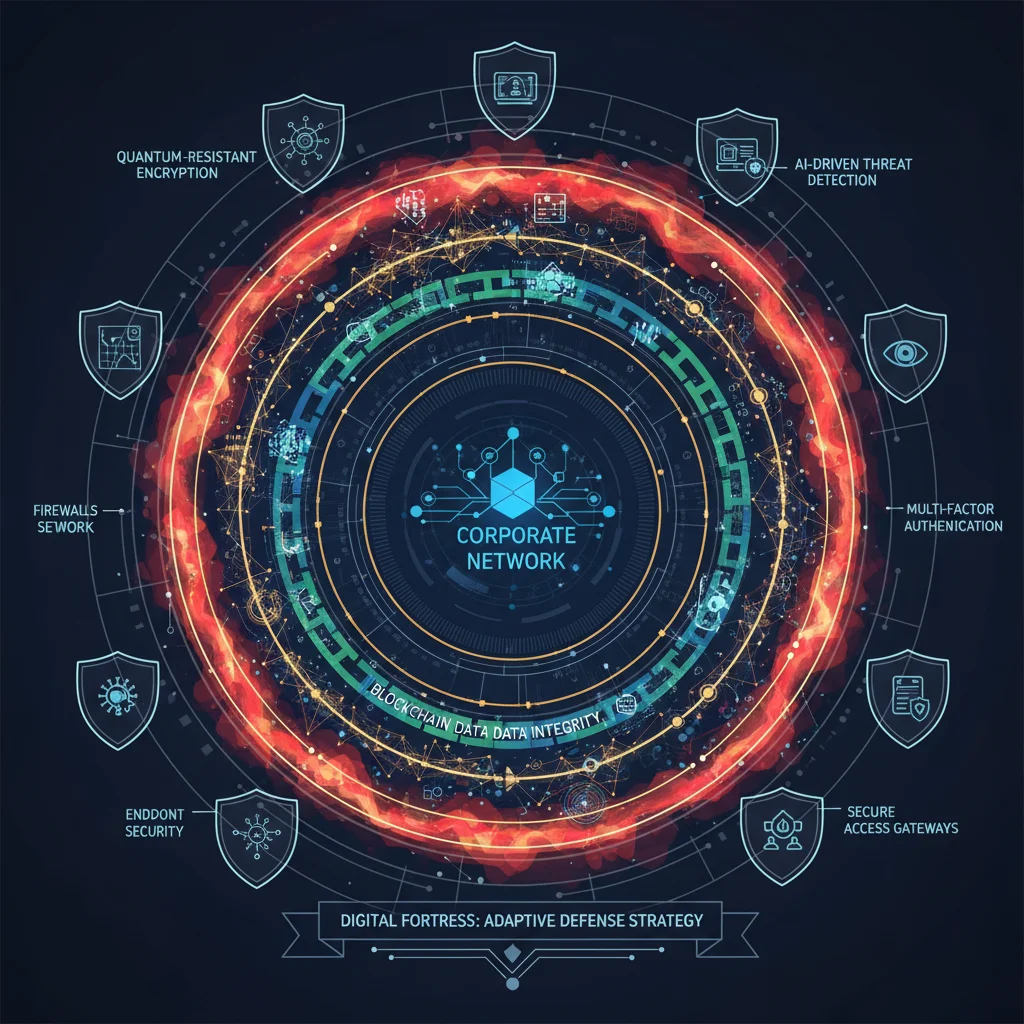
Encryption remains a fundamental defense for data at rest, in transit, and in use. Enterprises must implement strong encryption protocols across all sensitive data stores and communication channels. DLP solutions are vital for preventing sensitive information from leaving the organization’s control, whether accidentally or maliciously. These tools monitor, detect, and block unauthorized data transfers, protecting against exfiltration and compliance breaches.
6. Security Orchestration, Automation, and Response (SOAR)
With the increasing volume and complexity of security alerts, human analysts can easily become overwhelmed. SOAR platforms automate routine security tasks, orchestrate incident response workflows, and enable faster and more consistent reactions to threats. By integrating various security tools, SOAR enhances efficiency, reduces response times, and frees up security teams to focus on more complex strategic initiatives.
7. Advanced Endpoint Detection and Response (EDR) and Extended Detection and Response (XDR)
Endpoints (laptops, servers, mobile devices) are frequent targets. EDR solutions provide continuous monitoring, threat detection, and response capabilities at the endpoint level. XDR takes this a step further by integrating security data from endpoints, networks, cloud environments, and email, providing a unified view of threats across the entire digital estate. This holistic approach significantly improves threat visibility and accelerates incident response for cybersecurity threats 2026.
8. Employee Training and Security Awareness
Technology alone is insufficient. The human element remains the weakest link in many security chains. Regular, engaging, and updated security awareness training is crucial. Employees need to be educated on phishing tactics, social engineering, safe browsing habits, and the importance of reporting suspicious activities. Phishing simulations and continuous micro-training can reinforce these lessons effectively.
9. Incident Response and Business Continuity Planning
No defense is foolproof. Enterprises must have well-defined and regularly tested incident response plans. These plans should detail roles and responsibilities, communication protocols, forensic procedures, and recovery steps. Business continuity and disaster recovery plans are equally vital to ensure that critical operations can quickly resume after a significant cyber incident, minimizing downtime and financial losses. Regular tabletop exercises are essential to validate these plans.
10. Cyber Resilience and Proactive Threat Hunting
Beyond mere defense, enterprises need to cultivate cyber resilience – the ability to anticipate, withstand, recover from, and adapt to adverse cyber events. This includes proactive threat hunting, where security teams actively search for hidden threats within their networks rather than waiting for alerts. Penetration testing and red teaming exercises can simulate real-world attacks, uncovering vulnerabilities that automated tools might miss.
The Future of Enterprise Security: A Proactive Stance
The year 2026 will demand a significant paradigm shift in how U.S. enterprises approach cybersecurity. The traditional perimeter-based defense is becoming obsolete in a world of distributed workforces, cloud computing, and IoT devices. A proactive, adaptive, and resilient security posture is no longer a luxury but a fundamental requirement for business continuity and competitive advantage.
Enterprises must move towards a security culture where cybersecurity is integrated into every aspect of business operations, from software development (SecDevOps) to procurement and employee onboarding. This involves a commitment from leadership, adequate resource allocation, and continuous investment in both technology and human capital.

Collaboration is also key. Sharing threat intelligence with industry peers, government agencies, and security vendors can create a stronger collective defense against common adversaries. Participating in industry forums and working groups helps enterprises stay abreast of emerging cybersecurity threats 2026 and best practices.
The challenge of cybersecurity threats 2026 is formidable, but not insurmountable. By embracing new standards, deploying advanced protection protocols, and fostering a robust security culture, U.S. enterprises can not only defend against the evolving threat landscape but also thrive in an increasingly digital world. The time for action is now, preparing for the challenges and opportunities that lie ahead.
Key Takeaways for U.S. Enterprises:
- Embrace AI for both defense and awareness: Leverage AI-driven tools for threat detection and response, while also preparing for AI-powered attacks.
- Prioritize Quantum-Resistance: Begin planning and implementing post-quantum cryptography solutions.
- Fortify Supply Chain Security: Implement rigorous vetting and continuous monitoring for all third-party vendors.
- Secure the Edge: Implement robust security for all IoT and edge computing devices.
- Adopt Zero Trust: Implement a comprehensive Zero Trust architecture across your entire digital estate.
- Invest in XDR and SOAR: Enhance threat visibility and automate incident response.
- Continuous Training: Ensure regular and effective cybersecurity awareness training for all employees.
- Proactive Resilience: Develop and test robust incident response and business continuity plans, and engage in proactive threat hunting.
The journey to enhanced cybersecurity is ongoing. By understanding the cybersecurity threats 2026 and proactively implementing these advanced protection protocols, U.S. enterprises can build a resilient defense that safeguards their invaluable digital assets and ensures their continued success in the face of an ever-evolving threat landscape.