Optimizing Remote Work Infrastructure: 2026 U.S. Business Guide for 12% Efficiency Boost

The landscape of work has undergone a seismic shift, with remote and hybrid models becoming not just a contingency but a fundamental operational strategy for U.S. businesses. As we hurtle towards 2026, the imperative to build and maintain a robust, efficient, and secure Remote Work Infrastructure intensifies. Companies that proactively optimize their remote work capabilities are poised to gain a significant competitive edge, with projections indicating a potential 12% boost in overall efficiency for those who get it right. This comprehensive guide will delve into the critical components and strategic considerations necessary for U.S. businesses to achieve this ambitious goal, ensuring their distributed workforce operates at peak performance.
The transition to remote work wasn’t merely about providing laptops and internet access; it demanded a complete rethinking of IT architecture, communication protocols, and security paradigms. In 2026, a truly optimized Remote Work Infrastructure will be characterized by its agility, resilience, scalability, and unwavering security. It’s no longer enough to simply enable remote access; businesses must empower their employees to be as productive, if not more so, than they would be in a traditional office setting.
The Evolving Landscape of Remote Work in 2026
By 2026, remote work is no longer an experiment; it’s an embedded reality. The U.S. workforce has largely adapted, and expectations regarding flexibility and access have solidified. This evolution brings both opportunities and challenges for businesses. Opportunities lie in tapping into a broader talent pool, reducing overheads, and fostering greater employee satisfaction. Challenges, however, include managing distributed teams, ensuring data security across disparate networks, and maintaining a cohesive company culture.
The definition of an effective Remote Work Infrastructure has broadened. It now encompasses not just hardware and software but also the underlying processes, policies, and support systems that facilitate seamless remote operations. Businesses that view remote work as a strategic advantage, rather than a necessary evil, are already investing heavily in next-generation solutions that anticipate future needs and mitigate potential risks.
Key Trends Shaping Remote Work Infrastructure in 2026:
- Hyper-personalization of Workspaces: Employees expect more control over their digital work environments.
- AI-Powered Automation: Automating routine tasks to free up remote workers for higher-value activities.
- Advanced Collaboration Ecosystems: Moving beyond basic video calls to integrated platforms offering immersive experiences.
- Edge Computing for Remote Access: Bringing data processing closer to the remote user for faster performance and reduced latency.
- Zero-Trust Security Models: A fundamental shift in security philosophy, assuming no user or device can be trusted by default.
- Sustainability in Remote Operations: Considering the environmental impact of cloud services and hardware usage.
Understanding these trends is crucial for any U.S. business aiming to optimize its Remote Work Infrastructure for 2026 and beyond. It’s about building a future-proof system that can adapt to rapid technological advancements and changing employee needs.
Pillar 1: Cloud-First Architecture for Unrivaled Agility
At the heart of an optimized Remote Work Infrastructure lies a robust, scalable, and secure cloud-first architecture. The days of relying solely on on-premise servers for critical applications and data are rapidly fading. Cloud computing offers unparalleled flexibility, allowing businesses to scale resources up or down as needed, ensuring continuous access for remote employees regardless of their location or device.
Benefits of a Cloud-First Approach:
- Scalability: Easily accommodate fluctuating workforce sizes and data storage needs.
- Accessibility: Employees can access applications and data from anywhere, on any authorized device.
- Cost-Efficiency: Reduce capital expenditure on hardware and benefit from pay-as-you-go models.
- Resilience: Cloud providers offer high availability and disaster recovery solutions, minimizing downtime.
- Innovation: Access to cutting-edge cloud services, including AI, machine learning, and advanced analytics, can drive efficiency.
For U.S. businesses, selecting the right cloud service providers (CSPs) is paramount. Factors such as data residency requirements, compliance certifications (e.g., HIPAA, SOC 2), service level agreements (SLAs), and integration capabilities with existing systems must be thoroughly evaluated. A multi-cloud strategy, leveraging different providers for specific needs, can also enhance resilience and avoid vendor lock-in.
Furthermore, migrating legacy applications to the cloud or adopting Software-as-a-Service (SaaS) solutions for core business functions (CRM, ERP, HR platforms) significantly reduces the IT burden and improves remote accessibility. This strategic shift is a cornerstone of modern Remote Work Infrastructure optimization.
Pillar 2: Fortifying Cybersecurity in a Distributed Environment
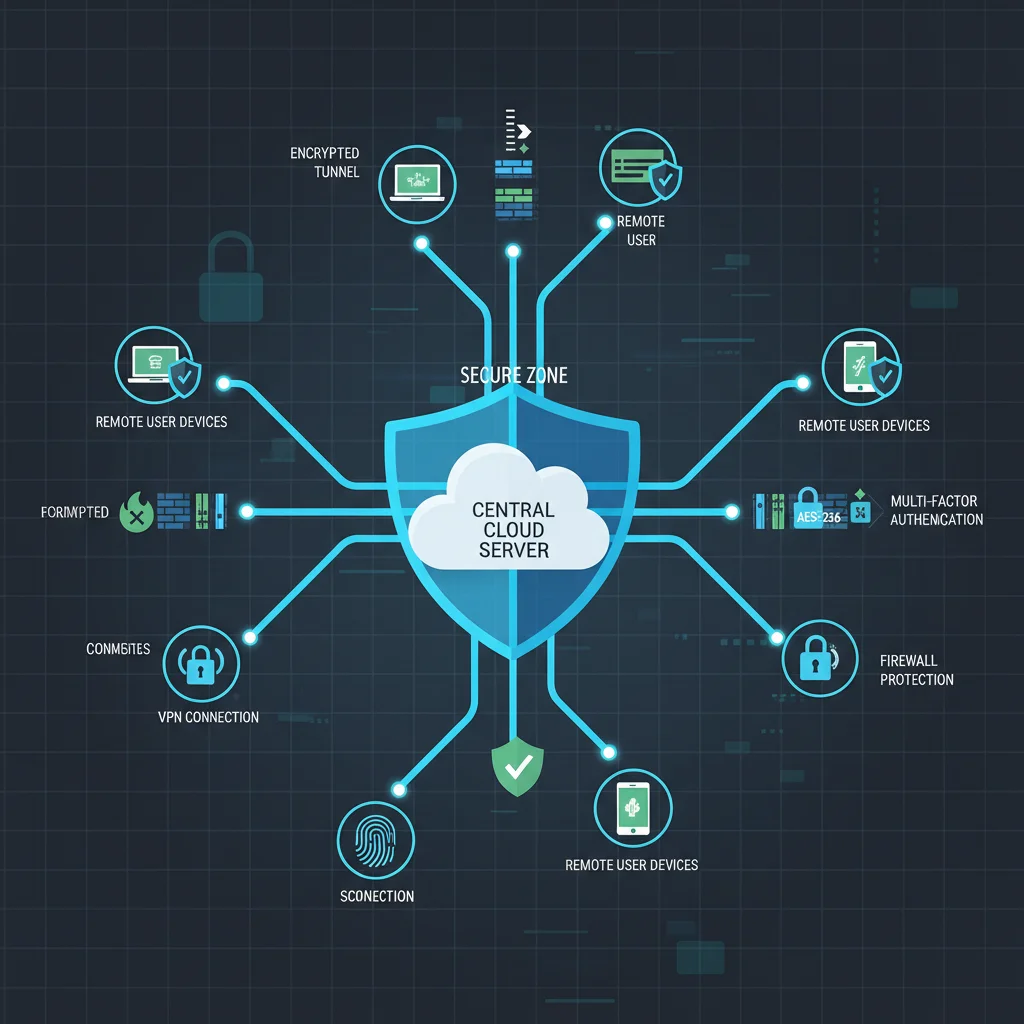
With remote work, the traditional network perimeter dissolves, making cybersecurity a more complex and critical challenge. A single compromised remote device can become an entry point for sophisticated cyberattacks, threatening sensitive corporate data and intellectual property. Therefore, fortifying cybersecurity is non-negotiable for any effective Remote Work Infrastructure.
Essential Cybersecurity Measures for Remote Work:
- Zero-Trust Network Access (ZTNA): Instead of trusting devices within a corporate network, ZTNA verifies every user and device attempting to access resources, regardless of their location. This significantly reduces the attack surface.
- Endpoint Detection and Response (EDR): Advanced EDR solutions monitor endpoints (laptops, mobile devices) for malicious activity, providing real-time threat detection and response capabilities.
- Multi-Factor Authentication (MFA): Implementing MFA across all applications and systems adds an essential layer of security, making it significantly harder for unauthorized users to gain access even with stolen credentials.
- Data Encryption: Encrypting data both in transit and at rest protects it from interception and unauthorized access. This applies to cloud storage, network communications, and local device storage.
- Security Awareness Training: Regular training for remote employees on phishing, social engineering, and best security practices is vital. Human error remains a leading cause of security breaches.
- Secure Access Service Edge (SASE): SASE converges network security functions (firewall, VPN, secure web gateway) with WAN capabilities into a single, cloud-native service. This simplifies management and enhances security for distributed workforces.
U.S. businesses must adopt a proactive, layered approach to cybersecurity, continuously monitoring their Remote Work Infrastructure for vulnerabilities and adapting to emerging threats. Regular security audits, penetration testing, and compliance checks are indispensable for maintaining a secure remote environment.
Pillar 3: Enhancing Collaboration and Communication Tools
Effective collaboration and seamless communication are the lifeblood of any successful remote team. In 2026, businesses need more than just basic video conferencing; they require integrated platforms that foster real-time interaction, project management, and a sense of shared purpose. Optimizing these tools directly contributes to the 12% efficiency gain we’re targeting.
Key Features of Advanced Collaboration Ecosystems:
- Unified Communication Platforms: Integrating chat, video conferencing, voice calls, and file sharing into a single, intuitive interface (e.g., Microsoft Teams, Slack, Google Workspace).
- Project Management Software: Tools like Asana, Trello, Jira, or Monday.com help remote teams organize tasks, track progress, and manage workflows efficiently.
- Virtual Whiteboards and Digital Collaboration Spaces: Facilitating brainstorming and design sessions as if participants were in the same room, bridging geographical gaps.
- Document Co-editing and Version Control: Enabling multiple users to work on the same document simultaneously with robust version tracking to prevent conflicts.
- Asynchronous Communication Tools: Recognizing that not all communication needs to be real-time. Tools that support thoughtful, non-urgent communication are crucial for global teams and different time zones.
The goal is to create a digital workspace that mirrors, and in many ways surpasses, the efficiency of a physical office. This means selecting tools that are not only feature-rich but also user-friendly, ensuring high adoption rates among employees. Training and ongoing support are equally important to maximize the value derived from these collaboration investments. A well-integrated suite of tools forms a powerful Remote Work Infrastructure backbone.
Pillar 4: Optimizing Performance and Connectivity
Slow internet, dropped calls, and unresponsive applications are productivity killers for remote workers. Ensuring optimal performance and reliable connectivity is a foundational element of an efficient Remote Work Infrastructure. This goes beyond simply telling employees to get ‘good internet’; it involves strategic planning and investment.
Strategies for Performance and Connectivity Optimization:
- Virtual Desktop Infrastructure (VDI) / Desktop-as-a-Service (DaaS): Providing remote employees with secure, standardized virtual desktops hosted in the cloud. This centralizes management, enhances security, and ensures consistent performance regardless of the employee’s local device.
- Network Performance Monitoring (NPM): Tools to monitor network health, identify bottlenecks, and diagnose connectivity issues for remote users. This allows IT teams to proactively address problems.
- Broadband Stipends/Reimbursements: Supporting employees in securing high-speed, reliable internet connections at home.
- Quality of Service (QoS) Configuration: Prioritizing critical business applications (e.g., video conferencing, CRM) over less critical traffic on home networks, where possible, to ensure smooth operation.
- Local Edge Computing: For specific, latency-sensitive applications, exploring edge computing solutions that process data closer to the remote user can drastically improve response times.
- 5G Connectivity: As 5G becomes more prevalent, leveraging it as a primary or backup internet connection for remote workers can offer high speeds and low latency, especially in areas with less reliable fixed broadband.
The aim is to minimize friction and ensure that technology empowers, rather than impedes, remote productivity. A seamless user experience is a direct contributor to employee satisfaction and overall efficiency within the Remote Work Infrastructure.
Pillar 5: Employee Enablement and Support
Even the most advanced Remote Work Infrastructure is only as good as the people using it. Employee enablement and robust IT support are critical for realizing the full potential of remote operations and achieving that 12% efficiency boost. This pillar focuses on the human element and the systems that support them.
Key Aspects of Employee Enablement and Support:
- Comprehensive Onboarding: Tailored onboarding processes for remote employees that cover technology setup, security protocols, and cultural integration.
- Dedicated IT Helpdesk: Accessible and responsive IT support channels specifically designed for remote users, potentially offering remote diagnostics and troubleshooting.
- Self-Service Portals: Empowering employees with knowledge bases, FAQs, and automated troubleshooting guides to resolve common issues independently.
- Training and Upskilling: Continuous training on new tools, security best practices, and efficient remote work techniques.
- Ergonomics and Well-being: Providing guidance or stipends for ergonomic home office setups and promoting digital well-being to prevent burnout.
- Performance Monitoring and Feedback: Implementing fair and transparent systems for monitoring remote employee performance and providing constructive feedback, focusing on outcomes rather than hours logged.
Investing in employee well-being and providing the necessary support infrastructure not only boosts morale but also directly translates into higher productivity and reduced turnover. A supported and empowered remote workforce is a highly efficient one, making this a vital component of optimizing your Remote Work Infrastructure.
Measuring Success: KPIs for Remote Work Efficiency
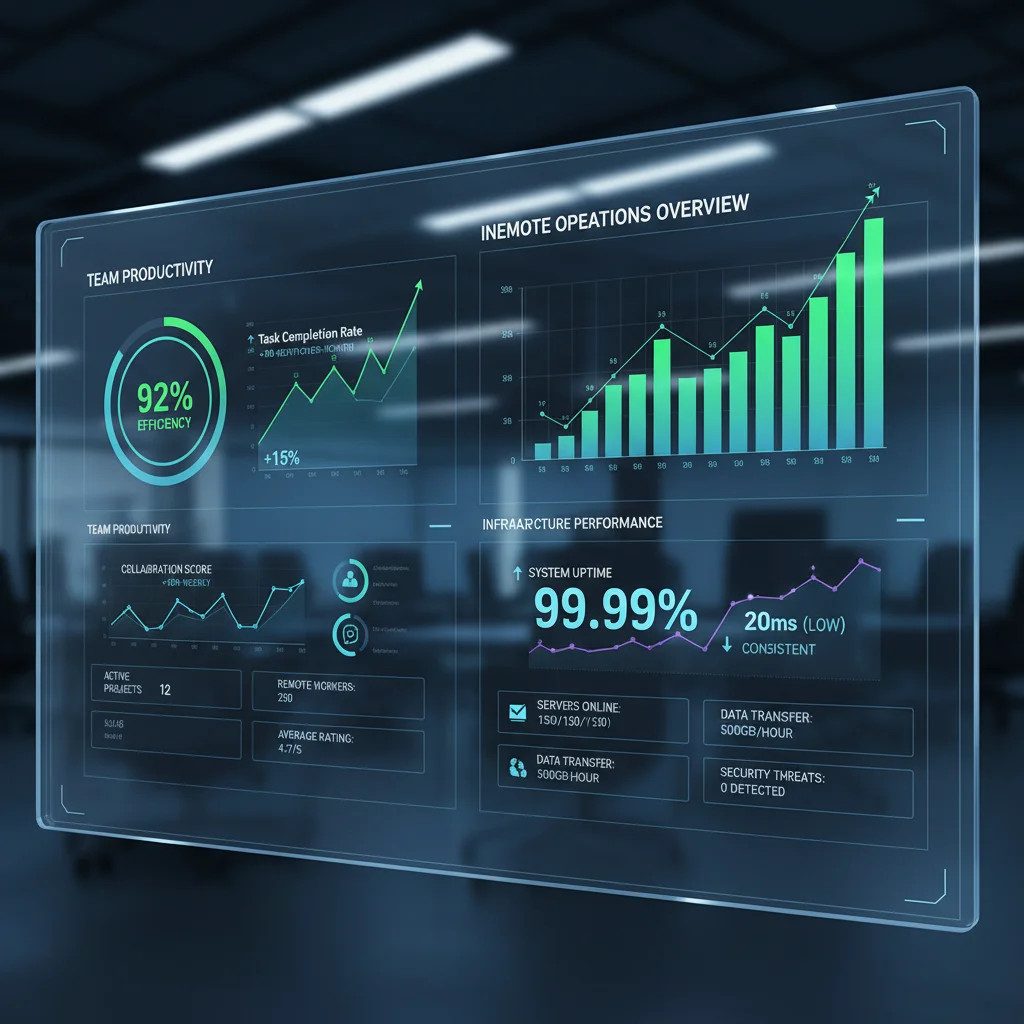
To truly achieve a 12% efficiency gain, U.S. businesses must establish clear Key Performance Indicators (KPIs) and regularly measure the effectiveness of their Remote Work Infrastructure. Without robust measurement, optimization efforts are merely guesswork.
Critical KPIs to Monitor:
- Employee Productivity: Track project completion rates, task turnaround times, and output metrics relevant to specific roles.
- System Uptime and Availability: Monitor the reliability of cloud services, applications, and network connections.
- Helpdesk Ticket Resolution Times: Measure how quickly IT issues are resolved for remote employees.
- Cybersecurity Incidents: Track the number and severity of security breaches, phishing attempts, and other security events.
- Collaboration Tool Adoption and Engagement: Monitor usage rates of communication and collaboration platforms.
- Employee Satisfaction (eNPS for Remote Teams): Regularly survey employees to gauge their satisfaction with remote work tools, support, and overall experience.
- Cost Savings vs. Investment: Analyze reductions in office space, utilities, and travel against investments in remote work technology and support.
Regularly reviewing these KPIs allows businesses to identify areas for further improvement, validate their investments, and demonstrate the tangible benefits of a well-optimized Remote Work Infrastructure. Data-driven decisions are key to continuous improvement and sustained efficiency gains.
The Road Ahead: Future-Proofing Your Remote Work Infrastructure
Optimizing your Remote Work Infrastructure is not a one-time project but an ongoing journey. As technology evolves and the nature of work continues to shift, businesses must remain agile and adaptable. Looking towards 2026 and beyond, several considerations will be crucial for future-proofing your remote capabilities:
- Embracing the Metaverse and Immersive Experiences: While nascent, virtual and augmented reality platforms could offer new dimensions for remote collaboration and training.
- Ethical AI Integration: Leveraging AI for productivity, automation, and analytics while ensuring ethical considerations and data privacy are paramount.
- Sustainability and Green IT: Prioritizing energy-efficient hardware, cloud providers with strong sustainability initiatives, and reducing digital waste.
- Global Compliance: As remote teams become more international, navigating diverse data privacy regulations (e.g., GDPR, CCPA) becomes increasingly complex.
- Digital Twin Technology: Potentially creating digital replicas of physical assets or processes for remote monitoring and management.
U.S. businesses that proactively consider these future trends will not only sustain their efficiency gains but also position themselves as leaders in the evolving world of work. The investment in a robust, adaptable Remote Work Infrastructure today is an investment in the resilience and success of your business tomorrow.
Conclusion: Achieving 12% Efficiency Through Strategic Remote Work Infrastructure
The goal of a 12% efficiency boost by 2026 for U.S. businesses is ambitious but entirely achievable through a strategic and holistic approach to Remote Work Infrastructure optimization. By focusing on cloud-first architecture, fortifying cybersecurity, enhancing collaboration tools, optimizing performance, and empowering employees, companies can build a resilient and highly productive distributed workforce.
This isn’t just about implementing new technologies; it’s about fostering a culture of adaptability, continuous improvement, and security awareness. The businesses that embrace these principles will not only survive but thrive in the dynamic remote work environment of the future, setting new benchmarks for operational excellence and employee satisfaction. The time to invest in and refine your Remote Work Infrastructure is now, paving the way for sustained growth and innovation.