The 2026 AI Workforce Shift: 5 Key Industry Insights for U.S. Professionals to Adapt Now
The landscape of work is undergoing a monumental transformation, driven by the relentless march of artificial intelligence. As we hurtle towards 2026, the AI workforce shift is no longer a distant theoretical concept but a tangible reality that U.S. professionals must confront and prepare for. This isn’t merely about job displacement; it’s about a fundamental redefinition of roles, skills, and the very nature of human-computer interaction in the workplace. Understanding these shifts is paramount for anyone looking to not just survive, but thrive, in the coming years.
For decades, science fiction has painted vivid pictures of AI’s future impact, from benevolent assistants to dystopian overlords. The reality, as always, lies somewhere in between, but the impact on our careers and industries is undeniable and accelerating. The 2026 horizon serves as a critical checkpoint, a moment by which many foundational changes will have solidified, demanding a proactive response from the current workforce. This comprehensive guide will delve into five pivotal industry insights, offering a roadmap for U.S. professionals to navigate this transformative period successfully.
The Inevitable Rise of AI: More Than Just Automation
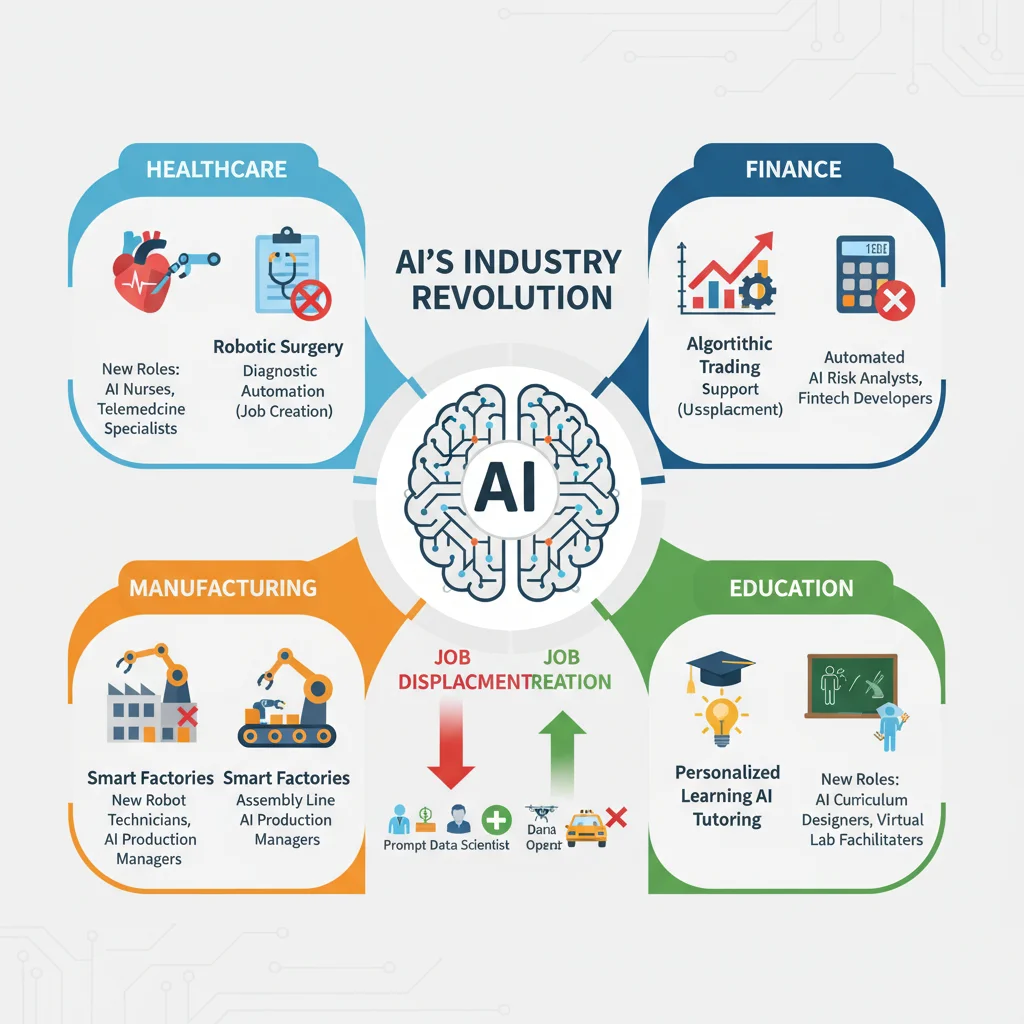
Before diving into specific insights, it’s crucial to grasp the breadth and depth of AI’s influence. AI is not just about automating repetitive tasks; it’s about augmenting human capabilities, enabling new forms of analysis, creativity, and problem-solving. From advanced analytics in finance to personalized medicine in healthcare, and from intelligent manufacturing to adaptive learning platforms in education, AI is embedding itself into the operational DNA of virtually every sector. The AI workforce shift signifies a move from tasks being done by humans to tasks being done by humans *with* AI, and in some cases, *by* AI entirely. This distinction is vital, as it highlights the need for collaboration and oversight skills, not just technical proficiency.
The economic implications are vast. Reports from institutions like McKinsey and the World Economic Forum consistently project significant job creation in new AI-related roles, alongside the transformation or reduction of existing ones. This dynamic interplay means that while some jobs may disappear, a plethora of new opportunities will emerge for those equipped with the right skills and mindset. The challenge, and indeed the opportunity, lies in bridging this skill gap before 2026.
Insight 1: The Paramountcy of Human-Centric Skills in an AI World
As AI handles more data processing, calculation, and even some forms of creative generation, the skills that become uniquely human will rise in value. These include critical thinking, complex problem-solving, emotional intelligence, creativity, and ethical reasoning. The AI workforce shift will not devalue human intelligence but rather refine its focus, pushing us towards higher-order cognitive functions and interpersonal competencies that machines cannot replicate.
Empathy and Emotional Intelligence: The Unautomateable Edge
In roles requiring client interaction, team leadership, or nuanced negotiation, empathy and emotional intelligence will become indispensable. AI can analyze sentiment, but it cannot genuinely feel or understand the subtleties of human emotion in the same way. Professionals who can build rapport, navigate complex social dynamics, and foster collaborative environments will find themselves in high demand. Think of healthcare professionals, educators, HR specialists, and customer service managers – their human touch becomes their greatest asset.
Creativity and Innovation: Beyond Algorithmic Boundaries
While AI can generate art, music, and text, true innovation often stems from divergent thinking, questioning assumptions, and making intuitive leaps that go beyond programmed parameters. The ability to conceptualize novel solutions, design groundbreaking products, or craft compelling narratives will be a premium skill. Designers, strategists, researchers, and content creators will leverage AI as a tool to amplify their creative output, but the initial spark and direction will remain distinctly human.
Ethical Reasoning and Judgment: Guiding the AI Frontier
As AI systems become more autonomous and influential, the ethical implications of their deployment grow exponentially. Professionals with strong ethical frameworks and the ability to make sound judgments will be crucial in areas like AI governance, data privacy, and responsible technology development. This applies not just to tech roles but also to leaders across all sectors who must ensure AI is used beneficially and equitably. The 2026 AI workforce shift demands a workforce capable of guiding technological progress with a moral compass.
Insight 2: The Imperative of Continuous Reskilling and Upskilling in AI Literacy
The pace of technological change means that skills acquired today might be obsolete tomorrow. Therefore, a commitment to lifelong learning and continuous adaptation is no longer an option but a necessity. The AI workforce shift mandates that U.S. professionals actively engage in reskilling (learning new skills for a different job) and upskilling (improving existing skills for the current job) to stay relevant.
Understanding AI Fundamentals: A Universal Requirement
Every professional, regardless of their field, will benefit from a foundational understanding of AI. This doesn’t mean becoming a data scientist, but rather comprehending how AI works, its capabilities, limitations, and ethical considerations. Courses on AI literacy, data interpretation, and machine learning basics will become as common as computer literacy is today. This knowledge empowers individuals to interact effectively with AI tools and understand their role in decision-making processes.
Specialized AI Skills: New Career Pathways
For those looking to directly contribute to the AI ecosystem, specialized skills are key. This includes roles in machine learning engineering, data science, AI ethics and governance, AI product management, and AI-driven cybersecurity. Demand for these roles is skyrocketing, offering lucrative career paths for those willing to invest in advanced technical training. Universities, online platforms, and corporate training programs are rapidly expanding to meet this need, making specialized AI education more accessible than ever.
Bridging the Gap: Human-AI Collaboration Skills
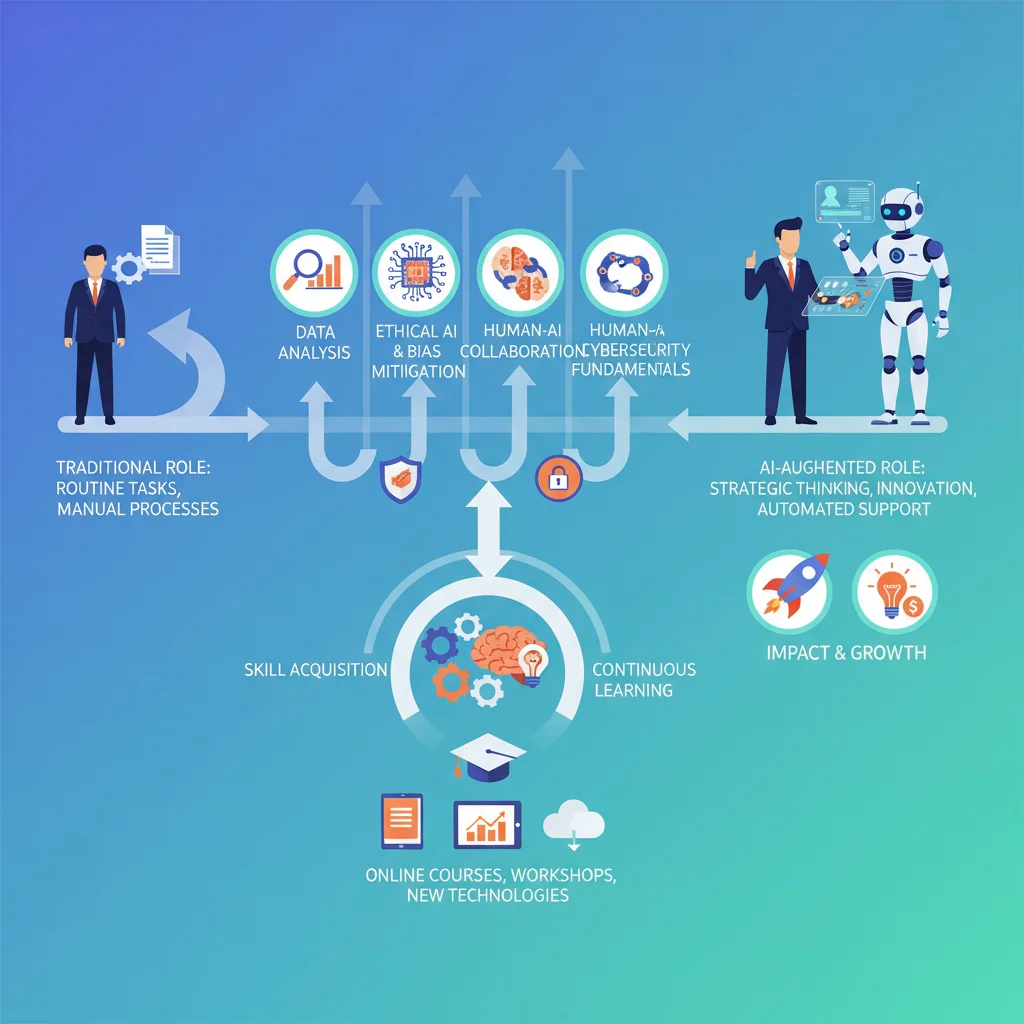
Beyond technical AI skills, the ability to effectively collaborate with AI systems will be a critical competency. This involves understanding how to prompt AI, interpret its outputs, validate its decisions, and integrate AI-generated insights into human workflows. Professionals who can act as ‘AI whisperers’ or ‘AI integrators’ will be invaluable, serving as the bridge between human teams and intelligent machines. This kind of collaboration will define the success of many businesses post-2026, making the AI workforce shift a collaborative endeavor.
Insight 3: The Emergence of Hybrid Roles and Cross-Functional Expertise
The traditional silos between departments and disciplines are eroding. The AI workforce shift is fostering the creation of hybrid roles that blend technical AI expertise with domain-specific knowledge, demanding professionals with cross-functional capabilities.
AI-Enhanced Domain Specialists
Consider a marketing professional who can not only strategize campaigns but also leverage AI tools for predictive analytics, personalized content generation, and audience segmentation. Or a healthcare administrator who uses AI for optimizing patient flow and resource allocation. These hybrid roles combine deep industry knowledge with AI proficiency, leading to more efficient, data-driven outcomes. The value of someone who understands both the ‘what’ of their industry and the ‘how’ of AI implementation will be immense.
The Rise of ‘Citizen Data Scientists’ and ‘Citizen Developers’
As AI tools become more user-friendly, professionals without formal data science or programming backgrounds will be empowered to use AI for their specific needs. Low-code/no-code AI platforms will enable ‘citizen data scientists’ to perform complex analyses and ‘citizen developers’ to build AI-powered applications. This democratization of AI tools means that a broader range of professionals will need to understand AI principles to effectively utilize these powerful new capabilities within their existing roles, further accelerating the AI workforce shift.
Project Management and AI Integration
Managing projects that involve AI implementation is a distinct skill set. It requires understanding AI development lifecycles, managing AI model deployment, and overseeing the ethical and practical integration of AI into existing systems. Project managers with an AI-savvy perspective will be crucial in ensuring successful digital transformations across organizations.
Insight 4: The Redefinition of Industry Structures and Business Models
AI is not just changing individual jobs; it’s reshaping entire industries and catalyzing new business models. U.S. professionals must understand these broader structural shifts to identify emerging opportunities and anticipate industry-specific challenges posed by the AI workforce shift.
Data-Driven Decision Making as a Core Competency
Every industry will become more data-driven. From manufacturing optimization to retail personalization, and from financial risk assessment to agricultural yield prediction, data will be the new currency, and AI will be the engine that extracts its value. Professionals in all sectors will need to be comfortable with data interpretation, understanding metrics, and using AI-powered insights to inform strategic decisions. This demands a shift from intuition-based decision-making to evidence-based approaches.
Personalization and Hyper-Targeting
AI enables unprecedented levels of personalization in services and products. In retail, healthcare, education, and entertainment, AI can tailor experiences to individual preferences, needs, and learning styles. Professionals in these fields will need to understand how to design and manage these personalized experiences, leveraging AI to create more engaging and effective interactions. This opens up new avenues for customer experience specialists, product managers, and content strategists.
Automation of Back-Office and Repetitive Tasks
Administrative, accounting, and operational roles involving repetitive tasks are prime candidates for AI automation. This doesn’t necessarily mean job elimination but rather a shift in focus. Professionals in these areas will need to pivot towards oversight, exception handling, system management, and more strategic analysis. For instance, an accountant might spend less time on data entry and more time on financial forecasting and compliance strategy, supported by AI tools. This directly impacts the AI workforce shift by freeing up human capital for higher-value activities.
Insight 5: The Growing Importance of Adaptability and a Growth Mindset
Perhaps the most critical meta-skill for the 2026 AI workforce shift is adaptability. The only constant will be change, and professionals who can quickly learn new skills, embrace new tools, and adjust to evolving job descriptions will be the most resilient and successful.
Embracing Continuous Learning
A growth mindset, characterized by a belief that abilities can be developed through dedication and hard work, is essential. This means viewing challenges as opportunities for growth, seeking out new knowledge, and being comfortable with the discomfort of learning new things. Formal education, certifications, online courses, and even informal learning through communities and self-study will all play a vital role in keeping skills current.
Networking and Community Engagement
Connecting with peers, mentors, and industry leaders who are also navigating the AI landscape provides invaluable support and insights. Professional communities, online forums, and industry events offer platforms for sharing knowledge, discovering new trends, and identifying collaborative opportunities. In a rapidly changing environment, a strong network can be a critical resource for career agility.
Proactive Career Planning and Self-Assessment
Regularly assessing one’s skills, identifying gaps, and proactively planning for future career trajectories is more important than ever. This involves understanding which aspects of your current role are most susceptible to AI automation and which are most amenable to AI augmentation. Strategic career planning will involve identifying areas for upskilling that align with emerging industry demands and personal interests. The AI workforce shift is an invitation to take ownership of your professional development.
Preparing for the Future: Actionable Steps for U.S. Professionals
The insights above paint a clear picture of the challenges and opportunities presented by the 2026 AI workforce shift. Here are actionable steps U.S. professionals can take now:
- Audit Your Current Skill Set: Identify which of your skills are uniquely human (creativity, empathy, critical thinking) and which are more susceptible to AI automation. Focus on enhancing the former and augmenting the latter with AI tools.
- Embrace AI Literacy: Enroll in introductory AI courses. Understand the basics of machine learning, data analytics, and how AI is being applied in your industry. Many free and low-cost options are available from platforms like Coursera, edX, and Google AI.
- Develop Human-Centric Skills: Actively seek opportunities to practice and improve your emotional intelligence, complex problem-solving, ethical reasoning, and creative thinking. These skills are often best honed through real-world experience, collaboration, and reflective practice.
- Explore Hybrid Roles: Look for opportunities within your current organization or in job postings that combine your domain expertise with AI tools or concepts. Consider how you can integrate AI into your daily tasks to increase efficiency and demonstrate value.
- Cultivate a Growth Mindset: Commit to lifelong learning. Stay curious, read industry reports, follow AI news, and be open to acquiring new knowledge and adapting to new ways of working. View continuous learning as an investment in your future.
- Network Strategically: Connect with professionals who are active in the AI space. Attend webinars, join online communities, and participate in discussions about the future of work and AI’s impact.
- Leverage AI Tools: Start experimenting with AI tools relevant to your profession. Whether it’s AI-powered writing assistants, data analysis platforms, or design tools, hands-on experience is invaluable for understanding capabilities and limitations.
Conclusion: Navigating the AI Workforce Shift with Confidence
The 2026 AI workforce shift is not an event to be feared, but a profound evolution to be embraced. For U.S. professionals, understanding these five key industry insights – the paramountcy of human-centric skills, the imperative of continuous reskilling in AI literacy, the emergence of hybrid roles, the redefinition of industry structures, and the growing importance of adaptability – is fundamental to navigating this new era with confidence and success. By proactively investing in skill development, fostering a mindset of continuous learning, and strategically adapting to technological advancements, individuals can position themselves as indispensable assets in an increasingly AI-powered world. The future of work is collaborative, intelligent, and distinctly human-augmented, and those who prepare now will be the leaders of tomorrow.